
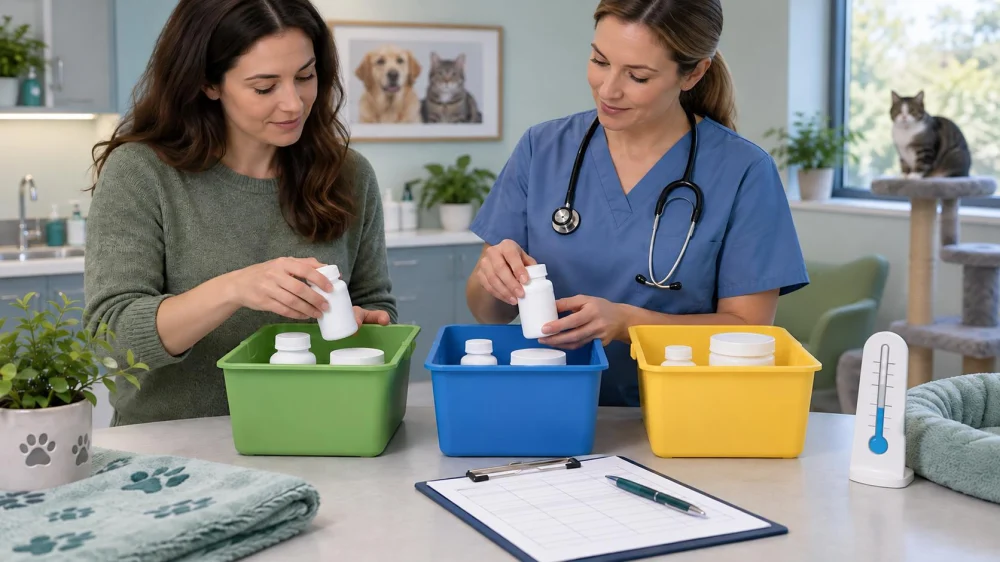
Pet Medication Storage: Label, Temperature, and Access
On this page
Quick answer
Keep every pet medication in its original labeled container, stored at the exact temperature and light conditions on the label, in a secure place pets and children cannot reach. Separate medicines by pet and from human products, use one dosing record, and dispose of unwanted medicine through approved instructions. For a wrong dose, mix-up, or accidental ingestion, call the veterinarian or animal poison service immediately.

IndyHumane Downtown Clinic
IndianapolisMarion CountyIndiana
456 N Holmes Ave, Indianapolis, IN 46222, USA
Keep original labels intact
The original container connects the medicine to the pet, dose, route, frequency, prescribing clinic, expiration, and storage directions. Keep the label readable and save the information sheet. Do not move tablets into an unlabeled bag, shared organizer, food container, or another animal's vial.
Before each dose, match the pet's name, medicine, strength, amount, route, and time. Contact the veterinary clinic when anything is missing, smudged, or inconsistent instead of reconstructing directions from memory.
West Michigan Street Veterinary Clinic
IndianapolisMarion CountyIndiana
3811 W Michigan St, Indianapolis, IN 46222, USA
Separate pets and people
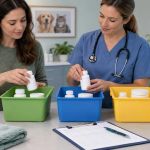
Store each pet's medicines in a distinct closed bin and keep animal medications apart from human medications. Use neutral labels that authorized caregivers understand without displaying private details to visitors.
FDA pet-medication storage guidance warns that flavored products can attract animals and that child-resistant packaging may not be pet-resistant. Counters and high shelves may still be reachable by climbing, jumping, or knocking containers down.
Follow temperature and light directions
Read the product label for room-temperature, refrigeration, freezing, humidity, and light requirements. Keep refrigerated medicine in a dedicated clean container away from spills and food handling. Do not place it in the door if the instructions or pharmacist recommend a more stable location.
Do not use medicine that froze, overheated, leaked, changed appearance, lost power-dependent refrigeration, or sat outside its range unless the veterinarian, pharmacist, or manufacturer confirms it remains suitable. Record the exposure details.
Build a safe dosing routine
Prepare one pet's dose at a time in a well-lit area, close the container immediately, and record administration before leaving. Keep measuring devices with the matching product and use the unit specified on the label.
FDA's questions for your veterinarian emphasize correct timing and amount, product-specific storage, and clarification about shaking liquids or handling missed doses. Never double a dose unless the veterinarian directs it.
Respond to a mix-up or ingestion
If a pet chews a container, receives the wrong medicine or amount, or reaches a human product, remove further access and call the veterinarian or animal poison control service immediately. Have the container, label, estimated amount, time, pet's weight, and current symptoms ready.
Do not induce vomiting, give food, or administer a home remedy unless a veterinary professional instructs you. If a person takes an animal medication, contact human Poison Control or a healthcare professional.
Important limits
This guide does not change a prescription or determine whether an exposed product remains effective. Do not split, crush, open, refrigerate, freeze, transfer, or dispose of medication contrary to its instructions. Sharps and controlled substances may require special handling.
Frequently asked questions
Can I put pet pills in a weekly organizer?
Only if the veterinarian or pharmacist confirms it is appropriate and the organizer preserves identity, stability, security, and accurate dosing.
Is a bathroom cabinet suitable?
Humidity and access may make it unsuitable. Follow the product's directions and choose a secure, dry location within the stated range.
What should I do with expired medicine?
Use a take-back program or the product, veterinarian, pharmacist, or FDA disposal instructions. Do not automatically flush it.
Can two pets share the same prescription?
No. Use medication only for the pet named and as prescribed, even when the animals have similar symptoms.
Sources and evidence notes
This checklist uses FDA veterinary guidance on original containers, secure separation, temperature, dosing questions, accidental ingestion, and disposal. The current label and veterinary instructions control each medication.
Next steps
Audit every container, separate medicines by pet and from human products, confirm storage ranges, and post emergency contacts. Review the dosing record with every caregiver and remove expired or unwanted products through an approved route.


 IndyHumane Downtown Clinic4.0 (654 reviews)
 West Michigan Street Veterinary Clinic4.0 (2027 reviews)
 All Pet Express by Noah's4.0 (560 reviews)
 All Pet Low Cost Surgery Center4.0 (46 reviews)
 Glasgo Memorial Veterinary Hospital4.0 (222 reviews)
 Olive Animal Hospital4.0 (52 reviews)
 Pet Medication Storage: Label, Temperature, and Access
 Pet Food Recall Check: Match the Lot, Stop, and Call
 Pet Meal Handoff: Portions, Timing, and Confirmation
 Pet Household Noise Plan: Create a Calmer Retreat
 Pet Nail Trim Prep: Light, Tools, Limits, and Rewards
 Pet Cough Video: Record Safely and Call the Vet