
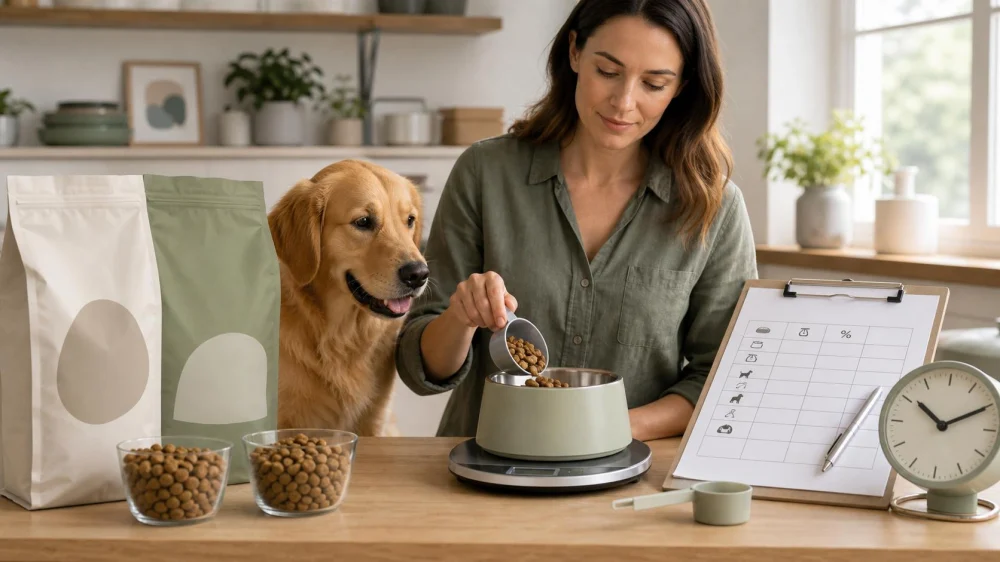
Pet Food Transition Log: Track Portions and Reactions
On this page
- Confirm the change with a veterinarian
- Record the old and new food
- Define the transition schedule
- Measure every portion
- Track appetite and water
- Record stool, vomiting, and behavior
- Control treats and other food
- Manage multiple pets
- Know when to pause and call
- Close out the transition
- Food transition checklist
A pet food transition log records exactly what changed, how much was offered, what the pet ate, and what happened afterward. It turns a vague report such as “the new food did not agree” into a dated pattern a veterinarian can interpret. The log should support—not replace—professional nutrition and medical advice.
Do not start a routine transition when a pet is acutely ill without veterinary guidance. Repeated vomiting, severe or bloody diarrhea, collapse, difficulty breathing, facial swelling, a swollen painful abdomen, inability to keep water down, or rapidly worsening symptoms needs prompt veterinary or emergency evaluation.
Choose one paper chart or secure digital file and make entries immediately after each meal and observation. Include date, clock time, pet name, and caregiver initials. Photos of labels or concerning stool can support the log when a veterinarian requests them, but protect household privacy and avoid sharing them publicly. Store the current food plan beside the log for quick reference during every meal.
Keep the log factual. Write “ate 30 of 40 grams within ten minutes” rather than “seemed picky,” and “one loose stool at 3 p.m.” rather than “food caused diarrhea.” The timing suggests questions but does not prove cause. A veterinarian considers the entire health history, examination, exposures, and diet.

VIP Petcare Vaccination Clinic
ShelbyvilleShelby CountyKentucky
128 Midland Blvd, Shelbyville, KY 40065, USA
Confirm the change with a veterinarian
Ask why the food is changing: life stage, weight plan, diagnosed condition, allergy trial, availability, preference, texture, or another reason. The purpose determines product, amount, schedule, treats, and what outcome matters.
Puppies, kittens, seniors, pregnant or nursing animals, exotic pets, and pets with diabetes, kidney disease, pancreatitis, food allergy, gastrointestinal disease, or other conditions need individualized direction. Do not use a generic online ratio for a prescribed diet.

Greenfield Veterinary Clinic
GreenfieldHancock CountyIndiana
916 N State St, Greenfield, IN 46140, USA
Record the old and new food
Photograph both package labels and record brand, product name, formula, flavor, life stage, form, calories, package size, lot number, best-by date, and where purchased. Keep the original bags during the transition for feeding guidance and recall identification.
Check that the new product is the one the veterinarian or care plan intended. Similar package colors may represent different protein, calorie density, veterinary indication, or species. Do not pour it into an unlabeled bin and discard the bag.
Define the transition schedule
Write the veterinarian-approved proportions and dates for old and new food. Specify whether percentages refer to calories, weight, volume, or another measure. Equal cups do not necessarily contain equal calories or grams.
Record the planned start, each step, and the target completion. Do not speed up merely because the new bag is open. If old food will run out, call before the schedule is forced to change.
Measure every portion
Use the recommended gram scale or consistent measuring tool and record the amount of each food offered at every meal. Note leftovers separately. Estimating “half and half” by visual bowl volume can change calories and proportions.
Keep meal times and feeder identity consistent. Do not top up the bowl without recording it. For canned or fresh food, follow safe refrigeration, storage, and discard times on the label and from the veterinary team.
Track appetite and water
Record whether the pet ate all, most, some, or none and how long the meal remained available. Note sniffing and leaving, chewing difficulty, gulping, coughing, food guarding, or needing unusual encouragement.
Observe water access and meaningful changes in drinking without restricting water unless a veterinarian directs it. Increased or decreased thirst can have many causes. A measured log is useful, but veterinary evaluation—not owner interpretation—determines significance.
Record stool, vomiting, and behavior
Note stool time, frequency, consistency, color changes, mucus, blood, straining, and accidents in factual language. Record vomiting or regurgitation time, relation to meals, appearance, and frequency without handling material unnecessarily.
Also track energy, play, sleep, comfort, scratching, ear or skin changes, gas, abdominal appearance, and body weight when the veterinarian requests it. A single rating scale used consistently is more useful than dramatic changing descriptions.
Control treats and other food
List treats, chews, table food, supplements, flavored medicine, dental products, and food used for training. These can add calories or ingredients and confuse an allergy or digestive trial. Follow the veterinarian's rules for what is allowed.
Tell every caregiver, family member, walker, boarding provider, and trainer about the plan. Store restricted foods securely. Do not blame the pet for accessing an unattended bowl or trash; correct the environment.
Manage multiple pets
Feed pets in separate supervised locations so the correct animal receives the correct proportion and amount. Pick up leftovers before shared access resumes. Label scoops and containers to avoid cross-use.
Keep a separate log for each pet. One animal's stool, appetite, or weight should not be attributed to another. Microchip feeders or scheduled rooms may help when introduced safely and appropriately.
Know when to pause and call
Ask the veterinarian in advance which changes require staying at the current step, returning to a prior step, stopping the food, or seeking examination. Do not invent a response after symptoms begin, especially for a prescription or allergy-elimination diet.
Call promptly about refusal to eat, repeated vomiting, significant diarrhea, blood, pain, marked lethargy, dehydration concerns, hives, swelling, or another meaningful change. Urgency varies by species, age, condition, duration, and severity.
Close out the transition
At completion, record the final food, daily amount, meal schedule, body weight if requested, tolerance, unresolved concerns, and veterinarian follow-up. Update caregiver instructions and automatic orders. Remove the old food only as directed.
Keep relevant labels and the log until the veterinary team says they are no longer needed. Review portion needs over time because calorie requirements change with growth, activity, health, and weight. Finishing the ratio change does not end monitoring.
Food transition checklist
Record both foods, lot numbers, calorie density, approved ratios, dates, grams offered, leftovers, water, stool, vomiting, behavior, treats, medicines, weight, caregivers, symptoms, and veterinary advice. Keep each pet's entries separate.
A careful log makes the transition visible meal by meal. Exact food identity and portions help distinguish preference, overfeeding, unplanned extras, and a possible reaction. When symptoms appear, share the record promptly and let the veterinary team guide the next step.



 Hite, Becca Dr.5.0 (2 reviews)
 Hollywood Feed4.0 (130 reviews)
 Animal Medical Center of Springboro4.0 (306 reviews)
 VIP Petcare Vaccination Clinic0.0 (0 reviews)
 JTs Fish And Coral5.0 (11 reviews)
 Rural Animal Clinic a.k.a Dog & Cat Repair4.0 (205 reviews)
 Canine Cognitive Dysfunction: How to Recognize & Manage Pet Dementia in Dogs
 What to Know About Canine Heart Disease: Signs, Care, and Prevention
 Why Do Dogs Head Press Against Walls? Understanding This Behavior
 How to Help Dogs With Sensitive Stomachs After Meals Safely and Naturally
 Best Dog Foods for Optimal Digestive Support
 Best Dog Harnesses for Adventure Activities