
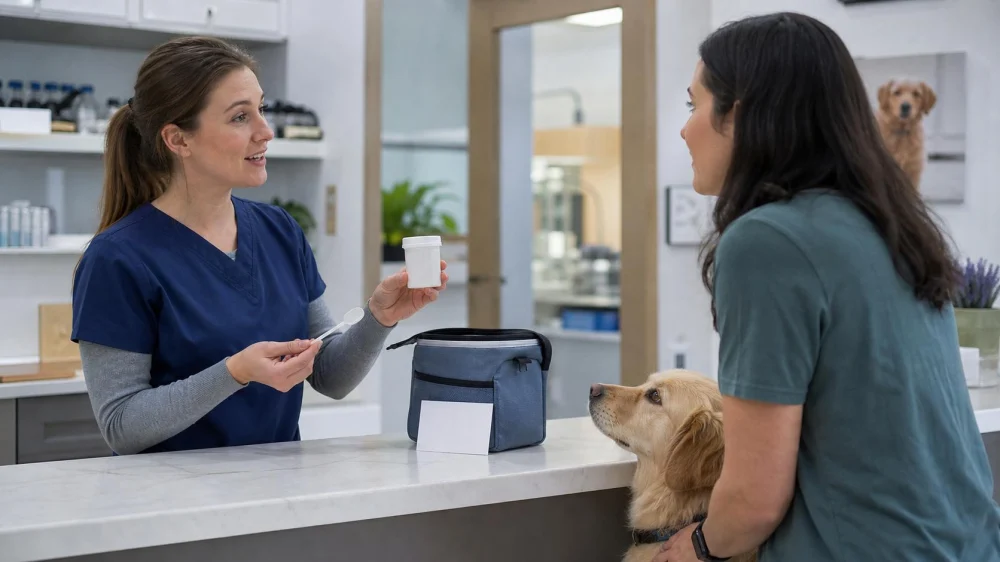
Pet Stool Sample: Collect, Label, Store, and Deliver
Table of contents
Quick answer: Call the veterinary clinic before collecting a pet stool sample. Ask how fresh it must be, how much is needed, which container to use, whether refrigeration is allowed, and when to deliver it. Wear disposable gloves, avoid soil, litter, water, and cleaning chemicals, place the sample in the clinic-approved leak-resistant container, label it immediately, wash your hands, and keep it separate from food.

Ask the clinic before collecting
A sample useful for one test may not suit another. The clinic may require fresh stool, a particular amount, multiple collections, or a special kit. Instructions vary by species, symptoms, test, and laboratory.
Before collecting, confirm:
- the pet and test the sample is intended for;
- the acceptable age of the sample and delivery deadline;
- the amount and whether multiple portions are needed;
- the approved container, scoop, or transport kit;
- whether the sample should be chilled, kept at room temperature, or handled another way;
- what information belongs on the label; and
- whether current medicine, supplements, dewormers, diet, or recent travel should be reported.
Do not reuse food, medicine, or household containers unless approved. Residue, leakage, breakage, and misidentification can affect safety or testing.
Collect a useful sample safely
Prepare the container, gloves, tool, outer bag, and label first. Keep children and animals away. Cover cuts and avoid touching your face, phone, handles, or food.
For a dog, avoid soil, water, chemicals, and other animals' waste. For a cat, ask whether a clean empty box or nonabsorbent material is needed; ordinary litter can alter the sample. Other species need specific instructions.
Use a scoop, never bare hands. Include an unusual portion only when safe and requested. Do not search for parasites or objects, or pull material protruding from a pet.
Close the container, check its outside, and place it in the specified bag. Remove gloves safely and wash with soap and running water. The CDC notes pet waste can carry germs; see its Healthy Pets, Healthy People guidance.
Label the sample and record context
Label immediately using required identifiers such as pet, owner, species, date, and exact time. Put the label on the container or designated sleeve, not only a loose note.
Record consistency, color, frequency, straining, blood or mucus, vomiting, appetite, water intake, behavior, and onset. Report observations; do not diagnose from appearance or online images.
Tell the clinic if the sample touched litter, soil, water, cleaner, another animal's stool, or the inside of a shared bag. Do not hide a collection problem to avoid repeating the task. The laboratory or veterinarian can decide whether the sample remains suitable.
Store and transport exactly as directed
Follow the clinic's temperature and timing rules. Never automatically refrigerate, freeze, warm, or add liquid. If chilling is directed, use a separate rigid secondary container away from food, children, and animals.
Deliver within the stated window, protected from heat, sun, freezing, and crushing. Keep paperwork separate and tell staff you have a specimen.
If delivery is delayed, the container leaks, the label is missing, or storage instructions were not followed, call the clinic. Do not silently substitute a new collection time on the label or combine old and new samples unless instructed.
Know the limits and call thresholds
A stool sample is one part of veterinary assessment. A negative result may not exclude every cause, and a pet with concerning signs may need examination, blood work, imaging, repeat sampling, or other tests. Do not delay care while waiting for a bowel movement.
Call the veterinarian promptly for repeated diarrhea, blood, vomiting, pain, marked lethargy, loss of appetite, dehydration concern, straining, or a meaningful change from the pet's normal behavior. Seek emergency veterinary care for collapse, severe weakness, breathing difficulty, a swollen painful abdomen, suspected toxin or foreign-body ingestion, uncontrolled bleeding, or any emergency sign identified by the clinic.
People at higher risk from animal germs—including young children, pregnant people, older adults, and those with weakened immune systems—should ask a healthcare professional and veterinarian about additional precautions. Another adult may need to collect and clean the sample area.
Frequently asked questions
How much stool does the clinic need?
Ask the clinic. Requirements differ by test, and collecting a large amount does not make a sample more useful.
Can I bring a sample in a plastic bag?
Only if the clinic approves that method. A rigid, leak-resistant specimen container may be preferred for safety and labeling.
Can samples from two pets be combined?
No, unless a veterinarian specifically orders pooled testing. Separate samples preserve identity and interpretation.
What if I see a worm?
Photograph it if safe and call the clinic. Collect it only as instructed, and do not give a dewormer without veterinary direction.
Next steps
Call the clinic, write down its container, timing, temperature, quantity, and labeling instructions, and assemble supplies. Collect without direct contact or environmental contamination, seal and label immediately, wash hands, and deliver on time. Bring the observation log and report any deviation so the veterinary team can decide whether to test, recollect, or examine the pet.
 Banfield Pet Hospital4.0 (255 reviews)
 Walmart Pet Services4.0 (15 reviews)
 Grand Paws Animal Clinic4.0 (1935 reviews)
 River Valley Equine Services2.0 (14 reviews)
 Puppies 'N Love4.0 (1518 reviews)
 Owensville Animal Hospital4.0 (314 reviews)
 How to Teach Your Pet to Sleep on Their Own Bed
 How to Read the “Guaranteed Analysis” on Pet Food Labels
 How to Introduce Pet Insurance to a Multi-Pet Household
 What to Know About Canine Bladder Stones in Dogs: Causes, Symptoms & Care
 How to Monitor Pet Vital Signs at Home Safely
 Pet Scents & Aromatherapy: What’s Safe and What’s Not