
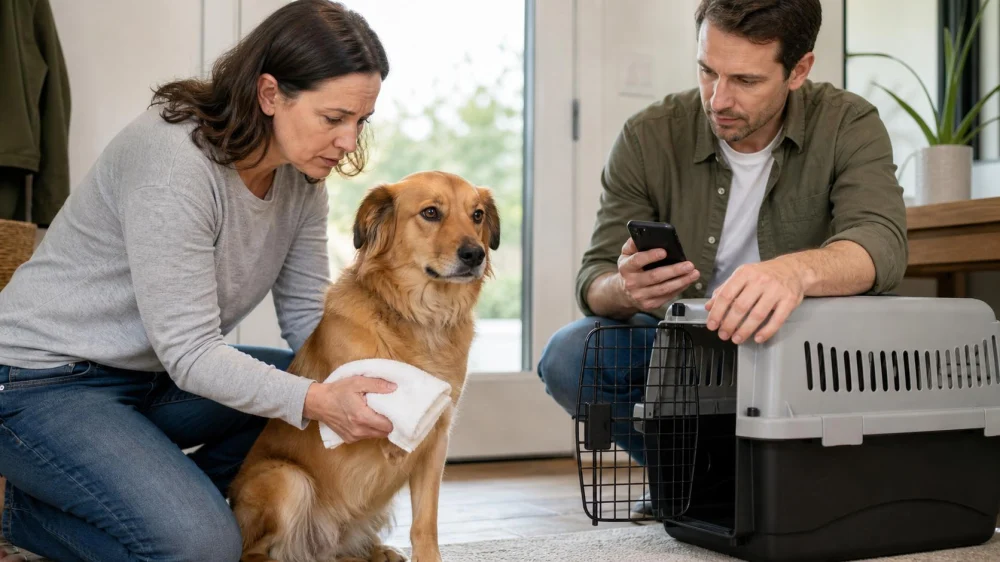
Pet Wound First Aid: Control Bleeding and Travel to the Vet
A bite, cut, torn nail, puncture, or paw injury can look small while hiding deeper damage, contamination, or pain. Protect yourself from a frightened animal, call the veterinary clinic, use clean direct pressure for active bleeding, avoid removing embedded objects, and transport the pet safely. First aid is temporary support, not a substitute for examination and treatment.
Quick answer
Move away from traffic, other animals, broken glass, and danger. Call a veterinarian or emergency clinic and describe the injury. If blood is flowing, hold a clean towel or nonstick pad directly on the wound without repeatedly lifting it to check. Add layers if they soak through. Do not use a tourniquet, remove an embedded object, scrub deeply, or apply peroxide, alcohol, powder, glue, ointment, or human pain medicine unless the veterinarian directs it.

Elk Creek Animal Hospital of Hikes Point
LouisvilleJefferson CountyKentucky
3606 Klondike Ln, Louisville, KY 40218, USA
Make the scene safe
An injured pet may bite or scratch even when normally gentle. Approach slowly, reduce noise and light, keep children and other animals away, and avoid putting your face near the mouth. Use a leash, carrier, towel, or barrier only if it can be done without worsening breathing or injury.
Do not muzzle a vomiting pet, an animal with breathing difficulty, a short-faced breed in respiratory distress, or a pet with facial trauma. Ask the clinic for restraint guidance. If human safety is at risk, contact animal control or emergency services.

Call before treating
Tell the clinic the species, size, location of the wound, cause, time, bleeding pattern, ability to stand, breathing, gum color, and whether another animal or a wild animal was involved. Mention medications, vaccination status, pregnancy, chronic conditions, and possible toxin exposure.
Ask where to go, whether to apply pressure or cover the area, and how to transport the pet. Bites and punctures can close at the surface while trapping bacteria, so do not judge severity by visible size alone.
Control bleeding
Place clean gauze, a nonstick pad, or a folded clean cloth over the bleeding point and press steadily. The American Veterinary Medical Association advises maintaining direct pressure for at least three minutes before checking. If blood soaks through, add material on top rather than pulling off the first layer and disturbing a clot.
Heavy, pulsing, rapidly soaking, or uncontrolled bleeding is an emergency. Keep pressure during transport when safe and have another person drive. Do not tie a cord or narrow band around a limb; an improvised tourniquet can cause severe damage.
Leave embedded objects in place
Do not pull out glass, sticks, metal, hooks, or another object lodged in tissue. Removal can trigger bleeding or damage deeper structures. Prevent movement by placing bulky padding around—not over—the object if the veterinarian instructs and immediate transport is underway.
Do not probe a puncture, squeeze a bite, or search inside a paw. For a fishhook, eye injury, chest or abdominal wound, or object near a joint, face, neck, or body cavity, go directly to emergency veterinary care.
Protect the wound
If bleeding is controlled and the clinic advises covering, place a clean nonstick pad lightly over the area. A bandage must not impair circulation or breathing. Swelling, cold toes, discoloration, increasing pain, or chewing at the wrap requires immediate removal or veterinary help according to instructions.
Prevent licking with the pet’s properly fitted recovery collar if already available and tolerated. Do not tape directly to fur or skin. Keep the pet quiet and confined so running and jumping do not reopen the injury.
Avoid harmful products
Do not pour hydrogen peroxide, rubbing alcohol, bleach, essential oils, powdered antiseptics, or household cleaners into a wound. Do not use skin glue or close a puncture. Human antibiotic creams may be licked and can hide deterioration.
Never give ibuprofen, naproxen, acetaminophen, aspirin, or leftover prescription pain medicine unless the veterinarian specifically prescribes it for this pet. Some human products are toxic to dogs or cats, and dosing errors can be fatal.
Transport safely
Use a secure carrier for a small pet or a sturdy board, blanket, or approved stretcher method for a larger pet when movement is painful. Support the body, keep the airway clear, and minimize bending of a suspected fracture or spinal injury. Use multiple helpers when possible.
Call the clinic while leaving so the team can prepare. Keep the vehicle calm and temperature controlled. Bring medication information, vaccination records, any product package involved, and a photo of the scene when safely available.
Recognize emergencies
Seek emergency care for uncontrolled bleeding, pale or blue gums, collapse, weakness, rapid or difficult breathing, severe pain, a large or deep wound, exposed tissue or bone, eye injury, abdominal or chest penetration, suspected fracture, or an embedded object. Bites from wildlife or unknown animals need prompt professional and public-health guidance.
Later swelling, heat, drainage, odor, fever, poor appetite, hiding, or worsening pain may indicate infection or tissue damage. Follow the discharge plan, prevent licking, give only prescribed medicine, and attend rechecks.
Frequently asked questions
Should I keep lifting the towel to check?
No. Hold steady pressure for the interval advised and add layers if material soaks through.
Can I wash the wound?
Ask the veterinarian first. Active bleeding, deep wounds, embedded objects, and eye or body-cavity injuries should not be delayed for cleaning.
Does a small puncture need care?
Yes. Small surface openings can hide deeper bite or contamination damage.
Can my pet walk to the car?
Only if the clinic agrees and the pet can move without worsening the injury; otherwise use safe assistance.
Next steps
Save the regular and emergency clinic numbers, assemble clean gauze, nonstick pads, towels, a spare leash, and carrier, and learn safe transport before an injury occurs. During an event, call first, protect yourself, control bleeding, and go.
See the American Veterinary Medical Association’s pet first aid guide.





 All Pets Animal Hospital4.0 (299 reviews)
 Veterinary Wellness Center4.0 (72 reviews)
 Westside Animal Hospital4.0 (225 reviews)
 Glendale Animal Hospital4.0 (479 reviews)
 Dermatology for Animals - Queen Creek5.0 (1 reviews)
 VCA McCormick Ranch Animal Hospital and Emergency Center3.0 (154 reviews)
 Managing Chronic Conditions in Pets: Essential Diet, Medication & Lifestyle Tips
 The Best Dog Grooming Clippers for At‑Home Grooming
 Why Dogs Lick People and What It Means: A Complete Guide
 How to Help a Dog With Sensitive Ears: Care Tips Every Owner Should Know
 How Heatstroke Affects Pets: Symptoms, Prevention, and Emergency Action
 Pet Scents & Aromatherapy: What’s Safe and What’s Not