
How to Prepare Your Dog for a Veterinary Video Visit
On this page
- Quick answer
- Confirm whether video care is appropriate
- Send a concise history in advance
- Test the room and technology
- Help your dog stay comfortable
- Show observations without forcing an exam
- Record the plan and follow-up
- Video-visit checklist
- Limitations and urgent signs
- Frequently asked questions
- Regulatory and evidence notes
- Film one short baseline clip
Quick answer
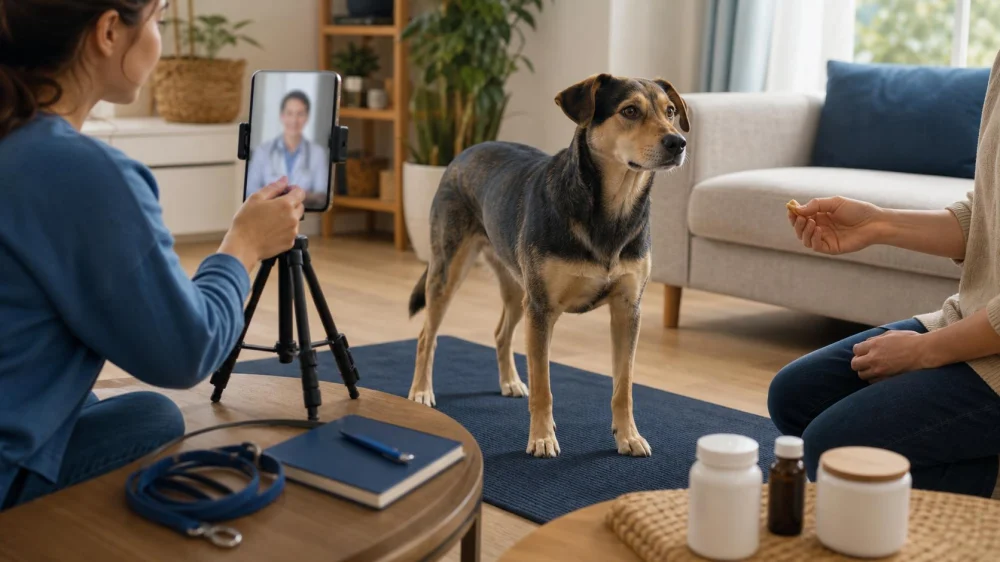
Ask the veterinary practice whether your dog's concern is suitable for video and what platform, forms, records, measurements, photos, and clips it needs. Prepare a quiet, well-lit floor-level space, reliable internet, a charged device, a helper if available, treats your dog may safely have, current medications, and an emergency transport option. Do not restrain, manipulate, or stress your dog to perform an examination the veterinarian has not directed.
A video visit can support triage, follow-up, coaching, and observation, but it cannot reproduce every hands-on test or establish every legally required veterinary relationship.

Henry Schein Animal Health
LexingtonFayette CountyKentucky
920 Citation Blvd, Lexington, KY 40511, USA
Confirm whether video care is appropriate
Tell the clinic why you are requesting a video visit and how long the concern has been present. Ask whether the veterinarian needs an in-person examination, laboratory test, imaging, or urgent care instead. State your current location because licensing, prescribing, and veterinarian-client-patient relationship rules vary by state.
Use the practice's official booking and communication channel. Clarify fee, cancellation, privacy, prescription, record-sharing, and follow-up policies before the appointment. Do not assume a commercial chat service can replace your regular veterinarian.
Send a concise history in advance
Provide your dog's name, age, sex and reproductive status, breed or type, current weight if known, medical conditions, allergies, medications and supplements, diet, recent travel or exposures, and regular veterinarian. Describe the main concern with dates, frequency, triggers, progression, and effect on eating, drinking, elimination, sleep, movement, breathing, and behavior.
Upload only clear, relevant files. Include medication labels rather than transcribing doses from memory. Do not send huge unsorted galleries; name short clips by date and observation.
Test the room and technology
Open the platform before the visit, allow necessary camera and microphone permissions, and test sound. Place the phone or computer on a stable stand so both hands can remain free. Use bright, diffuse light from the front and avoid a window directly behind the dog.
Clear a nonslip area where the camera can see the dog standing, walking a few normal steps, sitting, and resting without obstacles. Keep a second light, ruler, towel, leash, and the dog's records nearby, but use them only if the veterinarian requests them.
Help your dog stay comfortable
Give your dog a normal opportunity to eliminate beforehand and avoid an unusually intense exercise session. Let the dog explore the setup before the call. Use a familiar mat and calm rewards that fit the dog's dietary plan.
Do not crowd a painful, fearful, or guarding dog. Keep children and other pets out of the room unless their presence is calming and controlled. Tell the veterinarian if the dog will not tolerate handling; honest limits are safer and diagnostically useful.
Show observations without forcing an exam
Begin with the whole dog, then follow the veterinarian's camera directions. The clinician may ask to observe posture, gait, breathing, interaction, a skin area, or the home setup. Move the camera rather than repeatedly repositioning the dog.
Do not press a lump, open the mouth, bend a painful limb, remove a bandage, induce coughing, or give food, water, or medication for demonstration unless the veterinarian specifically directs it and it is safe. A pre-recorded clip may show an intermittent event better than trying to provoke it.
Record the plan and follow-up
Before ending, repeat back what to monitor, what action to take, medication instructions, activity or diet changes, the follow-up time, and the signs that require in-person or emergency care. Ask where the visit note and prescriptions will appear.
Keep a dated log after the call. If the dog's condition changes, update the clinic rather than reusing advice for a different situation.
Video-visit checklist
- Confirm video is appropriate and legally available.
- Send history, medications, and focused media.
- Test camera, audio, power, and connection.
- Prepare a bright, quiet, nonslip area.
- Have a helper only if the dog benefits.
- Do not force handling or provoke symptoms.
- Repeat back the plan and urgent thresholds.
- Keep an in-person transport option ready.
Limitations and urgent signs
- A video visit cannot provide palpation, vital signs, laboratory testing, imaging, or every physical examination.
- Rules for telemedicine and prescribing differ by state and relationship status.
- Do not delay emergency care for breathing difficulty, collapse, uncontrolled bleeding, severe trauma, repeated unproductive retching, seizure, suspected poisoning, or rapidly worsening illness.
- Call the veterinary clinic or emergency hospital for situation-specific direction.
Frequently asked questions
Can a veterinarian prescribe through video?
It depends on the veterinarian-client-patient relationship, drug, federal requirements, state law, and clinical judgment.
Should I take my dog's temperature?
Only if your veterinary team has already taught you a safe method and asks for it; do not risk injury or distress.
Can I send a long video?
Short, steady clips that show the relevant event and whole-dog context are usually easier to review.
What if my dog hides?
Tell the veterinarian and use prior footage if available; do not chase or drag the dog into view.
Should I record the appointment?
Ask permission and follow platform, practice, and local rules. Written visit notes may be the better record.
Regulatory and evidence notes
The FDA explains federal veterinarian-client-patient relationship and telemedicine rules: a federal VCPR cannot be established solely through electronic contact, though telemedicine can help maintain an established relationship. States may add requirements.
Film one short baseline clip
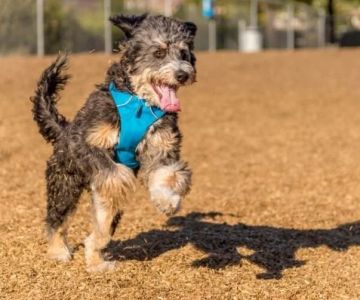
Before the call, record 20 to 30 seconds of your dog walking naturally in good light, without prompting unusual movement. Label it with the date and send it only through the clinic's approved channel if requested.



 Bella Dolce Maltese5.0 (11 reviews)
 Petco4.0 (1724 reviews)
 East Valley Urgent Pet Care4.0 (201 reviews)
 PetVet Vaccination Clinic5.0 (1 reviews)
 Moonshine Reptiles Arizona LLC4.0 (50 reviews)
 Lovet Pet Health Care - Surprise4.0 (908 reviews)
 How to Manage Multi-Pet Households: Tips for Feeding, Space, and Harmony
 How to Make Vet Visits Less Stressful for Pets
 How to Read the “Guaranteed Analysis” on Pet Food Labels
 Pet Vaccination Schedule: Essential Shots Your Pet Needs to Stay Healthy
 Understanding Pet Pancreatitis: Signs, Diet & Care
 Best Dog Harnesses With No-Pull Design