
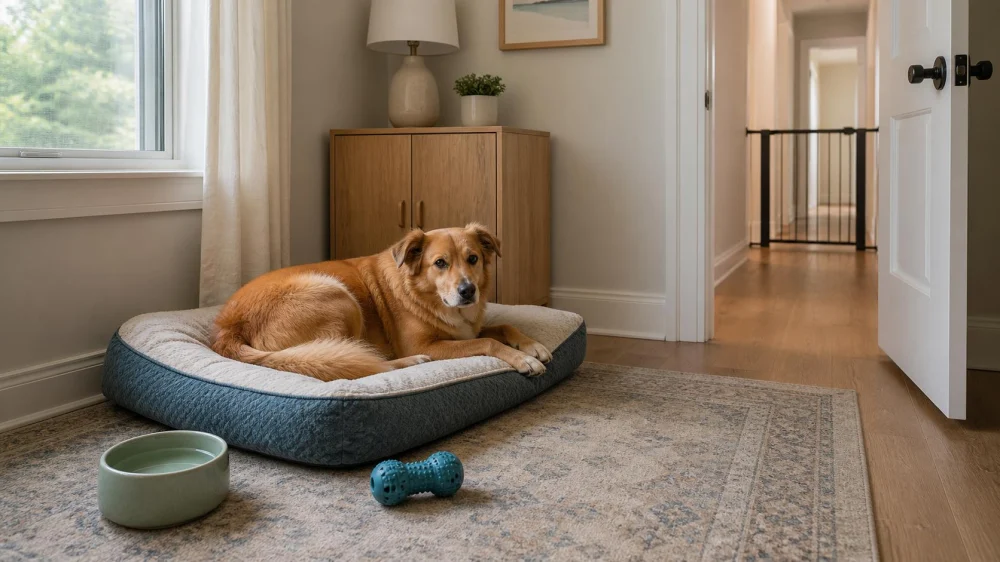
Set Up a Pet-Safe Retreat Before House Guests Arrive
On this page
Quick answer
Choose a quiet room away from the entry, remove hazards, secure windows and doors, and add the pet's familiar bed, water, and species-appropriate toilet area. Let the pet explore before guests arrive and keep the retreat voluntary when possible. Tell visitors not to enter, feed, photograph, or release the pet without the owner's permission.
This guide is for ordinary US households preparing for visitors. Pets with severe distress, aggression, escape history, medical needs, or confinement panic need an individualized plan from a veterinarian or qualified behavior professional.

Why a retreat helps
Doorbells, unfamiliar voices, luggage, children, food, and repeated door opening can change a pet's normal environment quickly. A retreat provides distance and predictability. It can reduce the need to manage every interaction in the busiest part of the home.
A retreat is not punishment and should not be used to force an animal into prolonged isolation without checking welfare. It works best when the pet already associates the room with rest, food puzzles, sleep, or quiet time.
Some pets prefer to observe from a distance, while others settle better behind a closed solid door. Choose the arrangement based on the individual animal rather than assuming every dog wants to greet or every cat wants to hide alone.

Choose the right space
Pick a room away from the front door, kitchen traffic, loud speakers, and the main gathering area. It should have safe temperature, ventilation, lighting, and enough room for the pet to stand, turn, stretch, and rest comfortably.
Inspect from the pet's level. Remove medications, strings, plants, food, trash, electrical cords, cleaning products, breakable objects, and small items that could be swallowed. Secure furniture that might tip and block access behind appliances or into unsafe closets.
Check windows, screens, balcony doors, vents, and any secondary exterior access. A closed window with a damaged screen is not secure. Do not rely on a lightweight baby gate for a pet known to jump, climb, or push through barriers.
Prepare familiar essentials
- Resting place: use the pet's usual bed, blanket, crate, perch, or hide box if it is already comfortable and safe.
- Water: provide a stable bowl in an accessible location away from litter or toilet pads.
- Toilet needs: add the normal litter box or approved bathroom setup when the visit overlaps the pet's routine.
- Calm activity: offer only familiar toys or food puzzles that are safe for unsupervised use.
- Sound control: close curtains when outside activity is a trigger and use a familiar, moderate background sound if the pet already tolerates it.
- Identification: keep current identification on the pet when appropriate and confirm microchip contact details before a busy event.
Avoid introducing a new crate, supplement, sedative, toy, or rich treat on the day guests arrive. Follow veterinary directions for any prescribed medication and never use a human medication.
Control doors and escape routes
Plan a two-barrier system between the pet and the exterior door when practical. For example, the retreat door remains closed while guests enter, and the pet stays behind another interior gate or closed hall door during any transition.
Assign one adult to control the retreat door. Do not give every visitor permission to check on the animal. Place a simple reminder outside the room, but also tell guests verbally because a sign alone can be missed.
Move coats, gifts, deliveries, and luggage into the home before transferring the pet. Keep keys and leashes in one owner-controlled location. If the pet must go outdoors, wait until the entry is quiet and use the normal secure equipment.
Practice before guests arrive
- Introduce the room early. Let the pet enter and leave while the home is calm.
- Build short positive sessions. Offer normal rest, play, or feeding activities there without immediately closing the door for a long period.
- Test the barrier. Observe whether the pet paws, climbs, chews, pushes, or becomes distressed.
- Rehearse door sounds. Have one household member open and close the front door while another stays near the pet.
- Increase duration gradually. Stop before the pet becomes highly aroused or panicked.
- Plan check-ins. Decide who will quietly check water, temperature, toilet needs, and behavior during the visit.
If the pet cannot settle during practice, change the location or seek guidance before depending on the room for a major gathering.
Give visitors clear rules
Before arrival, tell visitors whether they will meet the pet. Ask them not to open the retreat, call the pet out, reach through a gate, give food, or bring another animal without permission. Children need direct adult supervision and should not be assigned to monitor the room.
If a controlled greeting is planned, keep it brief and give the pet an exit path. Put food and high-value items away, avoid crowding, and end the interaction while everyone is calm. The pet does not need to greet every visitor.
Ask guests to secure exterior doors and notify the owner before deliveries, rideshares, or departures. The busiest transitions are often when escape risk is highest.
Pet retreat checklist
- The room is quiet, temperature-controlled, and away from the entry.
- Windows, screens, doors, and barriers are secure.
- Food, plants, cords, chemicals, and small hazards are removed.
- Familiar bed, water, and toilet setup are ready.
- Toys or chews are already known to be safe.
- The pet has practiced using the room calmly.
- One adult controls access and performs check-ins.
- Visitors know not to enter, feed, or release the pet.
- Identification and emergency contacts are current.
Limitations and important notes
A safe room cannot eliminate every risk. Noise, fireworks, unfamiliar animals, medical discomfort, or separation distress may overwhelm a previously successful setup. Monitor the pet and adjust rather than assuming silence means comfort.
Seek professional guidance for intense panting, persistent escape attempts, self-injury, aggression, collapse, breathing difficulty, or other concerning signs. Do not enter a confined space with an animal that is threatening or highly aroused.
Frequently asked questions
Should the door stay open or closed?
Use the option that safely prevents escape and helps the individual pet settle. Practice both the barrier and the duration in advance.
Can I use a bathroom?
Only after removing cleaners, medications, cords, trash, and other hazards and confirming temperature and ventilation. Some bathrooms are too small or echoing.
Should visitors meet the pet later?
Only if the owner believes the pet is comfortable and can control the setting. A successful visit does not require a greeting.
Can I play loud music to cover guest noise?
No. Use only familiar, moderate sound. Excess volume can add stress and make it harder to hear a problem.
Is a crate the same as a retreat room?
No. A crate may be one familiar resting option, but it offers less space and should be used only when the pet is already comfortable and the duration is appropriate.
Sources and evidence notes
The plan reflects broad animal-handling and household-safety practice: provide choice and distance, use familiar resources, control exterior doors, remove hazards, rehearse transitions, and avoid forced greetings.
No veterinary treatment, behavior diagnosis, confinement duration, medication plan, or product guarantee is assumed. Individual needs and professional guidance determine specialized arrangements.
Next steps
Choose the quietest suitable room and inspect it from your pet's level today. Add familiar essentials, then practice one short calm session before any guests arrive. Write three visitor rules—do not enter, do not feed, and ask before opening any exterior door—and assign one adult to control the retreat during the visit.






 Phoenix Dog Cat Bird Hospital4.0 (794 reviews)
 Arizona Bird Store4.0 (878 reviews)
 Pet Supplies Plus Lexington4.0 (211 reviews)
 Lynn Veterinary Hospital4.0 (254 reviews)
 Pet Planet College Park4.0 (438 reviews)
 Critters Without Litters4.0 (47 reviews)
 How to Help a Pet Deal with Anxiety After Trauma
 How to Check & Clean Your Pet’s Paws After Outdoor Walks
 Moving With a Pet? Update the Microchip Contact Record
 Signs of Canine Respiratory Infections to Watch For in Dogs
 Why Dogs Drink Water After Every Meal: Causes and Insights
 Why People Regret Delaying Pet Dental Care: The Importance of Early Action