
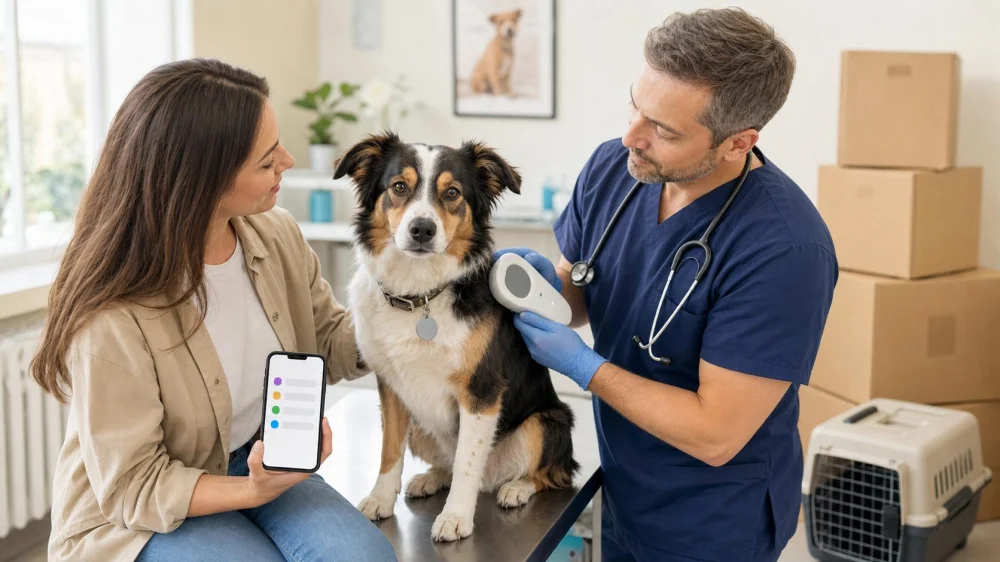
Moving With a Pet? Update the Microchip Contact Record
In this guide
A microchip can help a shelter or veterinary clinic connect a found pet with an owner, but only when the chip is registered and the contact record is current. Moving creates several opportunities for information to break: phone numbers change, a former address remains in the registry, the pet transfers to a new clinic, and a local license expires. Updating the record should happen before boxes and open doors make escape more likely.

E & L Pets
MadisonvilleHopkins CountyKentucky
107 Madison Square Dr #2741, Madisonville, KY 42431, USA
Quick answer
Before moving, locate the pet's microchip number and registry, sign in through the registry's official website, and update the owner's name, primary and backup phone numbers, email, and new address. Confirm the record is active and save written proof. Ask a veterinarian or shelter to scan the chip at least annually and after any concern about placement or readability. Update the collar tag, local license, veterinary file, emergency contacts, and travel documents separately because changing one system does not automatically update the others.

Animal Care Veterinary Center
BurkesvilleCumberland CountyKentucky
230 Copper Ln, Burkesville, KY 42717, USA
What a pet microchip does
A pet microchip is a small radio-frequency identification device implanted under the skin by a trained professional. It does not function like GPS, continuously transmit a location, contain a battery, or store the owner's current address inside the animal. A compatible scanner energizes the chip and reads its unique identification number.
The number is then used to look for registry information that can connect an authorized finder with the listed contact. The American Veterinary Medical Association (AVMA) explains that the chip contains an identification number, while owner contact information is kept in an online registry database. The system therefore has two parts: a readable device and an accurate registration.
Microchips supplement visible identification; they do not replace a safe collar and current tag where appropriate. A neighbor can call a phone number on a tag immediately, while a chip usually requires transport to a scanner.
Find the chip number and registry
Look in adoption, breeder, rescue, veterinary, licensing, travel, or prior registration records for the chip number. It is commonly a long numeric code, but formats vary. Do not rely on a handwritten number if any digit is uncertain.
If the number cannot be found, ask a veterinary clinic or animal shelter to scan the pet. The scan is painless, but the pet should be handled by trained staff. A clinic may scan several areas because chips can migrate from the original implantation site.
Finding a number does not by itself identify the correct current registry account. Ask the clinic, shelter, or a recognized lookup resource which registry should be contacted. Use the registry's verified official website or phone number, not a link in an unsolicited message. More than one service may display or store related information; confirm which record a finder will actually reach.
Update more than the street address
Review every field rather than changing only the address:
- owner's legal and preferred name;
- primary mobile phone and an alternate working number;
- email address checked regularly;
- new residential and mailing address;
- authorized backup contact;
- pet name, species, breed or description, sex, and identifying marks;
- veterinary clinic if the registry includes it;
- notes that the legitimate registry permits and that are useful for recovery.
Do not place full medical records, alarm codes, travel itinerary, or unnecessary private details in a general identification record. A statement such as “needs daily medication—contact owner and veterinarian” may be useful if allowed, but the registry is not a substitute for a current care plan.
Complete any required verification email or phone step. A saved edit that remains unverified may not become active. Take a screenshot or save confirmation without posting the chip number publicly.
Choose a useful backup contact
A backup contact helps when the owner is driving, traveling, hospitalized, outside cell range, or using a new number. Choose someone who agrees to the role, answers unknown calls, knows the pet, and is likely to keep a stable number during the move. The person should know how to reach the owner and what to do if a shelter calls.
Do not list a former roommate, inactive clinic, or relative without telling them. Review the backup at least annually. If the household is moving together and all phones may be disrupted, a trusted person outside the immediate area can add resilience.
Ask for a scan check
The AVMA advises owners to ask a veterinarian to scan the chip at least once a year so the chip can be found and read. A routine wellness appointment before or after a move is a convenient time. Confirm that the scanned number matches the registry record character for character.
A scan check does not guarantee every scanner in every situation will read the chip, but it catches transcription errors and confirms current readability. If a chip cannot be detected, the veterinarian can determine next steps. Do not attempt to locate or manipulate the chip through the skin.
Ask the veterinary clinic to store the chip number in the medical record. Give the new clinic a copy after moving, and verify it is entered correctly rather than assuming records transfer automatically.
Update tags, license, and veterinary records
Change the collar tag before moving day so the current phone works even while the address is in transition. A phone number is usually more immediately useful than a full address, and it exposes less private information. Use a breakaway collar for cats where recommended and choose fit and identification appropriate to the pet and activity.
Pet licensing rules vary by city, county, and state. Ask the new jurisdiction about deadlines, rabies documentation, fees, and tag requirements. Cancel or update the former license as directed. A license database does not necessarily update the microchip registry.
Transfer veterinary records, including vaccination history, prescriptions, test results, allergies, chronic conditions, and emergency contacts. Keep a copy accessible during travel. Refill prescriptions through the veterinarian before moving if appropriate; do not stockpile or change dosing without guidance.
Reduce escape risk on moving day
Open doors, unfamiliar people, noise, and missing furniture can make moving day a high-risk time. Put the pet in a secure quiet room, closed carrier, boarding facility, or trusted caregiver arrangement before movers begin. Post a clear reminder for household members, but do not place a sign where it advertises an unattended animal to the public.
Use a well-fitted collar or harness and secure carrier appropriate to the species. Keep the tag on and the registry updated. Never allow a frightened animal loose in a moving vehicle or truck. Check doors, windows, screens, carrier latches, and destination rooms before transfer.
Carry a recent clear photo showing the pet's face and body, plus vaccination and microchip records. If the pet is lost, contact local shelters, animal control, veterinary clinics, the microchip registry, and neighbors promptly. Follow local lost-pet procedures rather than waiting for the chip to produce a notification automatically.
Protect the first weeks in the new home
Set up a small secure area with familiar bedding, water, food, litter or toileting plan, medication, and hiding space before arrival. Introduce rooms gradually according to the pet's temperament and veterinarian's advice. Check fences, gates, screens, balconies, doors, and yard plants before allowing access.
Dogs may try to return along familiar routes or bolt through an unfamiliar gate. Cats may hide in cabinets, box springs, appliances, or behind moving materials. Keep the new identification in place even for pets that normally stay indoors.
Establish care with a local veterinarian and locate the nearest emergency hospital. Update those contacts in the registry if supported, in the pet's travel file, and on the household emergency list.
Watch for privacy issues and scams
Treat the chip number as an identifier. Do not post a full number, registration certificate, account screenshot, or transfer code publicly. A finder needs to have the chip scanned; strangers on social media usually do not need the number.
Use strong unique passwords and multifactor authentication if the registry offers it. Go directly to the known registry website when a message says the account will expire or a pet has been found. Verify calls independently before paying fees or sharing codes. Legitimate registry policies vary, but urgency and payment demands should prompt caution.
If ownership is changing, follow the registry's formal transfer process and retain adoption or sale documentation. Do not simply replace contact details in an account that belongs to someone else.
Microchip move checklist
- Locate the pet's exact microchip number.
- Confirm the current registry through a trusted source.
- Update phone, email, address, and backup contact.
- Complete verification and save confirmation privately.
- Schedule a veterinary scan and match the number.
- Order a collar tag with a current phone number.
- Check licensing rules at the new address.
- Transfer veterinary and vaccination records.
- Prepare a secure moving-day location and carrier.
- Recheck all records after the move is complete.
Frequently asked questions
Does the microchip know my new address automatically?
No. A chip stores an identification number. The owner must update contact information in the associated registry.
Can I track my pet with a microchip?
No. Standard identification microchips are not GPS trackers. A compatible scanner must be near the animal to read the number.
Is registration a one-time task?
No. Review it whenever a phone, email, address, owner, or backup contact changes, and verify it at least annually.
What if the registry charges a fee?
Services and fees vary. Verify that you are dealing with the registry linked to the chip and understand which basic recovery functions and optional services the fee covers.
Should I implant a second chip after moving?
Moving alone is not a reason to add a chip. Ask a veterinarian to scan the existing chip and advise if it cannot be found or read. Multiple chips can complicate records if not documented.
A chip works through current records
The implanted chip does not need a new address; the registry does. Find the number, update and verify the official record, add a reliable backup contact, and confirm the chip by scan. Then synchronize the visible tag, license, veterinary file, and moving-day plan. These separate layers turn one identification number into a practical path home if a pet slips away during a stressful transition.





 Noah's Stop 11 Animal Hospital4.0 (760 reviews)
 Aquarium Arts4.0 (1050 reviews)
 GoodVets Tolleson5.0 (6 reviews)
 Lovet Pet Health Care - Signal Butte4.0 (686 reviews)
 Pet Smiles General Veterinary Dentistry4.0 (29 reviews)
 South Point Animal Clinic4.0 (214 reviews)
 Raw Diet for Dogs: Benefits, Risks & Best Practices
 Best Dog Harnesses for Comfortable Day Walks
 Understanding Pet Pancreatitis: Signs, Diet & Care
 How to Help Dogs With Mobility Issues: Tips and Solutions
 How to Detect & Manage Pet Ear Tumors: A Comprehensive Guide
 How to Help a Pet Recover After Spay/Neuter Surgery