
Pet Carrier Training: Build Calm Entry Before Travel Day
On this page
Quick answer
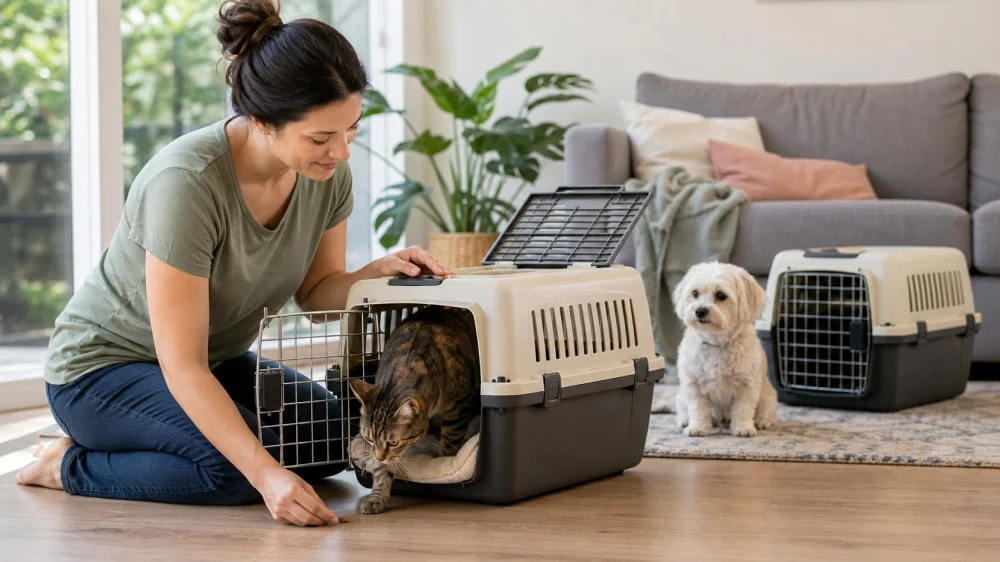
Carrier training means teaching a pet that entering, resting in, and travelling inside a secure carrier predicts safe, rewarding experiences. Leave the carrier out with the door secured open, add familiar bedding, reward voluntary approaches, and progress from brief entry to closing, lifting, and short travel. Stop before panic and ask the veterinary team for an individual plan when fear is intense.

Choose and inspect the carrier
Select a carrier sized so the pet can stand in a natural posture, turn, and lie comfortably without sliding through excessive space. It needs secure latches, ventilation, a solid floor, and material suitable for cleaning. For cats, a top opening or removable top can make entry and veterinary examination easier.
Check fasteners, door hinges, seams, handles, and the base before every trip. Confirm that the top cannot separate when lifted. Add a nonslip washable pad. Do not use a damaged cardboard carrier for routine travel or attach a leash to an interior point that could entangle the animal.

Make it part of the room
Place the open carrier in a quiet area where the pet already rests. Secure or remove the door so it cannot swing shut unexpectedly. Add familiar bedding that does not snag claws. Let the pet investigate without being pushed inside. Some animals need days or weeks before the carrier becomes ordinary furniture.
Offer treats, toys, meals, or calm attention near the carrier, then gradually move rewards inside. Use what is safe and motivating for that pet’s diet and behaviour. Do not withhold necessary food or create conflict between animals. In multi-pet homes, provide space so one animal cannot guard the carrier or entrance.
Train in small steps
Reward a look toward the carrier, an approach, one paw inside, full entry, and relaxed waiting. Use short sessions and end while the animal is successful. A cue such as “carrier” can be added after entry happens reliably. Never chase, corner, shout, or repeatedly pull a resisting animal through a narrow door.
Watch body language. Panting unrelated to heat, flattened posture, frantic escape, freezing, growling, swatting, drooling, or refusal of normally valued food can indicate fear or distress. Back up to an easier step. Behaviour differs by species and individual; a veterinary professional can rule out pain or illness that makes handling difficult.
Add closing and movement
When the pet enters comfortably, touch the door, move it slightly, close it for one second, and reopen before concern. Increase time gradually. Next, lift one side, set it down, carry it across the room, and return it to the familiar place. Reward calm behaviour after each manageable step.
Practice at varied times so the carrier does not predict only veterinary visits. Keep it level and support the base with both hands. Do not swing it by a single handle. A light cover can reduce visual stimulation for some cats, but keep ventilation clear and monitor temperature and breathing.
Practice safe vehicle placement
Begin with the pet in the secured carrier inside a stationary, comfortable vehicle. Progress to starting the engine, a short driveway movement when lawful, then brief trips. Never leave an animal unattended in a vehicle. Temperature can become dangerous quickly even when outdoor weather seems mild.
Follow the carrier manufacturer’s vehicle-restraint instructions. Feline veterinary guidance recommends a stable floor position behind a front seat unless using a carrier and restraint arrangement designed and tested for seat-belt use. Keep the carrier away from airbag deployment zones and prevent sliding, tipping, or luggage impact.
Prepare for appointment day
Confirm the veterinary appointment, parking or arrival procedure, feeding instructions, and any clinician-prescribed previsit medication. Do not give sedatives, supplements, pheromone products, or motion-sickness medicine without veterinary guidance. Prepare identification, records, absorbent bedding, a spare towel, and cleaning supplies.
Allow extra time and keep the household calm. If the pet will not enter safely, call the clinic rather than escalating a struggle or skipping needed care without advice. The team may suggest a different carrier approach, reschedule nonurgent care, or give a veterinarian-directed handling and medication plan.
Frequently asked questions
How long does carrier training take?
It ranges from a few sessions to several weeks or longer. History, pain, temperament, reinforcement, and training pace matter. Work backward from planned travel and keep the carrier available.
Should I store the carrier in a closet?
Routine visibility often helps it lose its “trip-only” meaning. If space requires storage, bring it out well before appointments and rebuild positive associations.
What if there is an emergency before training is complete?
Safety and urgent veterinary care take priority. Call the clinic for rapid handling advice, use a secure carrier, protect yourself from bites and scratches, and resume gradual training after the event.
Sources and limitations
The Feline Veterinary Medical Association supports carrier acclimation, opportunities to hide, and secure motor-vehicle transport in its 2025 cat transportation position statement. Its positive-reinforcement guidance explains how carrier training can reduce fear and caregiver stress. Dogs, exotic pets, injured animals, and airline travel need species- and carrier-specific veterinary or transport guidance.
Conclusion and next steps
Inspect the carrier, leave it open in a familiar room, and reward voluntary entry. Add door movement, lifting, and vehicle practice one calm step at a time. Contact the veterinary team early when fear, pain, motion illness, aggression, or urgent travel makes a standard training plan unsuitable.





 Bell Equine Surgery & Lameness5.0 (4 reviews)
 Eckert Veterinary Hospital4.0 (122 reviews)
 Midway Small Animal Clinic4.0 (142 reviews)
 Tail-End Vetcare4.0 (77 reviews)
 Pet Planet The Plant4.0 (84 reviews)
 VIP Petcare Vaccination Clinic5.0 (1 reviews)
 How to Stop Cats from Scratching Furniture: Effective Tips and Products
 Dog Drinking More Water? What Owners Should Track
 Tips for Helping Your Dog Adjust to a New Baby
 How to Monitor Pet Vital Signs at Home Safely
 Best Dog Harnesses for Adventure Activities
 Cat Straining to Urinate? Treat a Possible Blockage as an Emergency