
Pet-Friendly Houseplant Check: Identify Before You Buy
On this page
Quick answer
Do not buy a houseplant for a pet household from appearance or a vague “pet-friendly” sign alone. Get the scientific name and common names, verify the exact plant for each animal species in a current veterinary poison resource, save the label and receipt, and plan for fallen leaves, flowers, bulbs, soil additives, and curious behavior. If exposure may have occurred, call a veterinarian, emergency animal hospital, or animal poison control center promptly.
This U.S. guide supports prevention, not diagnosis or treatment. Toxicity can vary with the animal, dose, plant part, product, and individual health. A database may not include every plant or every possible reaction.

Start with exact plant identity
A pet-friendly plant check matches a correctly identified plant to the animal species that lives in the home before purchase or placement. Common names alone can be misleading because unrelated plants may share a name, and one plant may be sold under several names.
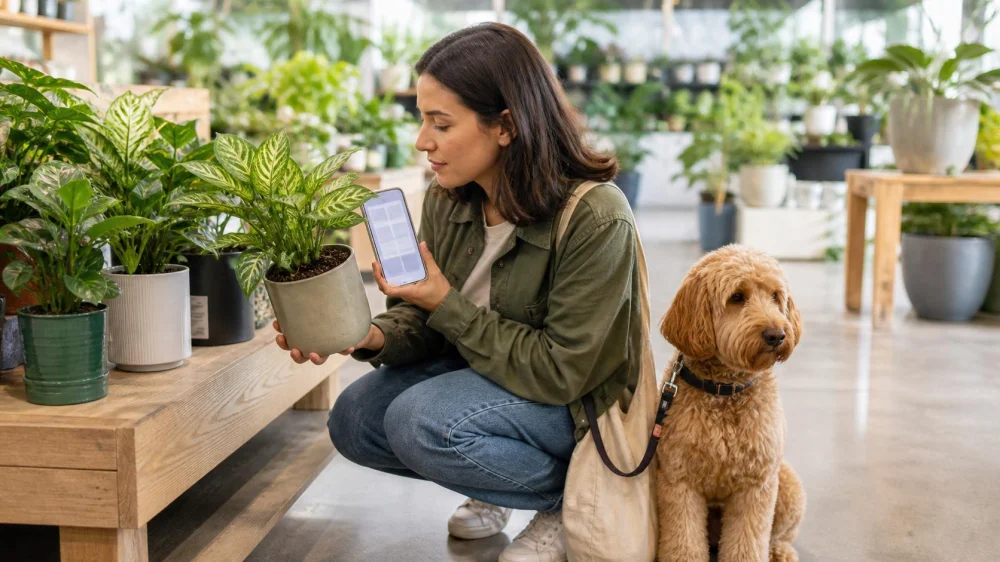
Ask the seller for the scientific name, including genus and species when available, and photograph the full label. Compare the plant’s leaves, stems, flowers, and growth habit with a reliable source. A phone photo-identification app can suggest possibilities but should not be the only evidence for a safety decision.
If identification remains uncertain, do not bring the plant into the pet’s environment. Ask a knowledgeable nursery professional, horticultural extension resource, veterinarian, or poison-control specialist for help.

Check the correct animal species
A plant may have different risk information for dogs, cats, horses, birds, reptiles, or small mammals. Filter the resource for every species in the household and consider visiting animals.
The ASPCA Toxic and Non-Toxic Plants database can be searched by common or scientific name and animal species. The ASPCA notes that its list is not all-inclusive and that plant appearance can vary, so absence from a result is not proof of safety.
“Non-toxic” also does not mean edible or harmless in every amount. Chewed plant material, fibrous leaves, soil, fertilizer, pesticide residue, decorative stones, or a broken pot can create other problems.
Consider the whole plant and product
Check which parts may be relevant: leaf, stem, sap, flower, pollen, fruit, seed, bulb, tuber, bark, or root. Risk can differ by part and amount. Also review the potting mix, fertilizer, systemic plant treatment, leaf-shine product, moss, stakes, ties, and decorative container.
Ask whether the plant was recently treated and follow all product labels. Do not assume rinsing the leaves removes every residue. Keep packaging for fertilizers and treatments in secure storage away from pets.
For cut flowers or arrangements, identify every stem and filler plant. Remove fallen leaves and pollen promptly without spreading material to floors, furniture, fur, or food-preparation areas.
Plan placement and containment
- Choose a stable pot that the pet cannot easily tip.
- Keep plants away from food, water bowls, bedding, and play zones.
- Account for cats that climb, dogs that reach counters, and pets that enter rooms unexpectedly.
- Check where leaves, petals, fruit, and soil will fall.
- Avoid hanging pots over pet areas or using cords that create entanglement.
- Use a closed room or physical barrier when “out of reach” is not reliable.
- Reassess after moving furniture, adding a pet, or changing the plant’s size.
Placement reduces access but does not change toxicity. A hazardous plant that regularly drops material into the pet’s space is not made safe by putting the pot on a shelf.
What to do after possible exposure
- Separate the pet from the source. Do so without putting yourself at risk.
- Save evidence. Keep the plant label, a clear photo, any chewed material, and treatment packaging where the pet cannot reach it.
- Record facts. Note the animal species, approximate weight, plant name, part involved, possible amount, time, and observed changes.
- Call promptly. Contact the pet’s veterinarian, an emergency animal hospital, or an animal poison control center for case-specific advice.
- Follow instructions. Do not induce vomiting or give food, milk, medication, charcoal, or a home remedy unless the veterinary professional specifically directs it.
The FDA’s pet emergency contact guidance directs owners to their veterinarian, an emergency animal hospital, or an animal poison control center when a pet gets into something potentially dangerous. Do not wait for symptoms when the substance may be hazardous.
Pre-purchase checklist
- Scientific and common names obtained from the seller
- Identity confirmed beyond a photo app
- Every household animal species checked separately
- Plant part and amount limitations understood
- Soil, fertilizer, pesticide, pot, stakes, and decorations reviewed
- Falling material and pet climbing behavior considered
- Stable, inaccessible placement selected
- Label, receipt, and plant photos saved
- Veterinarian, emergency clinic, and poison-control contacts available
Limitations and safety notes
- No online plant list is complete, and names or classifications can change.
- A “pet-safe” marketing label is not a substitute for exact identification.
- Any plant material may cause irritation or digestive upset even when not expected to be life-threatening.
- Do not test safety by offering a leaf or allowing supervised chewing.
- Breathing difficulty, collapse, seizures, severe weakness, or other acute distress requires immediate emergency veterinary help.
Frequently asked questions
Is a plant safe if it is not in a toxic-plant database?
Not necessarily. The plant may be misidentified, absent from the database, or lack enough information. Ask a veterinarian or poison-control specialist when uncertain.
Can I rely on the nursery’s “pet-friendly” tag?
Use it as a lead, then verify the scientific name and each animal species through a current veterinary resource.
Does putting a plant on a high shelf make it safe?
No. Pets can climb, pots can fall, and leaves or pollen can drop. Use a realistic access assessment and a physical barrier when needed.
What information should I have when calling?
Prepare the pet’s species, approximate weight, plant identity, part, possible amount, time, symptoms, and photos or packaging.
Should I make my pet vomit?
Not unless a veterinarian or animal poison-control professional specifically tells you to. The correct action depends on the substance, animal, time, and health.
Sources and evidence notes
This article uses the ASPCA plant database for identification and species filtering and FDA guidance for emergency contact boundaries. Both emphasize prompt professional contact for suspected harmful ingestion. The practical shopping steps are general prevention guidance and cannot determine the toxicity of an unidentified plant or treat an exposed pet.
Next steps
Before your next plant purchase, photograph the scientific name, check it for every animal species in the home, and save the result with your veterinary contacts. If the identity or risk remains uncertain, leave the plant at the store. For existing plants, complete the same inventory room by room and remove access while questions are resolved.




 Dr. Aaron Rowland4.0 (7 reviews)
 Avatar Holistic Veterinary Services4.0 (8 reviews)
 Christown Animal Hospital4.0 (386 reviews)
 VIP Petcare Vaccination Clinic0.0 (0 reviews)
 Ingalls Pet Wellness Clinic4.0 (82 reviews)
 Vetco Vaccination Clinic4.0 (39 reviews)
 Pet Toy Safety Check: When to Clean, Repair, or Retire
 How Seasonal Shedding Affects Pet Health and What to Do
 Best Dog Foods for Sensitive Digestion: Top Picks and Expert Tips | Pet & Puppy
 Pet Carrier Cleaning and Inspection: A Safe Routine Before Travel
 How to Help Dogs With Fear of Heights
 How to Help Dogs With Mobility Issues: Tips and Solutions