
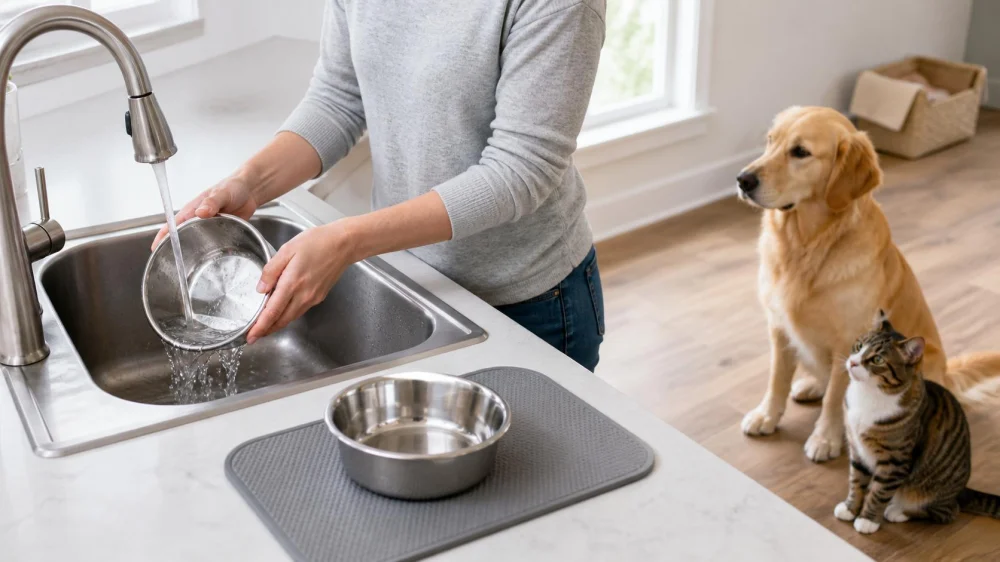
Pet Water Bowl Hygiene: Cleaning and Placement Guide
On this page
Quick answer
Give pets fresh drinking water in a bowl that is washed regularly, rinsed well, and allowed to dry. Empty old water rather than continually topping it off, remove food, hair, and outdoor debris, and clean fountains according to the manufacturer’s full disassembly schedule. Place water where the pet can reach it comfortably without competing, slipping, or standing beside litter, waste, or cleaning chemicals.
Pet water bowl hygiene is the routine of replacing water and cleaning every surface that contacts it so residue, debris, and microbial buildup do not accumulate. Hygiene supports access to appealing water, but it does not diagnose or treat changes in thirst or illness.
Agri-Pet Veterinary Service
1447 Millville Shandon Rd, Hamilton, OH 45013, USA
Why a water-bowl routine matters
Saliva, food particles, dust, fur, and residue can enter a bowl during ordinary use. A smooth-looking water surface does not show what remains on the sides, base, rim, fountain pump, or filter housing. A repeatable empty-wash-rinse-dry routine is more dependable than waiting for the bowl to look dirty.
Routine cleaning also gives an owner a useful observation point. You may notice an empty bowl, reduced use, spilled water, damaged material, slime, insects, or a change in how the pet approaches the station. These observations can help with care, but they should be interpreted with a veterinarian when drinking behavior changes.
Use a system that every household member understands. Someone should know who replaces the water, who washes the container, and how fountain parts are reassembled. Inconsistent topping-off can make it difficult to tell whether the station was actually cleaned.
Locust Trace Veterinary Clinic Lexington KY
LexingtonFayette CountyKentucky
3591 Leestown Rd, Lexington, KY 40511, USA
Step-by-step cleaning routine
- Move the pet away from the work area. Prevent access to cleaning products, hot water, loose fountain parts, and wet floors.
- Empty the old water. Pour it into an appropriate drain or outdoor location where it will not create a slip hazard or attract pests.
- Inspect the bowl. Check the rim, underside, seams, and base for cracks, chips, sharp edges, corrosion, deep scratches, or peeling material.
- Wash every contact surface. Use the cleaning method and product appropriate for the bowl material. Scrub the sides, bottom, rim, and exterior areas handled during filling.
- Rinse thoroughly. Remove visible soil and cleaning-product residue. Never combine household cleaners.
- Dry or drain as directed. Use a clean drying area that is separate from pet waste and raw-food preparation. Avoid wiping with a visibly used kitchen towel.
- Clean the placement area. Wipe spills and remove food or debris from the mat and floor using a pet-appropriate process. Let the surface dry to reduce slipping.
- Refill with fresh water. Use the household’s safe drinking-water source and return the bowl to its stable location.
- Observe access. Confirm that the pet can approach, stand, lower its head, and drink without the bowl sliding or another animal blocking the way.
Wash hands after handling pet bowls and before preparing human food. Households with young children, pregnant people, older adults, or immunocompromised members should ask their healthcare professional and veterinarian about any additional hygiene precautions appropriate to the home.
Choose a practical bowl location
A good water station is easy for the pet to reach and easy for the household to maintain. Evaluate the location from the pet’s height and normal route.
- Stable footing: use a level surface and manage splashes so people and pets do not slip.
- Low stress: avoid noisy appliances, doors that swing into the pet, busy hallways, or corners where another animal can trap access.
- Separation from contamination: keep the bowl away from litter boxes, pet toilets, waste bins, chemical storage, and areas where shoes or outdoor equipment deposit dirt.
- Comfortable access: choose a height and bowl shape suitable for the individual animal, mobility, face shape, and any veterinary guidance.
- Temperature control: avoid locations where the water can become very hot, freeze, or sit in strong sunlight for long periods.
- Visibility: place at least one station where caregivers can notice spills and refill needs without startling the pet.
In a multi-pet home, one station may not provide reliable access for every animal. Separate stations can reduce crowding and make it easier to observe preferences. The number and location should match the animals, home layout, and any behavior or veterinary plan.
Bowls, fountains, and shared water stations
Open bowls
Choose a stable bowl with an intact, cleanable surface. Replace damaged items that cannot be cleaned effectively or that expose sharp edges. Material preferences vary; ask a veterinarian when a pet has a skin condition, contact sensitivity, or special feeding setup.
Pet fountains
A moving stream does not make a fountain self-cleaning. Unplug it safely, then follow the manufacturer’s instructions for disassembly, washing, rinsing, pump care, filter replacement, and reassembly. Hidden channels and impellers can hold residue even when the reservoir looks clear.
Automatic reservoirs
Inspect both the dispensing tray and storage container. Continually adding water without emptying and cleaning the full system can leave older water and residue in contact surfaces. Check seals, vents, and dispensing action according to the instructions.
Outdoor bowls
Outdoor water can collect soil, insects, plant material, wildlife contamination, or lawn products. Place it away from treated areas, inspect it often, and replace water after contamination. An outdoor station does not replace dependable indoor access unless the pet’s care plan and living arrangement specifically address it.
When to contact a veterinarian
A dirty or poorly placed bowl may discourage use, but do not assume it explains a meaningful change in drinking. Contact a veterinarian promptly when a pet:
- Drinks much more or much less than usual.
- Cannot keep water down, repeatedly vomits, or refuses water.
- Shows weakness, collapse, breathing difficulty, marked lethargy, or another urgent change.
- Appears painful when lowering the head or approaching the station.
- Has a dry mouth, abnormal gums, or other suspected dehydration signs.
- Has a medical condition or medication plan that includes specific water instructions.
Do not restrict or force water unless a veterinarian has given specific instructions for that pet. When calling, describe the change, its timing, other symptoms, recent food or medication changes, and whether the pet can drink and urinate normally.
Limitations and important notes
- This article provides general pet-care hygiene guidance for U.S. households, not a veterinary diagnosis or a universal cleaning schedule.
- Follow the exact bowl, fountain, filter, pump, detergent, and dishwasher instructions. Not every material or part tolerates heat or the same cleaners.
- Do not use essential oils, fragrances, or disinfectants around drinking equipment unless a veterinarian and product instructions confirm safe use.
- Water needs and preferred station design vary by species, size, diet, health, mobility, environment, and individual behavior.
- Reptiles, birds, small mammals, farm animals, and exotic pets may need species-specific water systems beyond this dog-and-cat household guide.
Sources and evidence notes
The recommendations reflect broad household and veterinary hygiene principles: provide dependable access to fresh water, clean contact surfaces, prevent cross-contamination, maintain equipment as designed, and observe changes in drinking behavior. Exact schedules and products should follow equipment instructions and the pet’s veterinary care plan.
Useful references include the fountain or bowl manufacturer’s care instructions, filter replacement guidance, the pet’s written veterinary plan, and local water advisories. A veterinarian is the appropriate source for interpreting thirst changes, selecting special-access equipment, or managing fluid instructions for a medical condition.
Frequently asked questions
Can I just top off my pet’s bowl?
Topping off can be convenient between checks, but it should not replace emptying and washing the bowl. Old water and residue remain on contact surfaces when only more water is added.
Does a filter mean a pet fountain needs less cleaning?
No. Filters have a defined role and replacement interval, while the reservoir, pump, tubing, and drinking surface still need cleaning. Follow the complete manufacturer schedule.
Can pet bowls go in the dishwasher?
Only if the bowl manufacturer identifies the item as dishwasher safe and gives placement or temperature instructions. Hand-wash parts that are not approved for the machine.
Should water be next to the food bowl?
Some pets drink comfortably there; others prefer separation. Choose a low-stress, clean location and observe actual use. Multiple locations may help in larger or multi-pet homes.
What should I do if algae or slime keeps returning?
Fully disassemble and clean the equipment as directed, replace due filters, review light and heat exposure, and inspect damaged surfaces. If buildup persists despite correct care, contact the manufacturer or replace equipment that cannot be maintained.
Next steps
Empty the current water, inspect the entire bowl or fountain, and complete a full wash-rinse-dry cycle according to its instructions. Clean the mat and floor, refill with fresh water, and watch each pet approach the station. Write down the routine so every caregiver knows when the container—not just the water—was last cleaned.


 Vetco Total Care Animal Hospital4.0 (134 reviews)
 Paws Inn Animal Hospital4.0 (234 reviews)
 SNiP Vet - Spay Neuter in Phoenix4.0 (272 reviews)
 43rd Avenue Animal Hospital4.0 (427 reviews)
 PetVet365 Pet Hospital Jeffersonville IN/North Louisville4.0 (108 reviews)
 Animal Clinic of Glasgow4.0 (394 reviews)
 Behind the Scenes of a Veterinary Clinic: What Happens in 24 Hours
 How to Help Dogs With Fear of Cars Using Safe Training Methods
 How Much Does a Vet Visit Cost? Realistic Price Ranges for Pet Owners
 Signs Your Dog Needs Immediate Veterinary Care: What Every Pet Owner Should Know
 How to Monitor Pet Vital Signs at Home Safely
 Evaluating New "Functional" Pet Foods: Trends & Claims