
How to Introduce a New Pet Sitter to Your Dog
On this page
- Quick answer
- Prepare before the meeting
- Set up a low-pressure greeting
- Practice the real routine
- Share useful care instructions
- Plan home and leash access
- Decide whether the match works
- Pet sitter introduction checklist
- Limitations and important notes
- Frequently asked questions
- Sources and evidence notes
- Next steps
Quick answer
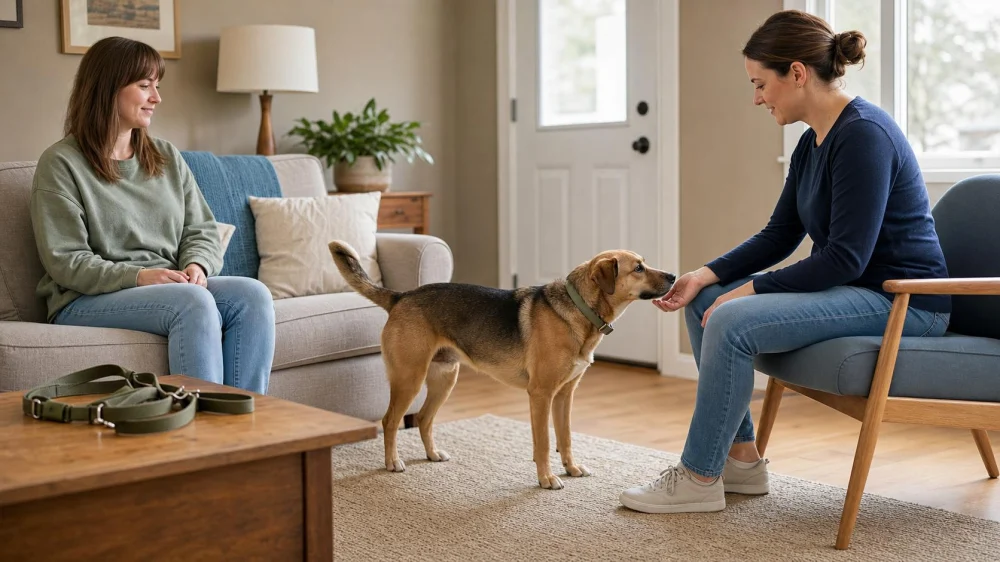
Meet the sitter while you are still available, in a calm setting where your dog has space to move away. Let the dog approach without forced touching, then practice the actual entry, leash, feeding, and exit routine. Share written instructions, emergency contacts, home rules, and known triggers. Schedule a short trial before depending on a long solo visit.
This guide is for US dog owners arranging ordinary pet sitting. A veterinarian or qualified behavior professional should guide plans for medical needs, serious fear, aggression, bite history, or escape risk.

Prepare before the meeting
Choose a time when the home is quiet and the dog has not just experienced a stressful event. Put away high-value chews, crowded toys, food bowls, and other items that may create conflict. Keep children and other pets from turning the introduction into a group event.
Tell the sitter what to expect before arrival. Share the dog's size, age, normal energy level, greeting style, handling preferences, door behavior, and any known fear or reactivity. Be direct about barking, jumping, guarding, pulling, or hiding.
Prepare the equipment the sitter would actually use: correctly fitted collar or harness, leash, waste bags, food scoop, secure gates, and keys or codes. Do not introduce unfamiliar gear during the handoff unless the dog has been trained to use it.

Desert Tropical Aquatics
Apache JunctionPinal CountyArizona
715 S Del Rio Ct, Apache Junction, AZ 85120, USA
Set up a low-pressure greeting
- Control the entry. Keep the dog safely separated while the sitter enters and the exterior door closes.
- Create space. Bring the dog into a room with an open path to retreat. Avoid corners, narrow halls, or people leaning over the dog.
- Keep body language neutral. Ask the sitter to stand or sit sideways, avoid staring, and let the dog choose whether to approach.
- Use familiar rewards only. If treats are appropriate for the dog, the owner can provide the usual type and explain how they are given.
- Pause when needed. Barking, hiding, stiff posture, repeated retreat, or escalating arousal means the dog needs more distance, not faster interaction.
- End while calm. A short neutral meeting is more useful than extending the visit until the dog becomes tired or overwhelmed.
Do not require the sitter to pet, hug, pick up, or take food from the dog's mouth. Familiarity grows through predictable, nonthreatening repetitions.
Practice the real routine
Once the initial greeting is settled, rehearse the tasks the sitter will perform. Watch how the dog responds when the sitter walks toward the leash location, opens an interior gate, handles a food container, or approaches the normal rest area.
Practice clipping the leash with the owner present only if the dog is comfortable and the sitter can do it without reaching into a crowded space. Take a short walk together on the intended route. Point out doorways, dogs, wildlife, traffic, construction, or other predictable triggers.
Have the sitter complete one normal departure and return sequence. Door control is often more important than a friendly greeting. Confirm where the dog waits, which barrier closes first, and how the sitter avoids opening two escape points at once.
Share useful care instructions
Use one dated sheet or secure digital note. Include:
- Dog's name, photo, identification and microchip details, and normal location.
- Feeding amounts, times, preparation, and foods or objects to avoid.
- Walk schedule, equipment, route limits, and weather rules.
- Bathroom routine and where waste supplies are kept.
- Household boundaries, furniture rules, gates, crates, and rooms that remain closed.
- Normal behavior and specific changes that should trigger a call.
- Owner, backup contact, veterinarian, emergency clinic, and building contact information.
- Written authorization and payment plan for emergency veterinary care when appropriate.
Do not ask a sitter to improvise medication, change a diet, diagnose symptoms, or perform a task they have not agreed and been trained to do. Demonstrate special care and provide instructions from the veterinarian.
Plan home and leash access
Give access through the smallest practical permission set. Test the key, lockbox, code, alarm, gate, parking, and building entry before the owner leaves. Do not place the home address on a loose key tag.
Store the leash and walking gear in one visible location away from the exterior door. Confirm fit before every handoff, especially if the dog has changed weight, coat length, or equipment. A backup leash can help if the primary gear is damaged, but the sitter should not switch to unfamiliar equipment casually.
Agree on communication: arrival confirmation, departure confirmation, photo frequency, and what requires an immediate call. Avoid posting the dog's location, empty-home schedule, access details, or recognizable address on public social media.
Decide whether the match works
A good sitter does not need instant affection from the dog. Look for calm observation, respect for instructions, honest questions, safe door handling, and willingness to decline a task outside their experience.
Postpone solo care if the dog cannot be safely leashed, repeatedly attempts to escape, guards access points, threatens or bites, or remains highly distressed. More introductions may help some dogs; others need a different care arrangement designed with a qualified professional.
The sitter should also feel safe. Do not minimize a bite history, handling sensitivity, or medical requirement to secure a booking. A clear “not a match” is safer than an unsupported promise.
Pet sitter introduction checklist
- The sitter knows the dog's normal greeting style and triggers.
- The first meeting happens in a quiet space with an exit path.
- The dog chooses whether to approach.
- Leash, feeding, doors, gates, and return routines are practiced.
- Equipment fits and is familiar to the dog.
- Written instructions and emergency contacts are current.
- Keys, codes, alarms, and communication methods are tested.
- A short trial occurs before a long absence.
- Both owner and sitter agree the plan is safe.
Limitations and important notes
Dog behavior can change when the owner leaves, at night, during storms, around wildlife, or when the dog is ill or in pain. One friendly meeting does not guarantee every future visit will be easy.
Use professional guidance for dogs with serious separation distress, aggression, repeated escape, bite history, or specialized medical care. Local licensing, insurance, vaccination, and service requirements vary; verify the sitter's credentials and terms directly.
Frequently asked questions
Should the sitter give treats at the first meeting?
Only if the owner confirms the treats and method are appropriate. Tossing a familiar treat at a comfortable distance may be less pressure than hand-feeding.
What if my dog barks the whole time?
Increase distance and shorten the meeting. Do not punish or force contact. Seek behavior guidance if the response is intense or persistent.
Should I leave while the sitter is there?
A brief planned trial can reveal how the dog responds, but set secure door procedures and remain close enough to return if needed.
Can the sitter use their own leash?
Use equipment that fits the dog and has been checked in advance. Familiar owner-provided gear is usually easier to verify.
How many meetings are enough?
There is no universal number. Base the decision on the dog's response, task complexity, sitter experience, and results of a short trial.
Sources and evidence notes
The approach reflects broad low-stress animal-handling and pet-care practice: allow choice, avoid forced contact, rehearse routines, control doors, use familiar equipment, and provide written emergency information.
No behavioral diagnosis, medical instruction, credential guarantee, or universal introduction timeline is assumed. The dog's veterinarian, qualified behavior professional, and the sitter's service agreement control specialized needs.
Next steps
Schedule a short meet-and-greet while you are home. Prepare the dog's normal equipment and a one-page routine, then practice entry, leash handling, one short walk, and departure. If both dog and sitter remain comfortable, book a brief trial visit before relying on the arrangement for travel or a long workday.






 Phoenix Dog Cat Bird Hospital4.0 (794 reviews)
 Arizona Bird Store4.0 (878 reviews)
 Pet Supplies Plus Lexington4.0 (211 reviews)
 Lynn Veterinary Hospital4.0 (254 reviews)
 Pet Planet College Park4.0 (438 reviews)
 Critters Without Litters4.0 (47 reviews)
 How to Help a Pet Deal with Anxiety After Trauma
 How to Check & Clean Your Pet’s Paws After Outdoor Walks
 Moving With a Pet? Update the Microchip Contact Record
 Signs of Canine Respiratory Infections to Watch For in Dogs
 Why Dogs Drink Water After Every Meal: Causes and Insights
 Why People Regret Delaying Pet Dental Care: The Importance of Early Action