
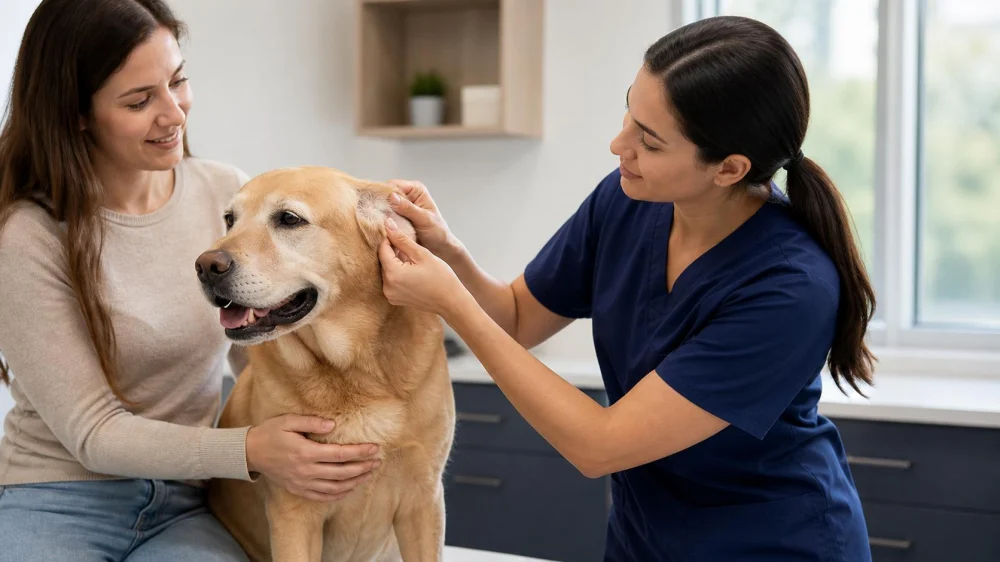
Pet Ear Scratching: Protect, Record, and Call the Vet
On this page
Quick answer
Occasional scratching can happen, but repeated ear scratching or head shaking, pain, odor, redness, discharge, hair loss, or swelling warrants a veterinary call. Do not put vinegar, peroxide, human products, leftover medicine, or objects into the canal. Prevent vigorous self-trauma only with a veterinarian-approved method, record which ear is affected and when signs began, and seek urgent care for balance changes, severe pain, facial changes, or rapid swelling.

Arizona Canine Orthopedics & Sports Medicine
ScottsdaleMaricopa CountyArizona
7410 E Pinnacle Peak Rd, Scottsdale, AZ 85255, USA
Why the same outward signs can have different causes
Ear discomfort may be associated with inflammation, infection, parasites, allergies, a foreign object, growth, injury, or deeper ear disease. Scratching and head shaking can also injure the face or cause a painful fluid-filled ear-flap swelling. Color or odor alone cannot identify the cause, and safe treatment can depend on an otoscopic exam, samples, and whether the eardrum is intact.
This guide is for United States dog and cat caregivers noticing new or increased ear scratching or head shaking. It supports observation and prompt veterinary contact, not diagnosis, ear flushing, medication selection, foreign-body removal, or delay of care. Species, age, prior disease, current medicines, and severity change the plan.

Practical checklist
- Which ear is affected, when signs began, frequency of scratching or shaking, sleep disruption, crying, avoidance, and response to touch without provoking pain.
- Visible redness, swelling, heat, hair loss, scratches, crusts, moisture, wax, discharge, blood, odor, ear-flap shape, or a soft fluid-filled area.
- Head tilt, stumbling, circling, unusual eye movement, facial asymmetry, inability to blink, hearing change, pain opening the mouth, vomiting, or collapse.
- Recent swimming, bathing, grooming, travel, boarding, outdoor plants, ticks, contact with other animals, new foods, seasonal itching, or skin changes elsewhere.
- Previous ear disease, allergies, surgery, eardrum concerns, prescribed cleaners or medicines, treatment dates, missed doses, and prior test results.
- Any product already applied, including cleaner, oil, peroxide, vinegar, human drops, pesticide, or leftover prescription, with amount and time.
- Clear photos or short videos captured without restraint or flash distress, plus the regular veterinarian and nearest emergency clinic contact.
Step-by-step plan
- Move the pet to a calm area and prevent rough rubbing on furniture or vigorous self-injury without pinning, wrestling, or manipulating a painful ear.
- Observe from outside the ear only, compare both sides without inserting anything, and stop if the pet shows pain, fear, aggression, or escalating distress.
- Do not clean or medicate unless the veterinarian has given current instructions for this pet and this episode; tell the clinic about anything already used.
- Record onset, side, frequency, odor, discharge, swelling, balance, appetite, activity, recent water exposure, skin signs, and relevant medical history.
- Call the veterinarian promptly and describe the signs so the team can set timing and advise whether an approved protective collar is appropriate until the visit.
- Transport in a secure carrier or restraint system, keep the pet from scratching during travel as advised, and bring current products and medication records.
- Follow the prescribed schedule and recheck plan exactly, reporting worsening signs or difficulty giving treatment rather than using another pet's medicine.
Log the affected side, onset, scratching and shaking frequency, visible changes, odor and discharge, pain behavior, balance or facial signs, recent swimming or grooming, other skin problems, products applied, medications, photos, clinic advice, examination findings, sample results, doses, response, and scheduled recheck.
Limits and important notes
Do not insert cotton swabs, tweezers, fingers, or tools into the canal; flush an acutely painful ear; pull a suspected plant awn; or use vinegar, hydrogen peroxide, essential oils, human drops, pesticide, or leftover veterinary medicine. Do not assume dark debris proves mites or that odor proves a specific infection.
Seek urgent veterinary care for head tilt, loss of balance, unusual eye movement, facial weakness, severe pain, open wounds, uncontrolled bleeding, rapid ear-flap swelling, suspected foreign material, toxin exposure, collapse, or rapidly worsening illness. Call ahead so the clinic can guide safe transport and arrival.
Frequently asked questions
Can I clean the ear before the appointment?
Ask the veterinarian first. Cleaning can hurt, obscure diagnostic samples, push material deeper, or use an unsafe product when the eardrum status is unknown.
Does dark debris mean ear mites?
Not by itself. Mites, yeast, bacteria, mixed disease, and other material can look similar; veterinary examination and microscopy help distinguish them.
Can I use medication left from a previous infection?
No unless the veterinarian specifically directs it for this episode. Causes and eardrum condition can differ, and an old or contaminated product may be unsafe.
Why is the ear flap suddenly puffy?
Vigorous shaking or scratching can contribute to an ear-flap hematoma. It can be painful and needs veterinary assessment along with the underlying cause.
Should healthy ears be cleaned routinely?
Needs vary. Follow the veterinarian's pet-specific plan because unnecessary or incorrect cleaning can irritate an otherwise healthy ear.
Sources and evidence
Cornell University College of Veterinary Medicine's current guidance on itchy ears and ear cleaning, and the Merck Veterinary Manual's current dog and cat owner guidance on external, middle, and inner ear disease support prompt examination, cause-based treatment, and caution with cleaners. Your veterinarian's examination and instructions govern this pet's care.
Conclusion and next steps
Prevent self-injury without manipulating the ear, record the affected side and visible or behavioral changes, avoid cleaning and unapproved products, and call the veterinarian. Use urgent care for balance, facial, severe pain, rapid swelling, bleeding, foreign-body, or systemic signs, then complete the prescribed course and recheck.






 Feeders Pet Supply4.0 (142 reviews)
 VIP Petcare Vaccination Clinic5.0 (1 reviews)
 PetVet Vaccination Clinic5.0 (1 reviews)
 VIP Petcare Vaccination Clinic0.0 (0 reviews)
 Oasis Animal Hospital4.0 (1087 reviews)
 PetSmart Veterinary Services - North Scottsdale (Frank Lloyd Wright)5.0 (49 reviews)
 How Long Can Pets Go Without Water? Risks & Guidelines
 Dangerous Foods for Pets: What to Avoid Feeding and How to Keep Your Pet Safe
 Why Is My Dog Limping? Common Causes and When to See a Vet - Pet & Puppy
 Best Dog Harnesses for Everyday Activities
 Pet Water Bowl Hygiene: Cleaning and Placement Guide
 How to Train Dogs to Be Calm at Home Alone