
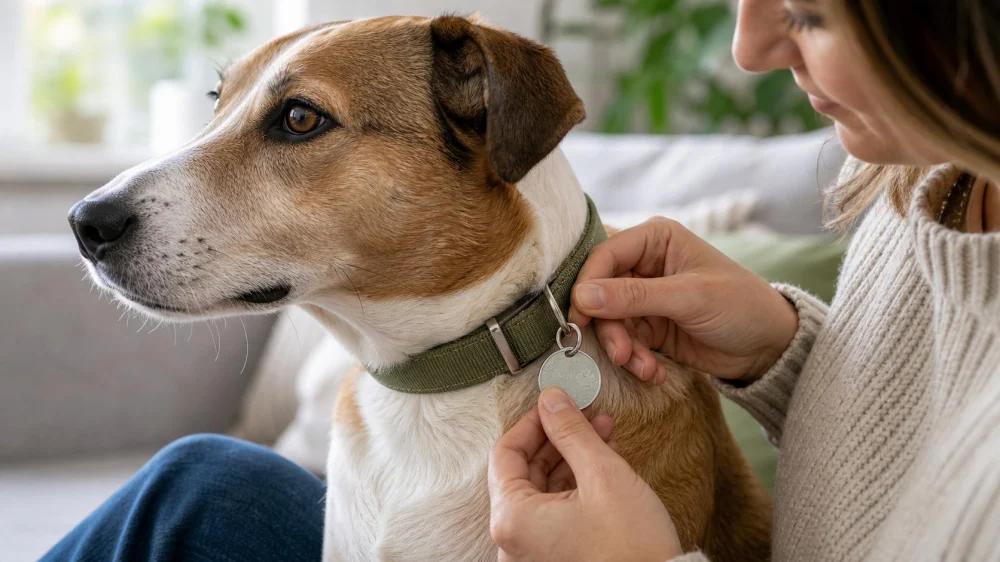
Pet ID Tag Check: Keep Contact Details Legible and Current
Table of contents
Quick answer
Read every line of the pet's tag in ordinary light and call the listed phone number to confirm it is current. Check both sides for wear, inspect the split ring and collar attachment, and replace anything bent, sharp, loose, or unreadable. Use a visible tag together with a registered microchip and any legally required license or rabies tag. Keep backup contacts and microchip registration updated.

Palm Valley Animal Clinic
GoodyearMaricopa CountyArizona
2520 N Litchfield Rd, Goodyear, AZ 85395, USA
Build layers of identification
A visible tag can let a neighbor call immediately without special equipment. A microchip provides permanent identification under the skin but must be scanned and linked to current registry details. A license or rabies tag may be legally required and may connect to a local record. These layers support one another.
A microchip is not GPS and does not continuously transmit location. It contains an identification number read by a compatible scanner. The registry uses that number to find owner contact information. If the record is missing or outdated, the chip's value is reduced.
Ask the veterinarian to scan the chip during routine care and confirm the number matches your records. Register it with the appropriate database and update changes. Keep the chip number and registry contact in a secure place.
Indoor pets also need identification. Doors, windows, carriers, emergencies, visitors, and disasters create escape opportunities. A plan should match the species, health, and safety needs.

Inspect the tag
Remove the collar only when the pet is safely contained. Wipe the tag with a material-safe cloth and read it in daylight. Shallow engraving can look clear at one angle and disappear at another. Ask another person to read it without help.
Check:
- Name and phone numbers
- Every digit and area code
- Wear on front and back
- Sharp edges, cracks, and bent corners
- Rust or separation in the split ring
- Noise or weight that bothers the pet
- Contact with skin or other tags
- Interference with harnesses, carriers, or bowls
Call or text the number using another phone. Confirm that voicemail is available and does not reveal unnecessary private information. If using a QR tag, test the code from different devices and make sure a plain phone number remains available when practical.
Photograph the tag for replacement reference, but do not post the image publicly if it contains personal details or a scannable code. Store it with the pet's records.
Choose useful details
Space is limited. A mobile number that is monitored is usually more useful than an old home number. Consider a second trusted contact when the primary person may be unreachable. Include the pet's name only if comfortable; opinions differ about its security value.
A brief message such as “microchipped” can prompt a finder to request scanning. Medical wording should be accurate and concise. Do not put a full medication list, detailed diagnosis, or home security information on a public tag. Emergency care decisions belong with veterinary professionals.
Use the current city or address only when it aids return and privacy risks are acceptable. Travelers may prefer a phone-focused tag plus temporary destination information. Replace a temporary handwritten tag if moisture or friction makes it unreliable.
Do not assume a decorative shape is safe. Size, weight, edge finish, durability, and contrast matter. Lettering should remain readable after normal wear.
Check attachment and fit
Inspect the collar, buckle, stitching, D-ring, and tag ring. A strong tag on a cracked collar will not stay with the pet. Replace worn parts according to the manufacturer rather than improvising with wire, staples, or key rings that do not close safely.
Collar fit depends on species, body shape, age, coat, and escape risk. Ask the veterinarian or qualified trainer for individualized guidance. Cats often use safety-release designs; dogs may need specific collars or harnesses for walking. An ID collar is not automatically the right tool for restraint.
Multiple tags can strike each other and wear the engraving. A tag silencer or collar-mounted plate may help if compatible, but ensure it does not hide legally required information or create a snag. Inspect after adding accessories.
Remove or modify collars only under safe supervision and the pet's established plan. Pets housed in crates, kennels, or play groups may face snag risks that require facility-specific policies. Ask the veterinarian, boarding facility, or trainer.
Update the record
Review identification after a move, phone change, ownership change, adoption, travel plan, new caregiver, collar replacement, or registry change. Add it to an annual veterinary or household safety calendar.
Keep a current photograph showing the pet's whole body, face, and distinctive markings. Record species, breed description, color, sex, age, weight, microchip number, registry, veterinarian, and relevant behavior. Store records securely but make them accessible to an authorized caregiver during an emergency.
If a pet is lost, contact local shelters, animal control, microchip registry, veterinarian, and community resources promptly. Mark the registry record appropriately. Beware of people who demand money or verification codes before providing credible evidence that they found the pet.
When the pet returns, update the record and inspect the tag and collar for damage. Tell the veterinarian about injuries or concerning symptoms rather than assuming the animal is fine.
Limitations
This guide cannot select a collar, implant a microchip, define local licensing law, or direct a lost-pet search for every community. Species, behavior, medical status, and environment change the plan.
Follow veterinarian advice, product instructions, microchip registry procedures, shelter guidance, and local animal-control rules. Privacy and security preferences are individual.
Sources and evidence
American Veterinary Medical Association client materials explain that a microchip contains a unique identification number, does not replace visible identification or required tags, and depends on current registry contact information. AVMA emergency-preparedness guidance also recommends identification and current owner contact information.
- AVMA National Check the Chip Day brochure
- AVMA microchipping client brochure
- AVMA pet emergency preparedness guide
Frequently asked questions
Does a microchip replace an ID tag?
No. A visible tag allows immediate contact, while a microchip requires scanning. Required license or rabies tags may also apply.
Is a microchip a GPS tracker?
No. Standard pet microchips carry an identification number read by a scanner; they do not broadcast the pet's location.
How often should a tag be checked?
Inspect it routinely and after changes, travel, rough play, grooming, or collar replacement. Test the contact number rather than only looking at it.
Should the pet's name be on the tag?
That is a personal choice. Prioritize a reliable contact number and accurate required information within the available space.
What if the tag is readable but the ring is rusty?
Replace the attachment with a compatible secure part. A legible tag is useless if it separates from the collar.
How do I update a microchip?
Use the registry associated with the chip number. Ask the veterinarian or shelter for help identifying it, then follow the registry's verified process.
Conclusion
Pet identification works best as a maintained system. Keep a readable visible tag, a secure attachment, a registered microchip, required local tags, current contacts, and recent photos. Test the phone number and registry instead of assuming they are correct. A five-minute review can remove the avoidable delay between a pet being found and a trusted person being reached.




 United Pet Care, LLC3.0 (57 reviews)
 Fish Happens4.0 (426 reviews)
 Dr. Julia Stricker Esposito, D.V.M4.0 (35 reviews)
 Frankfort Animal Clinic4.0 (519 reviews)
 Eastside Animal Hospital4.0 (227 reviews)
 PetVet Vaccination Clinic4.0 (2 reviews)
 How to Build a Diet Plan for Overweight Dogs
 How to Help Dogs With Fear of Cars Using Safe Training Methods
 Pet Vaccination Schedule: Essential Shots Your Pet Needs to Stay Healthy
 How to Help Your Dog With Reluctance to Exercise
 Best Dog Food for Sensitive Skin and Coat Health
 What to Know About Canine Pancreatitis and Care Tips