
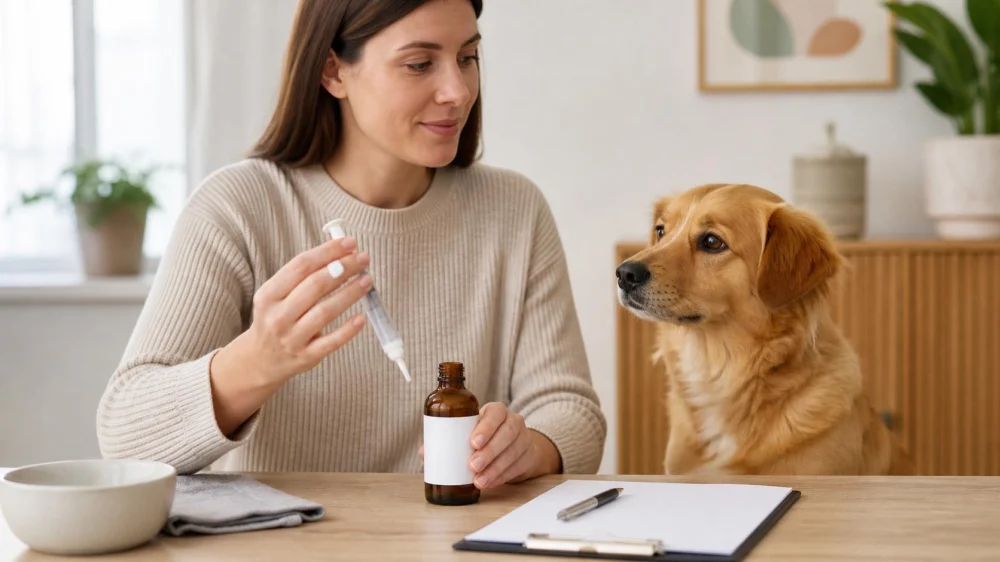
Pet Liquid Medication: Measure, Label, Syringe, and Log
On this page
Quick answer
Before giving pet liquid medicine, match the pet, drug, concentration, prescribed amount, route, and time to the current veterinary label. Use only the supplied or veterinarian-approved oral syringe with the correct units. Measure at eye level, give it exactly as demonstrated, and log the dose immediately. Never repeat a spilled or uncertain dose until the veterinary team tells you what to do.
This guide supports medication handling after a veterinarian has prescribed and demonstrated treatment. It does not calculate doses or replace the label and veterinary instructions.
Lovet Pet Health Care - Las Sendas
6747 E McDowell Rd #101, Mesa, AZ 85215, USA
Verify before every dose
Read the full label rather than identifying a bottle by color. Confirm:
- the pet's name and species;
- drug name and concentration;
- prescribed amount and measurement unit;
- how often and how long to give it;
- oral, ear, eye, skin, or another route;
- whether to shake, refrigerate, give with food, or avoid certain products;
- expiration or discard date and storage instructions.
Concentration matters. A refill or different bottle can contain a different amount of drug per milliliter even when the drug name is the same. If the appearance, label, syringe, or directions changed, pause and call the veterinary clinic or dispensing pharmacy.
North Kenilworth Veterinary Care
342 W McDowell Rd, Phoenix, AZ 85003, USA
Measure with the correct device
An oral dosing syringe measures liquid without a needle and provides markings for a specific unit, commonly milliliters. Household teaspoons, kitchen spoons, droppers, and syringes from another medicine can produce the wrong amount.
- Wash and dry your hands and place the bottle on a stable, well-lit surface.
- Shake or mix only when the label directs it.
- Use the supplied bottle adapter and syringe if provided.
- Draw liquid slowly and hold the syringe at eye level.
- Align the correct edge of the plunger with the prescribed marking as demonstrated by the clinic.
- Remove large air gaps according to the dispensing instructions without squirting medicine around the room.
- Recheck the unit. Do not convert between teaspoons, milliliters, pounds, kilograms, or syringe scales yourself.
FDA-approved pet medicines can include product-specific syringes. FDA client information for some oral suspensions warns that different syringe sizes serve different animal-weight ranges and that only the provided syringe should be used. The lesson is product-specific: use the exact device and directions for your pet's bottle.
Give only as demonstrated
Ask the veterinary team to demonstrate safe positioning for your pet and medication. Some liquids are placed in the cheek pouch in small amounts; others may be mixed with a specific quantity of food if the label allows. Do not aim a syringe toward the back of the throat or force liquid into a struggling animal.
Use a calm, non-slip location and a second trained helper only when the clinic recommends it. Stop if the pet has trouble breathing, coughs repeatedly, becomes highly distressed, or cannot swallow. Avoid crushing tablets into liquid or mixing medicine into a full meal unless the veterinarian approves; you may not know how much was consumed.
Clean the syringe as directed and let it dry away from children and animals. Do not transfer medicine into an unmarked container.
Keep a dose log
Record the date, scheduled time, actual time, amount, initials of the caregiver, whether the full dose was given, food instructions followed, and any observed concern. Log immediately so two caregivers do not dose the same pet twice.
Keep the current prescription label with the log. At handoff, say what was actually given rather than only what was scheduled. Mark refills and bottle concentration changes clearly. If multiple pets use medicine, store each bottle and syringe in separate labeled containers.
Spills, missed doses, and reactions
If medicine spills, the pet spits some out, or you cannot tell how much was swallowed, do not automatically give another full dose. Call the clinic with the drug name, concentration, prescribed amount, approximate amount lost, and time. The correct response depends on the medication.
For a missed or late dose, follow the veterinarian's written instructions or call. Do not double the next dose unless specifically directed. If the wrong pet, wrong amount, wrong route, or human medicine was given, contact a veterinarian or animal poison resource promptly.
Seek urgent veterinary help for collapse, seizure, severe breathing difficulty, facial swelling, repeated vomiting, extreme weakness, or any reaction the label identifies as an emergency. Bring the bottle and syringe.
Safety limits
Never give a pet medicine from a human medicine cabinet without veterinary advice. FDA warns that some common human drugs can be dangerous or fatal to pets. Do not use leftover medication from another pet or a previous illness.
Keep medicines in original child-resistant containers and away from children and animals. Follow label directions for refrigeration, light, disposal, and accidental human exposure. Do not flush or discard a drug unless the label, pharmacy, or approved take-back guidance permits it.
FAQ
Is one milliliter the same as one household teaspoon?
No. Do not use kitchen spoons or perform a conversion. Use the approved syringe and label units.
Can I reuse an oral syringe?
Only for the same medicine and pet when the veterinary team or product instructions allow it. Clean, dry, and replace it as directed.
What if the markings rub off?
Stop using it and obtain a correctly marked replacement from the clinic or pharmacy.
Should I redose if my pet drools afterward?
Not without advice. Drooling does not reveal how much was swallowed; call with the medication details.
Can I mix the liquid into food?
Only if the label or veterinarian approves and explains how to confirm the entire dose is eaten.
Sources and evidence
FDA's animal drug FAQ explains veterinary oversight, client information sheets, and dangers of using human medicines in pets. FDA-approved client labeling for an oral suspension illustrates why the supplied product-specific syringe and directions matter.
Next steps
Ask the clinic to watch you measure one practice dose, photograph the current label, and start a shared log. Store the bottle with its own syringe. If any element changes or a dose becomes uncertain, pause and call before giving more.


 Artistic Aquariums, Inc4.0 (407 reviews)
 BloomingPaws Clinic Resort & Spa4.0 (398 reviews)
 PetVet Vaccination Clinic5.0 (1 reviews)
 Decatur Veterinary Clinic4.0 (283 reviews)
 Alta Mesa Animal Hospital4.0 (584 reviews)
 U-Vet Animal Clinic4.0 (236 reviews)
 Genetic Testing for Pets: What You Can Learn & What’s Useful
 Vet Tips for Preventing Puppy Ear Infections
 How to Start a Pet Garden with Safe Plants
 3D Imaging & Pet Diagnostics: What You Should Know
 Gastrointestinal Upset in Pets: Diarrhea, Vomiting, and What to Feed
 Best Practices for Pet Grooming Frequency by Breed: Keeping Your Pet’s Coat Healthy