
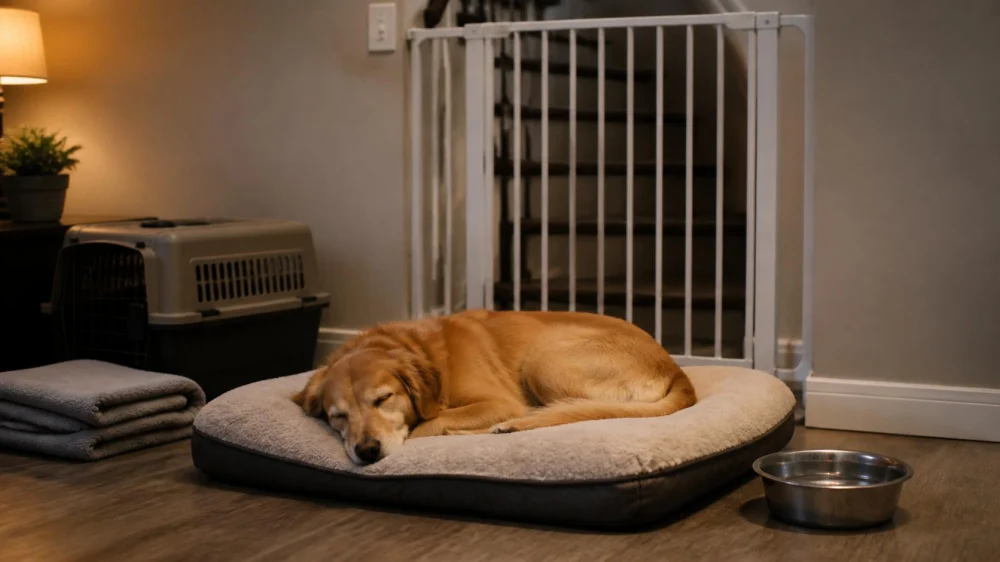
Pet Recovery After Anesthesia: Prepare a Quiet, Restricted Space
On this page
Quick answer
Before bringing a pet home after anesthesia, prepare a warm, quiet floor-level recovery area away from stairs, jumping, other animals, and unsupervised outdoor access. Follow the veterinary discharge sheet for feeding, water, medicines, incision care, activity, cone use, and monitoring. Expect only what the clinic says is normal for that pet and procedure. Call promptly for breathing trouble, inability to wake normally, repeated vomiting, worsening pain, bleeding, collapse, or any listed emergency sign.

Why it matters
Sedation, reduced coordination, nausea, pain, temperature changes, and altered behavior can continue after discharge. A controlled environment and written monitoring plan reduce falls, medication errors, and delayed recognition of problems.
This United States pet health guide is educational. Recovery varies by species, age, health, procedure, anesthetic drugs, and complications. The veterinary team's discharge instructions and emergency thresholds control.
Practical checklist
- Choose a floor-level space with non-slip footing, comfortable temperature, and dim light.
- Block stairs, furniture jumping, pools, balconies, and pet-door access.
- Separate other pets and supervise children.
- Set out the prescribed cone, carrier, leash, bedding, and measured food and water plan.
- Organize labeled medicines and a dose log without pre-filling uncertain doses.
- Inspect the incision only as directed and know the normal appearance.
- Save daytime and after-hours veterinary contacts.
Step-by-step plan
- Receive a spoken and written handoff covering alertness, food, water, elimination, pain, medicines, activity, and wound care.
- Carry or guide the pet using the clinic's safe transport instructions and a secured carrier or restraint.
- Settle the pet on the floor and supervise walking until coordination returns as expected.
- Offer food and water only in the amount and timing directed; do not add human food or unapproved remedies.
- Give each medication exactly as labeled and record time, dose, and response.
- Check breathing, comfort, alertness, walking, vomiting, urination, and the procedure site at the stated intervals.
- Call the clinic if recovery differs from the written expectations rather than waiting for the next day.
Log discharge time, alertness, breathing, food and water, vomiting, elimination, walking, pain signs, incision observations, medicines and doses, cone use, activity, calls, photos if requested, and follow-up.
Limits and warning signs
Sleepiness can be expected, but it should not be used to dismiss difficulty waking or abnormal breathing. Human pain relievers, sedatives, stool products, and food should not be given without veterinary approval.
Use emergency veterinary care for breathing difficulty, collapse, uncontrolled bleeding, seizures, blue or very pale gums, or inability to wake. Call the veterinarian promptly for persistent severe distress, repeated vomiting, worsening pain, incision changes, or delayed eating and drinking beyond the stated plan.
Frequently asked questions
Can my pet use stairs after anesthesia?
Restrict stairs and jumping for the period the veterinarian specifies; coordination may be impaired.
Should I feed a full meal?
Follow the discharge amount and timing; smaller portions may be advised depending on the procedure.
How sleepy is too sleepy?
Use the clinic's timeline and call if the pet cannot be easily awakened or recovery worsens.
Can I give an over-the-counter medicine?
No unless the veterinarian explicitly approves the exact product and dose for your pet.
Sources and evidence
American Animal Hospital Association guidance emphasizes individualized anesthesia recovery and discharge instructions, restricted activity, avoidance of unauthorized medicines or human food, and veterinary contact for prolonged distress, vomiting, delayed eating or drinking, or persistent abnormal sleepiness and unsteadiness.
Conclusion and next steps
Prepare a quiet floor-level restricted area, obtain the written discharge plan and emergency thresholds, log medicines and recovery signs, and call promptly whenever the course differs from the clinic's expectations.



 Banfield Pet Hospital4.0 (154 reviews)
 Machine clothing co5.0 (2 reviews)
 Southern Indiana Equine4.0 (122 reviews)
 Eye Care for Animals - Avondale4.0 (212 reviews)
 VIP Petcare Vaccination Clinic0.0 (0 reviews)
 Petco4.0 (1409 reviews)
 How to Choose the Right Pet Supplement Brand: Essential Tips for Pet Owners
 How Social Media Influences Pet Care Decisions and Pet Product Choices
 Pet Limping After Activity: Restrict Movement and Call the Veterinarian
 What to Ask Before Boarding Your Pet: Vet & Staff Questions | Pet & Puppy
 The Mental Health of Pets: Signs They Need Emotional Support
 How to Use Behavior Tracking Apps to Monitor Your Pet’s Mood | Pet & Puppy