
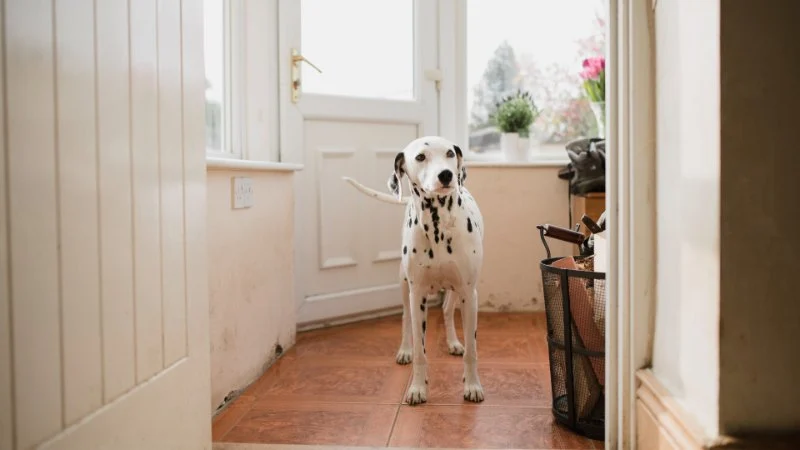
- 1. Why Dogs Should Wait at Doors and Gates
- 2. Understanding Your Dog’s Behavior
- 3. Training Methods for Teaching Your Dog to Wait
- 4. Common Challenges and How to Overcome Them
- 5. Real-Life Experiences and Success Stories
- 6. Why Choose Pet & Puppy for Dog Training
1. Why Dogs Should Wait at Doors and Gates
Teaching your dog to wait at doors and gates is not just about good manners; it is also crucial for safety. When your dog rushes out the door or gate, they might be in danger of traffic or other hazards. By teaching them to wait calmly, you help them stay safe and well-behaved.
Furthermore, this behavior helps establish boundaries and a sense of control for both you and your dog. It’s an essential part of their obedience training that reinforces trust and respect between you and your furry companion.

2. Understanding Your Dog’s Behavior
Before starting any training, it’s important to understand why dogs exhibit certain behaviors. Dogs are naturally excited by stimuli like doors and gates, as they associate these areas with freedom and exploration. When you open a door or gate, your dog might instinctively move towards it, driven by excitement or curiosity.
Understanding this instinct is key to effective training. Dogs respond best when their actions are redirected or modified gradually, rather than being punished for their excitement. By being patient and consistent, you can teach your dog how to respond appropriately in these situations.

3. Training Methods for Teaching Your Dog to Wait
There are several proven methods for training your dog to wait at doors and gates. Here are a few effective strategies:
1. Use Positive Reinforcement
Positive reinforcement is one of the most effective training techniques for dogs. This involves rewarding your dog with treats, praise, or affection when they exhibit the desired behavior. In the case of teaching your dog to wait, you can reward them when they remain calm and do not rush toward the door or gate.
Start by standing near the door with your dog on a leash. When the door opens, calmly ask your dog to stay or wait. If they remain in place, reward them immediately with a treat or praise. Gradually increase the difficulty by opening the door wider or waiting longer before rewarding them.
2. Teach "Stay" and "Wait" Commands
Training your dog to stay or wait in one place is a foundational command that will help with door and gate training. Start by practicing "stay" in a quiet room with few distractions. Once your dog is proficient at staying in one spot, practice the same command near the door.
For the "wait" command, use it when you're about to open the door or gate. If your dog moves or tries to go out, gently guide them back and reinforce the "wait" command. Be patient and consistent with your training, as it may take time for your dog to learn that they must wait before proceeding.
3. Consistency and Routine
Consistency is key when training your dog. Use the same commands, gestures, and rewards every time you practice. This helps your dog understand what is expected of them. Establish a routine where you consistently practice waiting at doors and gates during walks, playtime, and when entering or leaving the house.
4. Common Challenges and How to Overcome Them
Training your dog to wait at doors and gates can be challenging, especially for dogs with high energy levels or excitement. Here are some common hurdles and tips for overcoming them:
1. Excitement and Impatience
Some dogs become overly excited when they see a door open or when it's time for a walk. To manage this excitement, ensure that your dog is calm before you start the training session. If your dog becomes too excited, take a break and allow them to calm down before continuing.
2. Distractions
At first, it can be difficult for your dog to focus on the "stay" or "wait" command if there are distractions. Start practicing in a quiet area and gradually add distractions, such as people walking by or the sound of the doorbell, as your dog becomes more proficient in staying in place.
3. Lack of Consistency
Inconsistent training can confuse your dog and slow down the learning process. Make sure everyone in the household is on the same page with the commands and training techniques to provide clear, consistent instructions for your dog.
5. Real-Life Experiences and Success Stories
Many dog owners have successfully trained their dogs to wait at doors and gates. Take Sarah and her dog Max, for example. She shares, "Max used to bolt out the door every time it was opened, and it was a struggle to get him to stop. But with consistent training using positive reinforcement, he's now able to wait calmly before stepping outside. It’s made our walks so much more enjoyable!"
Similarly, Jake and his dog Daisy had success with using the "stay" command near their front gate. "Daisy used to get so excited when we approached the gate, but now she waits calmly until I give her the signal to go through. It’s made trips to the park much more pleasant!"
6. Why Choose Pet & Puppy for Dog Training
At Pet & Puppy, we specialize in effective dog training techniques for dogs of all ages and temperaments. Our experienced trainers will work with you and your dog to develop customized training plans that address your specific needs, including teaching your dog to wait at doors and gates.
Whether you're dealing with an excitable puppy or an adult dog with bad habits, our expert trainers are here to help you create a more obedient and well-behaved dog. Visit Pet & Puppy today to get started with your dog training journey!





 Union Pointe VetCare5.0 (39 reviews)
 Petco4.0 (955 reviews)
 VCA Lakota Hills Animal Hospital4.0 (158 reviews)
 Towne Square Animal Hospital4.0 (283 reviews)
 Arrow Animal Hospital PLC: Payton Willow DVM4.0 (52 reviews)
 Animal Hospital-Nicholasville: Fox Julie DVM4.0 (33 reviews)
 Ear Infections in Dogs: Prevention, Treatment, and Aftercare
 How to Tell if Your Pet Is in Pain (When They Can’t Speak)
 How to Teach Pets to Sleep on Their Own Bed
 Choosing Wet vs Dry Food: When Each Is Best
 3D Imaging & Pet Diagnostics: What You Should Know
 How to Use Behavior Tracking Apps to Monitor Your Pet’s Mood: A Guide for Pet Owners