
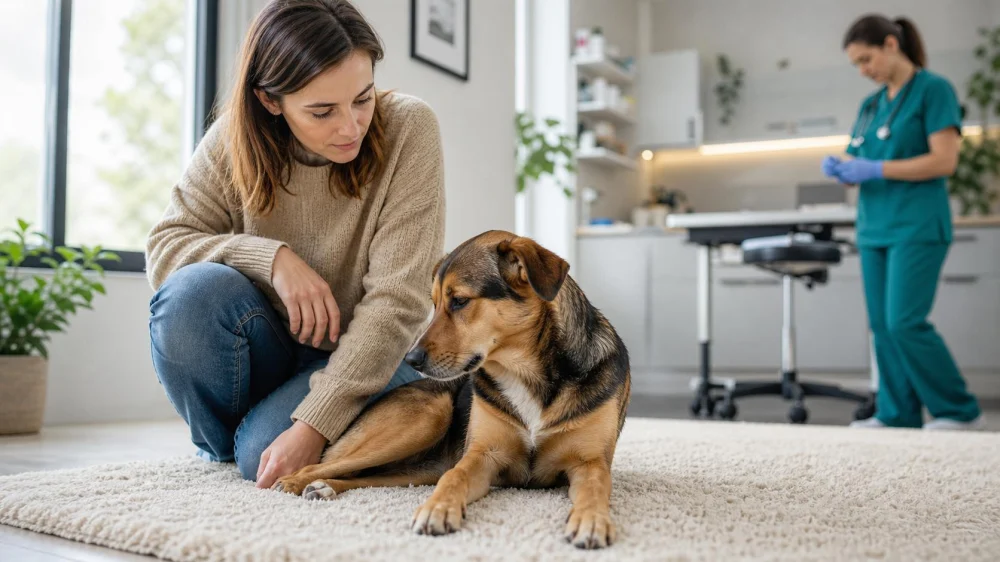
Dog Suddenly Limping? When to Call a Veterinarian
On this page
Quick answer
A dog that suddenly limps should stop running, jumping, and rough play. Call an emergency veterinary clinic now after major trauma, if your dog cannot stand or use the limb, or if there is an obvious deformity, severe pain, heavy bleeding, collapse, pale gums, breathing trouble, or sudden loss of limb function. For a mild weight-bearing limp, restrict activity and contact your regular veterinarian for guidance.
Lameness means abnormal use of a limb because of pain, weakness, or a problem involving the paw, muscles, joints, bones, tendons, ligaments, nerves, or skin.
This guide is for United States dog owners deciding on a safe first response. It cannot diagnose the cause or replace an examination.

Emergency signs
Go to an emergency veterinarian, or call while arranging transport, when the limp follows a vehicle strike, significant fall, animal attack, or other major trauma. Treat these signs as urgent:
- The dog cannot stand, cannot walk without help, or suddenly drags a limb.
- The leg looks bent at an unusual angle, a bone may be exposed, or swelling develops rapidly.
- Pain is intense, worsening, or accompanied by repeated crying, trembling, or inability to settle.
- Bleeding does not stop with steady direct pressure.
- The dog collapses, has pale or blue-tinged gums, struggles to breathe, seems disoriented, or has a seizure.
- You suspect a snake bite, toxin exposure, or medication ingestion.
Visible injury is not required for a serious problem. Neurologic and internal injuries can affect walking without an obvious wound.

A safe at-home check
- Restrict movement. Put your dog in a small, quiet area. Use a leash for brief bathroom trips.
- Watch before touching. Note which leg is affected, whether the paw touches the ground, and whether the limp began suddenly or gradually.
- Look at the paw only if safe. Check visually for a torn nail, cut pad, swelling, or an easily seen object between the toes. Stop if your dog resists or shows pain.
- Do not test the joints. Do not bend, straighten, massage, or repeatedly press a painful limb. Manipulation can worsen some injuries.
- Record useful evidence. If it is safe, take a short video of the walk before the limp changes at the clinic.
A painful dog may bite even when normally gentle. Keep your face away from the mouth and do not force an examination.
What to do next
When to choose emergency care: choose it for any red flag above, major trauma, inability to bear weight, or rapid deterioration.
When a same-day veterinary call is appropriate: call promptly when the dog can stand but the limp is new, persistent, recurrent, or clearly painful. Puppies, senior dogs, and dogs with existing orthopedic or neurologic disease may need a lower threshold for examination.
When brief observation may be reasonable: a mild limp that improves quickly while the dog remains bright, comfortable, and able to bear weight may be monitored under veterinary guidance with strict rest. If it continues into the next day, returns, or worsens, arrange an examination.
Do not give ibuprofen, naproxen, acetaminophen, aspirin, leftover veterinary medicine, or another pet's prescription unless a veterinarian specifically directs it for this dog. Human pain relievers can be dangerous, and medication can complicate diagnosis or interact with other treatments.
Safe transport
- Call the clinic ahead so staff can advise you and prepare for arrival.
- Carry a small dog while supporting the chest and hips; minimize movement of the injured limb.
- For a larger dog that can walk, use a leash and a towel or blanket as gentle support if advised.
- If the dog cannot walk, use a firm board or folded blanket as a stretcher with another person helping.
- Do not muzzle a dog that is vomiting, struggling to breathe, unconscious, or has a facial injury. Ask the clinic for handling advice.
What to tell the veterinarian
Prepare a concise timeline: when the limp began; sudden versus gradual onset; known falls, play, exercise, or collisions; the affected leg; whether weight bearing changes; and any swelling, wound, broken nail, appetite change, feverish behavior, or lethargy. List all medications and supplements. A video from home can be useful because excitement may change a dog's gait at the clinic.
Limitations and important notes
A limp can come from a minor paw irritation, but it can also reflect a fracture, ligament injury, joint disease, infection, or neurologic problem. Appearance alone cannot reliably identify the cause. Imaging or other testing may be needed after a physical examination.
Do not remove a deeply embedded object, splint a limb without professional direction, or delay care because the dog briefly seems better. Advice from a veterinary professional who knows the dog's history should take priority over general online guidance.
Frequently asked questions
Can a dog sleep off a limp?
Rest may make a mild strain look better, but sleep does not identify the cause. Use the red flags above, restrict activity, and contact a veterinarian if the limp persists, recurs, or worsens.
Should I walk my dog to see whether the limp improves?
No. Avoid a test walk, stairs, jumping, and play. Observe only the minimum movement needed to identify the problem and take the dog outside on a leash.
Can I put ice on the leg?
Because the cause may be unclear, call your veterinarian before applying heat, ice, wraps, or topical products. Never force an uncomfortable dog to tolerate treatment.
What if my dog stops limping before the appointment?
Keep the video and notes, and ask the clinic whether the appointment is still recommended. Intermittent lameness can still require evaluation.
Sources and evidence notes
This guidance follows general veterinary first-aid principles and triage information from university veterinary hospitals and established veterinary hospital networks. Those sources consistently emphasize activity restriction, careful handling, veterinary assessment for persistent or painful lameness, and emergency care for major trauma, inability to walk, breathing difficulty, collapse, pale gums, or obvious fracture. Recommendations vary by the individual dog and local clinic capacity.
Next steps
Stop strenuous activity, check for emergency signs, and call the appropriate veterinary clinic. If transport is needed, minimize movement and ask for help on arrival. A clear timeline and short gait video can help the veterinary team focus the examination.



 Fish World Aquarium4.0 (232 reviews)
 Tropical Treasures4.0 (919 reviews)
 Teacup Yorkies home0.0 (0 reviews)
 Perry County Animal Hospital4.0 (169 reviews)
 Moore's Animal Care Clinic4.0 (805 reviews)
 Hope For Pets4.0 (9 reviews)
 How to Manage Multi-Pet Households: Tips for Feeding, Space, and Harmony
 What to Do After a Pet Emergency: Step-by-Step Guide
 Dealing with Separation Anxiety in Dogs & Cats: Tips and Solutions
 How to Tell if Your Pet Is in Pain (When They Can’t Speak)
 How to Keep Senior Dogs Active and Healthy
 How to Help Dogs With Fear of Cars Using Safe Training Methods