
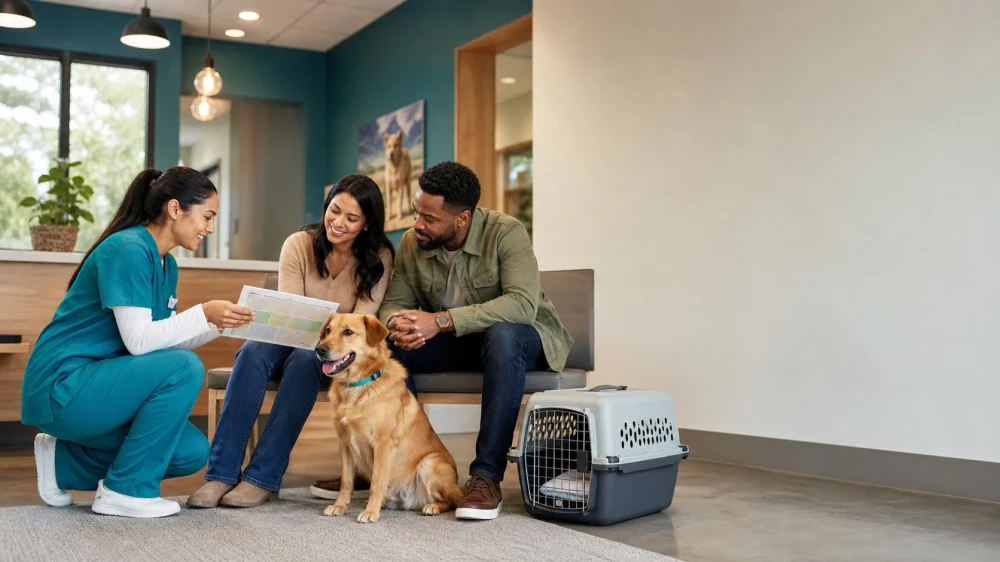
Emergency Veterinary Clinic Plan: Verify Before a Crisis
Choose and verify an emergency veterinary clinic before your pet needs one. Confirm the facility's current hours, species served, emergency capabilities, intake process, location, payment expectations, and backup options directly with the clinic. Save your regular veterinarian's records and safe transport supplies. During a possible emergency, call the clinic while preparing to leave and follow professional instructions; do not delay urgent care to finish a checklist or search for a home remedy.
In this guide
Identify Primary and Backup Options
Ask your regular veterinarian where patients are directed after hours. Identify a primary emergency clinic and at least one backup in case the first is full, closed, too far away, or unable to treat your pet's species or condition. Exotic pets, birds, large animals, and wildlife may require specialized arrangements.
Map the route from home and from places your pet visits often. Check travel time at different hours, parking, building entrance, and accessibility. A search result's “open” label can be outdated, so do not rely on it as the sole source of current availability.

Lovet Pet Health Care - Arrowhead Ranch
GlendaleMaricopa CountyArizona
6750 W Deer Valley Rd c101, Glendale, AZ 85310, USA
Verify the Clinic Directly
Call the facility using a number from its official site or another reliable source. Confirm whether it is open continuously or only during listed shifts, whether appointments or referrals are required, and whether intake can pause during capacity limits. Ask which species it treats and what advanced services are available on site.
Verify the legal facility name, address, and the credentials or oversight required in your state. State veterinary boards generally provide license information for veterinarians, although facility regulation varies. A professional title in advertising is not a substitute for a current record.
Ask how triage works. Emergency hospitals usually prioritize medical urgency rather than arrival order, so a stable patient may wait while a critical patient is treated. Learn where to wait and how staff communicate updates.
VCA Elliot Park Animal Hospital
1700 E Elliot Rd Suite 19, Tempe, AZ 85284, USA
Know When to Seek Urgent Help
Potential emergencies include difficulty breathing, collapse, uncontrolled bleeding, severe trauma, seizures, inability to urinate, major swelling, suspected poisoning, heat illness, repeated unproductive retching, or a rapid change in responsiveness. This list is not complete, and signs can have many causes.
If you are unsure, call a veterinarian or emergency clinic promptly and describe what you see. Do not use an online article to diagnose the pet. Call emergency services if people are also in danger, and approach an injured or frightened animal carefully because pain can change behavior.
Call Ahead Effectively
State your name, species, approximate age and weight, main signs, when they began, and whether breathing or consciousness is affected. Mention known trauma, pregnancy, chronic conditions, medications, allergies, and possible exposure to a substance. Follow staff questions and avoid guessing.
Ask whether to come immediately, where to enter, and whether the clinic recommends any steps during transport. Do not give food, water, human medicine, leftover pet medicine, or induce vomiting unless a veterinarian or qualified poison professional specifically directs it for this animal and exposure.
Prepare Safe Transport
Keep an appropriate carrier, leash or harness, towels, and basic cleanup supplies accessible. Practice calm carrier entry before a crisis. Secure the animal during travel; a loose, distressed pet can distract the driver or escape when a door opens.
When possible, have one adult drive and another observe and communicate with the clinic. Do not speed or use a phone while driving. For a large, painful, or immobile animal, ask the clinic for handling guidance before moving it. Never put yourself in a position to be bitten, crushed, or exposed to traffic.
Organize Records and Payment
Maintain a concise record with the pet's identification, veterinarian, diagnoses, medication names and doses, allergies, vaccines when relevant, recent laboratory or imaging summaries, and owner contact details. Keep it current and accessible on a phone and in a printed copy, but protect private account information.
Ask the emergency clinic about exam deposits, estimates, payment timing, financing options, and insurance documentation. Emergency costs vary with testing, treatment, hospitalization, time, and region. Request an estimate after assessment and ask staff to explain changes, recognizing that urgent stabilization may precede a complete plan.
Pet insurance often reimburses rather than paying the clinic directly. Verify waiting periods, exclusions, deductibles, preauthorization, and claim documents with the insurer before an emergency.
Plan for Possible Poison Exposure
Save your veterinarian, emergency clinic, and a reputable animal poison-control service. Some poison services charge a consultation fee. Keep product packaging, ingredient lists, medication labels, plant photos, and the approximate exposure time when safe to do so.
Do not taste, sniff closely, or handle an unknown substance without protection. Do not induce vomiting or give milk, oil, salt, charcoal, or another remedy unless a qualified professional directs it. Some interventions can worsen burns, aspiration, or other injury.
Review the Plan Regularly
- Primary emergency clinic and a separately verified backup
- Current phone numbers, hours, address, entrance, and route
- Species and service capability confirmed directly
- Regular veterinarian contact and record-sharing method
- Carrier, leash, towels, and safe transport plan ready
- Current medication, allergy, diagnosis, and identification record
- Payment method, insurance terms, and emergency budget reviewed
- Animal poison-control contact saved
- Care authorization for sitters or family documented
Recheck the plan every six months, after a move, when the pet's health changes, and before travel. Clinic hours, ownership, services, and capacity procedures can change. Share the plan with anyone responsible for the pet.
Frequently Asked Questions
Should I call before driving to an emergency vet?
Call when possible so staff can advise on urgency, capacity, entrance, and transport. Do not let an unanswered phone or a lengthy search delay care for an obvious emergency; proceed according to your established plan.
Can an emergency clinic refuse a stable patient?
Capacity, services, referral practices, and legal duties vary. A clinic may redirect patients it cannot safely accommodate. That is why a verified backup is important.
What records matter most?
Medication and allergy details, major diagnoses, recent results, veterinarian contact, identification, and a concise history are useful. The treating team decides what is relevant.
Is telehealth enough during an emergency?
Remote guidance may help with triage in some circumstances, but it cannot provide every examination, test, or treatment. Follow the veterinarian's direction for in-person care.
How do I plan while traveling?
Locate clinics that treat your species along the route and at the destination, verify them directly, carry records and medication, and confirm any interstate health-document requirements.
A useful pet emergency plan is short, verified, and easy to act on. It supports—not replaces—professional veterinary judgment. Symptoms, services, laws, and individual risks vary, so contact a licensed veterinarian for advice about your pet and seek urgent help when directed.


 Val Vista Animal Hospital4.0 (549 reviews)
 pets0.0 (0 reviews)
 VCA Lakota Hills Animal Hospital4.0 (158 reviews)
 Lovet Pet Health Care - White Tanks4.0 (861 reviews)
 PetVet Vaccination Clinic5.0 (1 reviews)
 FACE Low-Cost Animal Clinic4.0 (2536 reviews)
 How to Create a Pet Health Journal: Metrics to Track for Better Pet Care
 How 3D Printing Is Being Used in Pet Prosthetics & Surgery
 How to Vet a New Pet Food Brand: 10 Warning Flags
 Why Is My Dog Panting After Light Activity? Causes & What to Do
 Best Dog Food for Sensitive Skin and Coat Health
 How to Introduce a New Kitten or Puppy to Kids