
How to Prepare a Dog's Health Information for Boarding
In this guide
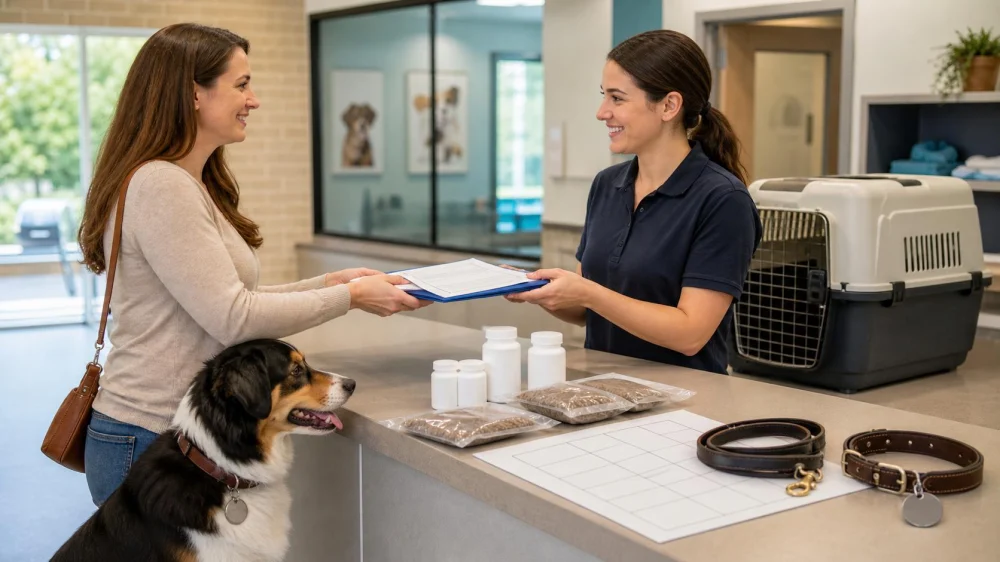
Boarding staff care for many animals on structured schedules, so verbal instructions given at a busy front desk are easy to mishear or simplify. A concise written health packet tells the facility what the dog needs, how the veterinarian has prescribed it, which behavior changes the handling plan, and who may authorize emergency care. The goal is not a long biography. It is a current, specific handoff that the facility has agreed it can safely carry out.
Quick answer
Before boarding, ask the facility for its vaccination, parasite prevention, medication, food, arrival, emergency, and illness policies. Schedule veterinary care early enough to meet individualized health and facility requirements. Provide current records, medication in original labeled containers, exact feeding and administration instructions, behavior and handling risks, primary and backup contacts, veterinary and emergency-hospital details, identification information, and signed treatment authorization. Report any coughing, sneezing, vomiting, diarrhea, fever, skin issue, parasite, or recent exposure before arrival.

Start with the facility and veterinarian
Facilities differ in the species and medical needs they accept. Some have veterinary supervision; others provide routine husbandry but cannot administer injections, manage complex diseases, or monitor a medically fragile dog. Ask about staffing overnight, training, isolation space, air handling, exercise groups, cleaning, security, fire and evacuation plans, and access to veterinary care.
Request written requirements and deadlines. Vaccines do not create immediate protection the moment they are given, and a dog may need a series or booster schedule determined by age, history, risk, product, law, and veterinary guidance. Do not vaccinate solely from an internet checklist at the last minute. Give the veterinarian the facility's policy and travel dates so they can advise what is medically appropriate.
The American Animal Hospital Association (AAHA) recommends visiting a boarding facility, ensuring the pet is healthy and identification is current, checking required vaccinations, and discussing diet, medication, behavior, and stress with the veterinarian.
Gather current health records
Provide the dog's full name, date of birth or age, breed or description, sex and reproductive status, weight, microchip number, primary veterinarian, and insurance information if relevant. Include diagnoses, allergies and reactions, surgical history relevant to care, mobility or sensory limitations, and recent illness or exposure.
Vaccination proof should come from the veterinary record and show the vaccine, administration date, and due date as the facility requires. A handwritten note from the owner or photo of a tag may not be accepted. Include current parasite prevention and test results only when requested or clinically relevant.
Keep the packet focused. The facility does not need every lab result from the dog's life, but it does need enough information to recognize risks and contact the veterinarian. Mark the date each page was verified. Ask the clinic and facility to use secure transmission rather than sending records through an unapproved channel.
Prepare medications safely
Tell the facility about every prescription, over-the-counter product, supplement, topical, injection, and as-needed medicine. Confirm in advance which products staff can administer, at what times, by which routes, and for what fee. A facility that cannot meet the schedule is not the right placement for that stay.
Bring medicines in original pharmacy or veterinary containers with the dog and owner names, drug, strength, directions, prescriber, and expiration visible. Do not place loose pills in a bag or pre-mix them into multiple meals unless the facility specifically instructs and the veterinarian approves. Count the supplied doses with staff and include a small authorized reserve according to facility policy.
For each medicine, write the exact dose, route, clock time, relation to food, storage requirement, and what staff should do if the dog refuses, vomits, spits it out, or a dose is late. “Give as needed” is not an executable instruction. Copy the veterinarian's indication and limits, and provide the clinical contact for questions.
Never start a new sedative or change a dose for boarding without the veterinarian. If an anxiety medicine is prescribed, the veterinarian may recommend a trial at home to observe response before the stay.
Write a precise feeding plan
List the food brand and exact product, measured amount, meal times, preparation, bowl or slow feeder, water routine, and accepted treats. Include food allergy, intolerance, prescription-diet status, and signs of a previous reaction. “One scoop” is ambiguous unless the actual marked scoop accompanies the food and staff agree to use it.
Pack food in the format the facility requests. Some prefer individual sealed meal bags; others require the original package for ingredient and lot information. Bring enough for the stay plus an approved reserve for delay. Label containers without covering the commercial product label.
Do not introduce a new diet immediately before boarding if it can be avoided. Stress and abrupt diet changes can both affect appetite and stool. Tell staff what is normal for the dog and how long a missed meal can continue before they must call, based on veterinary guidance—especially for puppies, toy breeds, diabetes, or other medical conditions.
Describe behavior without euphemisms
Accurate behavior information protects the dog and staff. Describe triggers and observable responses:
- fear of men, uniforms, hats, handling, loud sounds, or confined spaces;
- guarding of food, toys, bed, kennel, or people;
- history of growling, snapping, biting, climbing, digging, or escaping;
- dog-dog play style and known conflicts;
- separation distress, barrier frustration, or noise sensitivity;
- pain-associated sensitivity or areas not to touch;
- cues the dog reliably knows and rewards that work.
“Protective,” “dominant,” and “sometimes grumpy” do not tell a handler what happens. A statement such as “freezes and growls when feet are touched; do not trim nails” is actionable. Disclose bite history and professional behavior plans. The facility may recommend private handling, veterinary boarding, or another arrangement.
Do not ask staff to flood a fearful dog with triggers or use punishment. Provide the veterinarian or qualified behavior professional's current handling instructions.
Set emergency contacts and authorization
List the owner's travel numbers, local backup, primary veterinarian, nearest or preferred emergency hospital, and any specialist managing an active condition. The backup contact should be reachable, know the dog, understand financial limits, and have actual authority under the facility's form.
Read the emergency policy before signing. Clarify:
- which symptoms trigger a call or immediate transport;
- which veterinary hospital the facility uses after hours;
- who transports and stays with the dog;
- what care can begin if the owner cannot be reached;
- how estimates, deposits, and payment are handled;
- whether pet insurance preauthorization or claim details are needed;
- how the backup contact makes decisions.
A spending limit is not a medical plan. Discuss likely scenarios and legal authorization with the facility and veterinarian, and leave a payment method through a secure approved process rather than writing card details on a general instruction sheet.
Know what symptoms must be reported
Call the facility before arrival if the dog has coughing, sneezing, nasal discharge, vomiting, diarrhea, fever, lethargy, reduced appetite, a new rash, open wound, fleas, ticks, or known exposure to an ill animal. AAHA infection-control guidance flags acute respiratory and gastrointestinal signs and recent exposure to boarding, daycare, shelters, and similar environments as important triage information.
Do not hide a symptom to avoid losing a reservation. Group housing can amplify infectious disease, and an apparently mild illness may worsen under stress. The facility and veterinarian can decide whether to postpone, isolate, examine, or use a medical boarding option.
Tell staff what is normal: usual stool frequency, appetite, drinking, sleep, activity, and any chronic cough or limp already evaluated. Establish thresholds for calls. “Call if something seems wrong” leaves too much interpretation.
Verify identification and escape prevention
Update the microchip registry and ask the veterinarian to confirm the chip reads and matches the record. Use a current collar tag with working phone numbers if the facility permits collars; some remove collars in enclosures for safety. Provide a recent clear photo and note distinctive markings.
Tell the facility about door-dashing, fence climbing, leash slipping, backing out of harnesses, and recall reliability. Bring the secure carrier, leash, or properly fitted walking equipment the facility approves. Inspect worn clips and straps before arrival.
Confirm check-in and release authorization. List who may pick up the dog and what identification the facility requires. Do not share access codes or release instructions publicly.
Pack only approved items
Facilities restrict belongings to reduce choking, entanglement, guarding, loss, and infection risks. Ask before bringing bedding, toys, chews, crates, bowls, brushes, or clothing. A familiar washable blanket may comfort one dog but be unsafe for a dog that shreds fabric.
Label permitted belongings in a way that cannot be chewed off. Photograph them at check-in and avoid sentimental or irreplaceable items. Pack:
- food and treats in the requested packaging;
- original labeled medicines and written instructions;
- health, vaccination, and contact packet;
- approved collar, tag, leash, harness, or carrier;
- approved comfort item and grooming supply;
- enough supplies plus the facility's requested reserve.
Use a two-way check-in handoff
Arrive within the assigned window so staff have time to review the dog before the owner leaves. Tell them about any change since the forms were submitted. Hand over medications and food directly and verify the count. Ask the receiving staff member to repeat critical points: medication time, allergy, behavior trigger, emergency contact, and call threshold.
Confirm how updates will be sent and what communication is routine versus urgent. Daily photos are pleasant but do not replace appetite, elimination, medication, and symptom records. Keep the goodbye calm and brief; AAHA notes that an intense farewell can heighten some pets' stress.
Stay reachable. If traveling internationally or entering an area without service, make sure the backup contact knows when their authority begins.
Monitor the return home
At pickup, ask for a written or verbal report on eating, drinking, stool, urination, medication doses, sleep, play, interactions, injuries, coughing, vomiting, and unusual behavior. Count remaining medicine and collect records from any veterinary visit. Clarify whether a symptom has already been discussed with a veterinarian.
Mild fatigue or excitement may follow a stimulating stay, but do not assume every change is “boarding stress.” Contact a veterinarian about persistent appetite loss, repeated vomiting or diarrhea, coughing, breathing difficulty, marked lethargy, pain, injury, or other concerning signs. Emergency symptoms require immediate veterinary care.
Let the dog rest in a familiar quiet space, provide normal food and water unless advised otherwise, and avoid an intense social schedule immediately after return. Update the boarding packet with what worked before the next stay.
Frequently asked questions
Which vaccines does a boarding dog need?
Requirements vary by facility, law, region, age, health, and risk. Obtain the facility's written policy and ask the dog's veterinarian for an individualized plan well before check-in.
Can the facility give my dog medicine?
Only if its policy, staffing, legal scope, and training allow that medication and schedule. Confirm in advance and provide original labeled containers and veterinary instructions.
Should I bring my dog's regular food?
Often yes, to avoid an abrupt change, but use the facility's packing rules. Some facilities provide house food or restrict outside products.
What if my dog becomes ill the day before boarding?
Call the facility and veterinarian before arrival. Do not bring an acutely ill dog into a shared reception or housing area without instructions.
Is a pet camera enough to monitor boarding?
No. A camera shows only part of the environment. Trained observation, records, security, veterinary access, and clear reporting policies remain essential.
Make the instructions executable
A strong boarding packet lets a staff member act without guessing. Verify facility capacity, meet veterinary and vaccination requirements early, keep medicines in original containers, measure food precisely, describe behavior honestly, and define emergency authority. At check-in, have staff repeat the critical details. The best preparation does more than list facts: it turns the dog's normal routine, health needs, and risk signals into clear steps a new caregiver can safely follow.




 Noah's Stop 11 Animal Hospital4.0 (760 reviews)
 Aquarium Arts4.0 (1050 reviews)
 GoodVets Tolleson5.0 (6 reviews)
 Lovet Pet Health Care - Signal Butte4.0 (686 reviews)
 Pet Smiles General Veterinary Dentistry4.0 (29 reviews)
 South Point Animal Clinic4.0 (214 reviews)
 Raw Diet for Dogs: Benefits, Risks & Best Practices
 Best Dog Harnesses for Comfortable Day Walks
 Understanding Pet Pancreatitis: Signs, Diet & Care
 How to Help Dogs With Mobility Issues: Tips and Solutions
 How to Detect & Manage Pet Ear Tumors: A Comprehensive Guide
 How to Help a Pet Recover After Spay/Neuter Surgery