
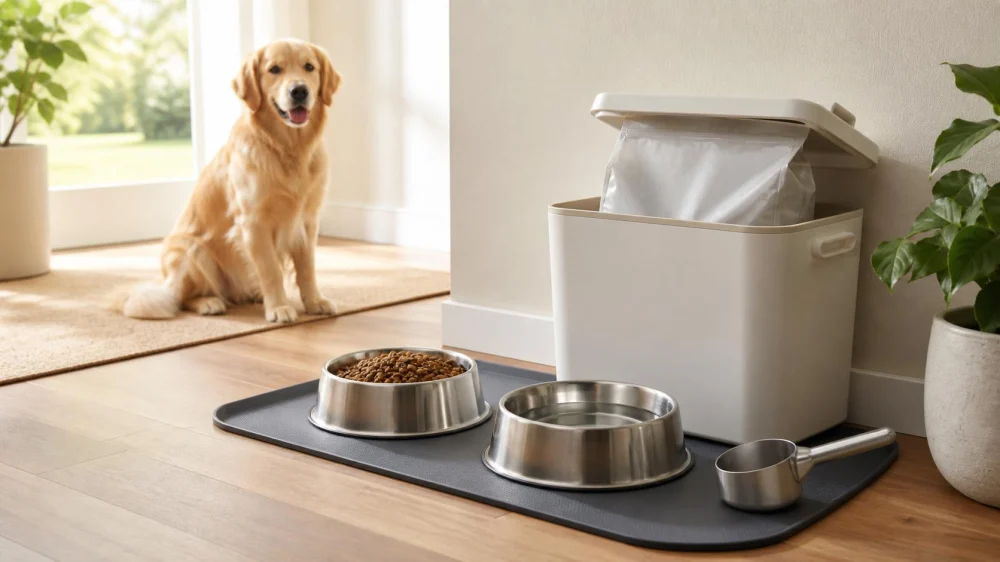
Pet Feeding Station Checklist: Store, Measure, Clean, and Observe
Table of contents
Quick answer
Place food and water in a stable, easy-to-clean area where each pet can eat without competition. Keep food in its original package or preserve the full label and lot information, store it cool and dry, and use a dedicated measuring utensil. Wash and dry food bowls and scoops after use and water bowls daily. Contact a veterinarian if appetite, thirst, swallowing, vomiting, diarrhea, or behavior changes.

That Big Fish Store
12425 N Cave Creek Rd Suite 101, Phoenix, AZ 85022, USA
Choose the location
A feeding station should be quiet enough for the pet to eat normally but visible enough for an owner to observe. Avoid hot appliances, direct sun, chemicals, litter boxes, waste bins, garages with fumes, and places where people may trip over bowls.
Use a stable nonslip surface that can be cleaned. A mat can catch splashes, but its edges should not curl and its underside must dry. Repeated moisture against wood or wallboard can cause damage and odor.
Separate pets when one guards food, eats a prescription diet, finishes much faster, or steals from another bowl. Cats and dogs may need different access. Do not assume a raised bowl, slow feeder, puzzle, or timed dispenser is appropriate for every animal; ask the veterinarian when health, swallowing, posture, or behavior is involved.
Keep children away from feeding pets. Even a normally gentle animal may guard food, and children can contaminate or spill it. Give the pet space and remove bowls only when the animal has stepped away safely.

Store food correctly
FDA recommends keeping pet food and treats in the original bag or container so the product name, manufacturer, UPC, lot number, and best-by date remain available. If using a secondary bin, placing the entire bag inside preserves this information and reduces contact between food fats and the bin.
If dry food must be poured into another container, clean and dry it completely first, use a tight-fitting lid, and save all label and lot information. Do not top off old food with a new bag. Residual crumbs and fats can age, and mixed lots make a problem harder to trace.
Store unopened dry and canned food in a cool, dry, secure place according to the label. Keep pets from opening bags or treat containers. Store human food, pet food, medicines, pesticides, and cleaners separately.
Refrigerate or discard unused canned or pouched food promptly according to the product and FDA guidance. Use a clean cover and label the opening date. Do not serve spoiled, swollen, leaking, damaged, or foul-smelling product.
Measure and serve
Use the feeding amount and schedule set with the veterinarian, especially for puppies, kittens, weight management, disease, pregnancy, or prescription diets. Package directions are a starting point, not an individualized medical plan.
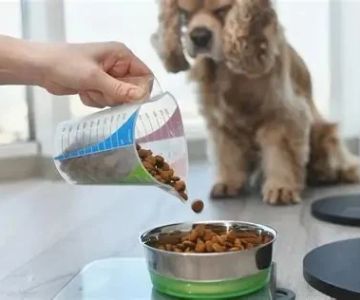
Measure with one dedicated cup or scale and record the actual amount. A generic drinking cup can vary. Include treats, training food, toppers, and food used to give medicine in the daily total discussed with the veterinarian.
Do not change diets abruptly unless instructed. If a transition is planned, write down the schedule and keep packages identifiable. Observe stool, appetite, vomiting, skin, energy, and weight trends without diagnosing them.
Serve food at the temperature and consistency recommended. Avoid heating in packaging not intended for it, and stir carefully to prevent hot spots. For a pet with dental pain, swallowing problems, or a prescribed texture, follow veterinary instructions exactly.
Clean the station
FDA advises washing and drying pet food bowls after each use, scoops and measuring utensils after each use, and water bowls daily. Use a cleaning method safe for the material and household. Wash hands before and after handling pet food.
Keep pet utensils separate from human food utensils where practical. If a dishwasher is used, follow product and appliance guidance. Replace cracked, deeply scratched, chipped, or corroded bowls that cannot be cleaned well.
Empty stale water, wash the bowl, rinse thoroughly, and refill with fresh water. Automatic fountains need pump, filter, reservoir, and tubing maintenance according to their manual. A running fountain can still develop residue.
Clean the floor and wall nearby. Do not mix disinfectants or leave chemical residue where a pet can lick it. Allow surfaces and mats to dry before resetting bowls.
Watch for problems
Record changes in how quickly the pet eats, whether food drops from the mouth, coughing or gagging, reluctance to approach, guarding, vomiting, diarrhea, weight, and water consumption. A video can help the veterinarian if captured without delaying care or stressing the animal.
Call the veterinarian for sudden appetite or thirst change, repeated vomiting or diarrhea, difficulty swallowing, abdominal swelling, pain, weakness, or suspected food-related illness. Emergencies require immediate veterinary or animal poison-control guidance.
If several pets or people become ill, preserve the food package, lot information, receipt, and remaining product without feeding more. Contact the veterinarian and follow FDA and manufacturer reporting instructions. Do not return or discard everything before necessary information is recorded.
Inspect for pests, moisture, mold-like growth, damaged packaging, and expired food. Correct storage and sanitation rather than spraying pesticides around exposed bowls.
Limitations
This article cannot choose a diet, feeding amount, bowl, posture, or medical response for an individual pet. Species, age, size, disease, behavior, and medications change the plan.
Follow the veterinarian, food label, equipment manual, and current public-health instructions. Raw and therapeutic diets require additional individualized handling guidance.
Sources and evidence
The US Food and Drug Administration recommends preserving original pet-food packaging and lot information, storing food cool and dry, securing it from pets, cleaning and drying storage containers between bags, refrigerating unused wet food promptly, and washing food bowls and scoops after use and water bowls daily.
Frequently asked questions
Should kibble be poured into a plastic bin?
FDA recommends keeping the original bag, ideally inside the bin. If food is poured, the bin must be clean and dry and complete product and lot information saved.
How often should food bowls be washed?
FDA recommends washing and drying food bowls after each use and water bowls daily. Follow additional veterinary or manufacturer guidance.
Can two pets share a water bowl?
Some households do, but illness, guarding, diet, and monitoring needs may require separate bowls. Provide enough clean access and ask the veterinarian about health concerns.
Should a pet use a raised bowl?
Do not assume it is better. Appropriate height and design depend on the individual pet and medical or mobility needs; ask the veterinarian.
What food details should I save?
Keep the product name, manufacturer, UPC, lot number, best-by date, and receipt when possible. These are important for complaints and recalls.
When is appetite loss urgent?
Urgency depends on species, age, health, duration, and accompanying symptoms. Contact the veterinarian promptly rather than relying on a general timeline.
Conclusion
A reliable pet feeding station joins good storage, accurate measuring, routine cleaning, and observation. Preserve product information, keep food secure, wash bowls and tools, and separate pets when needed. Record meaningful changes and involve the veterinarian early. The station should make safe care easier, not hide how much or how well a pet is eating.



 United Pet Care, LLC3.0 (57 reviews)
 Fish Happens4.0 (426 reviews)
 Dr. Julia Stricker Esposito, D.V.M4.0 (35 reviews)
 Frankfort Animal Clinic4.0 (519 reviews)
 Eastside Animal Hospital4.0 (227 reviews)
 PetVet Vaccination Clinic4.0 (2 reviews)
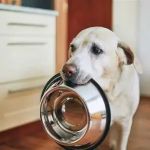 How to Build a Diet Plan for Overweight Dogs
 How to Help Dogs With Fear of Cars Using Safe Training Methods
 Pet Vaccination Schedule: Essential Shots Your Pet Needs to Stay Healthy
 How to Help Your Dog With Reluctance to Exercise
 Best Dog Food for Sensitive Skin and Coat Health
 What to Know About Canine Pancreatitis and Care Tips