
Pet Poison Exposure: Call Before You Try a Home Remedy
Table of contents
Quick answer
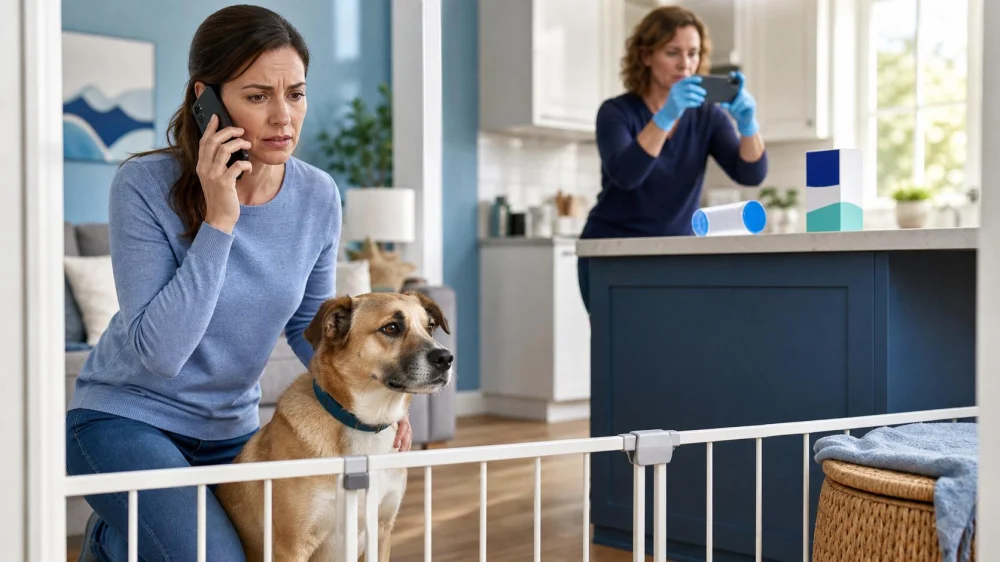
If a pet may have swallowed, licked, inhaled, or contacted something harmful, move the pet away from the source without exposing yourself, check breathing and responsiveness, and call a veterinarian, emergency animal hospital, or animal poison control center immediately. Keep the package or photograph the label. Do not make the pet vomit and do not give food, milk, oil, salt, charcoal, or medication unless a veterinary professional specifically directs it for that pet and exposure.

What to do in the first minutes
Start by stopping further exposure. Put other pets in a separate safe room and close access to the spill, plant, medicine, bait, food, or chemical. If material is on the coat or paws, prevent grooming while you call for instructions. Avoid touching an unknown powder or liquid with bare hands; use the product's human safety directions and protect yourself.
Look at the pet without delaying the call. Note whether the pet is alert, walking normally, breathing comfortably, drooling, vomiting, trembling, coughing, or behaving unusually. Record the current time and the earliest possible exposure time. A pet that looks normal may still need urgent advice because some toxins cause delayed effects.

When to go straight to emergency care
Collapse, loss of consciousness, seizures, severe tremors, difficulty breathing, uncontrolled bleeding, profound weakness, or rapidly worsening signs require immediate emergency veterinary care. Call the clinic while another adult prepares transport if possible. Do not place fingers in the mouth of a seizing or distressed animal. Keep the area quiet, move nearby objects away, and follow the clinic's directions.
If a corrosive product reached the eyes or skin, or fumes were inhaled, tell the professional exactly what happened. Decontamination differs by substance; an improvised rinse or neutralizer can sometimes increase injury. The label's emergency directions and case-specific veterinary guidance take priority.
What information to collect
Useful facts help a veterinary professional assess risk quickly. Have the pet's species, breed, age, current weight, medical conditions, medications, and present signs ready. Identify the substance as precisely as possible. Photograph the front and back label, ingredient list, concentration, lot information, and remaining quantity. Save intact packaging and any fragments without putting yourself at risk.
Estimate the maximum amount that could be missing and when exposure may have occurred. Say whether it was swallowed, inhaled, spilled on skin, or placed in an eye. For a plant, photograph the whole plant, leaves, flowers, and container rather than relying on a nickname. Do not bring loose toxic material into a clinic without asking how to contain it.
What not to do
- Do not wait for symptoms before calling.
- Do not induce vomiting unless a veterinarian or animal toxicology professional directs it.
- Do not use hydrogen peroxide, salt, mustard, fingers, or another internet remedy on your own.
- Do not give human medication or reuse instructions from a different pet or past exposure.
- Do not force water or food into a weak, seizing, vomiting, or poorly responsive pet.
- Do not assume a small amount is safe; risk varies by substance, concentration, species, weight, and health.
Who to call
Your veterinarian is a strong first contact because the clinic knows the pet's history. If the clinic is closed, call a local emergency animal hospital. In the United States, the FDA also identifies the ASPCA Animal Poison Control Center at 888-426-4435 and Pet Poison Helpline at 855-764-7661 as round-the-clock options; fees may apply. Save local numbers before an emergency, but verify contact details from the official service when needed.
Stay available after the initial call. The toxicology service may provide a case number and coordinate with the treating clinic. Write down the professional's instructions, the name of the service, and the time. If the pet's condition changes, report that change promptly rather than repeating a prior plan without review.
Prepare for safe transport
Use a secure carrier for a cat or small animal and a leash plus appropriate restraint for a dog. Keep the vehicle ventilated if fumes are a concern, but do not transport a leaking container in the passenger area. Bring photographs, packaging, medication lists, and the poison-control case number. Ask before bringing vomit, plant pieces, or chemicals; the clinic may prefer a sealed sample or photographs.
Have another person drive when practical so one adult can observe the pet and call ahead. Do not offer food or medication during transport unless instructed. A frightened or painful animal may bite, so handle gently and avoid putting your face near the mouth.
Prevent another exposure
After the immediate event, review how access occurred. Store human and veterinary medicines in closed cabinets rather than bags or counters. Keep cleaners, pesticides, nicotine products, cannabis products, batteries, and concentrated oils secured. Check food labels for pet hazards and identify plants before bringing them indoors. Separate pets during medication preparation and confirm the patient, drug, strength, dose, and time before every administration.
Replace damaged latches, move tempting products above climbing range, and ask visitors to secure bags. Keep an updated weight and medication list with emergency contacts. Prevention should match the individual pet: a determined dog, curious cat, bird, rabbit, or other species can reach different hazards.
Pet poison response checklist
- Stop further exposure and protect people and other animals.
- Check breathing, responsiveness, movement, and visible symptoms.
- Call a veterinarian, emergency animal hospital, or animal poison control center now.
- Photograph labels and collect the pet's weight, health history, amount, route, and time.
- Avoid vomiting, food, fluids, medication, or home remedies unless specifically directed.
- Follow transport and containment instructions.
- Record the case number and report any change in condition.
Limitations
This guide cannot identify a toxin, calculate a safe dose, diagnose poisoning, or replace case-specific veterinary care. Products with similar names may contain different ingredients, and toxicity can differ sharply among dogs, cats, birds, and other animals. Phone numbers, fees, and service availability can change. If an animal is unstable, emergency treatment takes priority over online research or completing a checklist.
Frequently asked questions
Should I make my pet vomit?
Not without direct professional instruction. Vomiting can be dangerous after corrosives, petroleum products, sharp objects, or when a pet is drowsy, seizing, or unable to protect the airway.
What if my pet seems normal?
Call anyway. Some harmful exposures have delayed signs, and early case-specific guidance may improve options.
Should I call human Poison Control?
For an animal exposure, contact a veterinarian, emergency animal hospital, or animal poison control service. Human Poison Control is for people.
Can I wash a product off the coat?
Ask first when possible. The correct method depends on the substance, and water can be inappropriate for some materials. Prevent licking while seeking guidance.
Sources and evidence notes
This article is based on the U.S. Food and Drug Administration's guidance on who to call in a pet emergency and potentially dangerous items for pets, plus the ASPCA Animal Poison Control Center's poison-response steps. These sources support rapid professional contact, evidence collection, and avoiding unapproved remedies. Accessed August 10, 2026.
Conclusion
A suspected poison exposure is a call-first event. Stop access, observe the pet, preserve accurate product information, and obtain veterinary or animal-toxicology guidance immediately. A calm, documented response is safer than guessing at a remedy—and a secured home makes the next exposure less likely.



 Gailor Animal Hospital: Herre Adam DVM4.0 (14 reviews)
 Premier Farm & Pet4.0 (115 reviews)
 EVE Pet Hospital4.0 (281 reviews)
 Pet Vaccination Clinic4.0 (831 reviews)
 VIP Petcare Vaccination Clinic0.0 (0 reviews)
 Woodstock Spay & Neuter Clinic4.0 (598 reviews)
 The Best Doggy Life Jackets for Water Safety
 When Is It Time for Pet Physical Therapy or Rehab?
 How Heatstroke Affects Pets: Symptoms, Prevention, and Emergency Action
 How Pet Startups Are Disrupting Traditional Vet Care
 How to Train a Service Dog: Basics & Considerations
 How to Help Dogs With Mobility Issues: Tips and Solutions