
Pet Window and Balcony Safety: Check Screens and Gaps
On this page
Quick answer
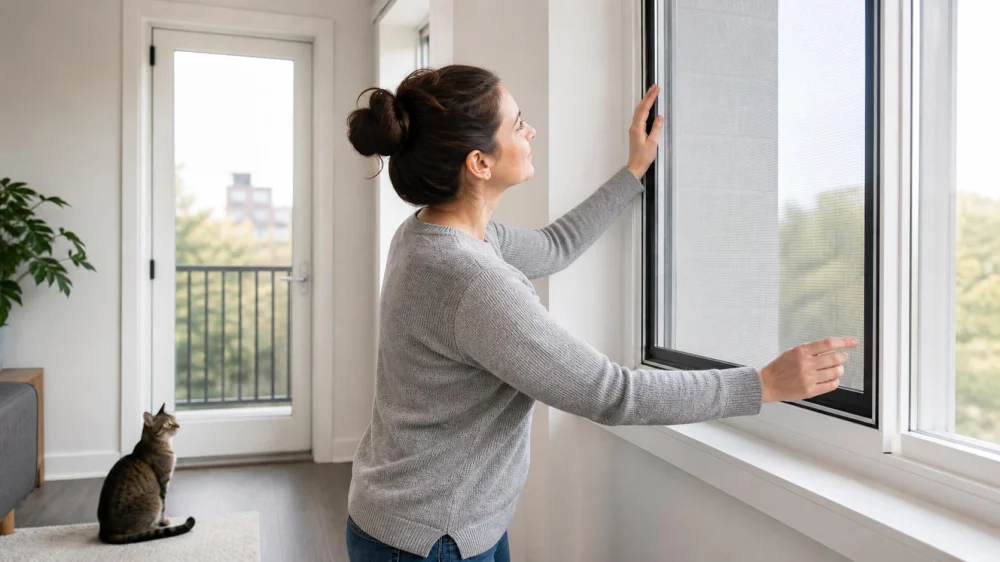
Keep unscreened windows closed around pets. Before opening a screened window, press and inspect the frame, corners, mesh, latches, and fit from inside; a screen that shifts, bows, tears, or pops out is not ready for pet exposure. Treat balconies as separate controlled areas: check doors, rail gaps, furniture, climbable objects, overhead routes, and enclosure integrity. Supervision does not replace a physical barrier.
This U.S. guide supports household prevention. Window, balcony, fire-egress, rental, building, child-safety, and enclosure requirements vary. Ask the property owner and qualified installer before modifying a shared, historic, or required-egress opening.
Why familiar openings still create risk
Pet window and balcony safety prevents access to an opening or edge where distraction, climbing, squeezing, impact, or barrier failure could lead to a fall or escape. A pet does not need to intend to jump for an accident to occur.
Birds, insects, sounds, another animal, a visitor, or sudden fear can draw a pet toward an opening. A screen designed mainly for insects may not withstand leaning, claws, impact, or a loose frame. A calm pet can behave differently when excited.
The ASPCA’s high-rise syndrome guidance says unscreened windows create serious danger for cats, recommends snug, sturdy screens, and warns that childproof window guards do not adequately protect pets because cats can slip through them.

Bluegrass Animal Care Center-Radcliff
849 S Dixie Blvd, Radcliff, KY 40160, USA
Inspect windows and screens
- Secure the pet elsewhere. Close the room or use another safe barrier before testing.
- Check the frame. Press each side and corner from indoors to see whether it shifts, lifts, or separates.
- Inspect the mesh. Look for tears, pulled edges, corrosion, brittle material, claw damage, and gaps around hardware.
- Test the window. Confirm the sash, stops, locks, and opening limit work as intended without creating a new gap.
- Look around the opening. Move furniture, shelves, plants, cords, and cat trees that create a launch point or interfere with closure.
- Review after weather. Recheck after storms, seasonal removal, cleaning, building work, or a screen replacement.
Do not test a screen by allowing a pet to push against it. A visual check alone may miss a loose frame, and an adjustable screen needs secure seating in the window system.
Inspect balconies and doors
Keep the pet inside while inspecting. Check the door latch, self-closing or locking behavior where applicable, threshold, screen door, rail openings, floor-wall gaps, drainage openings, and routes to neighboring balconies or fire escapes.
Move chairs, tables, planters, storage boxes, trellises, and grills away from railings when they create a step or launch point. Check that planters and décor cannot fall, spill hazardous material, or reduce the walking area.
A railing is designed for people and may not contain a small or climbing animal. Netting, mesh, or a “catio” needs property approval, appropriate materials, secure attachment, weather resistance, emergency egress review, and inspection by someone qualified for the installation. Do not attach an improvised barrier that can entangle the pet or fail under load.
Build an opening routine
- Confirm the pet’s location before opening a window or balcony door.
- Open only windows with screens that passed the current inspection.
- Latch the balcony door immediately after every entry or exit.
- Tell guests, cleaners, workers, and pet sitters which openings must remain closed.
- Use a visible but non-sensitive reminder near the interior handle.
- Keep microchip and ID contact information current in case of escape.
- Recheck the barrier after maintenance workers leave.
- Close openings before leaving the pet unsupervised.
For fresh air, choose the safe opening rather than the most convenient one. Air conditioning, a locked screened opening, or a separate pet-free room may be the better option until repairs are complete.
Plan for a fall or escape
Save the regular veterinarian, nearest emergency animal hospital, building desk, and local animal control or shelter contacts. Keep a carrier, towel, leash, recent photo, and identification information accessible.
If a pet falls, do not assume the animal is uninjured or will return on its own. Approach carefully because pain and fear can change behavior, use safe containment, and contact a veterinarian or emergency animal hospital immediately. Do not delay care to search online for home treatment.
If the pet escapes without a known fall, secure the opening, alert household and building contacts, search safely without chasing into traffic or another hazard, and follow local lost-pet procedures.
Window and balcony checklist
- Unscreened windows kept closed
- Screen frame, corners, mesh, and fit tested from indoors
- Window locks, stops, and closing path working
- Furniture and launch points moved from openings
- Balcony door, rails, floor gaps, and neighboring routes checked
- Enclosures approved and professionally evaluated where needed
- Guests and workers know the opening rules
- ID and microchip contact information current
- Carrier and emergency veterinary contacts ready
Limitations and safety notes
- Child window guards are not necessarily pet barriers.
- An insect screen or screen door may not be designed to contain an animal.
- Never lean outside, climb a railing, or place yourself at height to retrieve a pet.
- Do not block required emergency egress or building access with an enclosure.
- Any fall, breathing difficulty, bleeding, inability to walk, collapse, or acute distress requires immediate veterinary help.
Frequently asked questions
Is an ordinary window screen enough for a cat?
It must be snug, sturdy, undamaged, and secure in the frame. A loose insect screen can fail when pushed, so inspect the exact installation.
Can I open a window a few inches without a screen?
A small gap may still permit a paw, head, or body to enter, and window mechanisms can create pinch or entrapment hazards. Use an approved pet-safe configuration.
Are childproof window guards safe for pets?
The ASPCA warns they may not adequately protect pets because cats can slip through. Use a snug, sturdy screen and an approved window setup.
Is balcony supervision enough?
No. A distraction or sudden movement can happen faster than a person can react. Use an effective physical barrier and controlled access.
What should I do if my pet falls but walks away?
Contact a veterinarian or emergency animal hospital immediately. Movement does not rule out serious injury.
Sources and evidence notes
This article uses ASPCA guidance that unscreened windows can cause high-rise injuries, secure screens are necessary, and child window guards may not contain cats. Balcony layout, enclosure, guest instructions, identification, and emergency preparation are general prevention practices; exact building alterations need property and professional approval.
Next steps
Put the pet in a closed room and inspect every window and balcony opening today. Mark any loose screen, unreliable latch, gap, or climbable route as unavailable until repaired. Save emergency contacts, check the carrier and ID record, and teach every person entering the home the same closed-door and screened-window routine.





 Dr. Aaron Rowland4.0 (7 reviews)
 Avatar Holistic Veterinary Services4.0 (8 reviews)
 Christown Animal Hospital4.0 (386 reviews)
 VIP Petcare Vaccination Clinic0.0 (0 reviews)
 Ingalls Pet Wellness Clinic4.0 (82 reviews)
 Vetco Vaccination Clinic4.0 (39 reviews)
 Pet Toy Safety Check: When to Clean, Repair, or Retire
 How Seasonal Shedding Affects Pet Health and What to Do
 Best Dog Foods for Sensitive Digestion: Top Picks and Expert Tips | Pet & Puppy
 Pet Carrier Cleaning and Inspection: A Safe Routine Before Travel
 How to Help Dogs With Fear of Heights
 How to Help Dogs With Mobility Issues: Tips and Solutions