
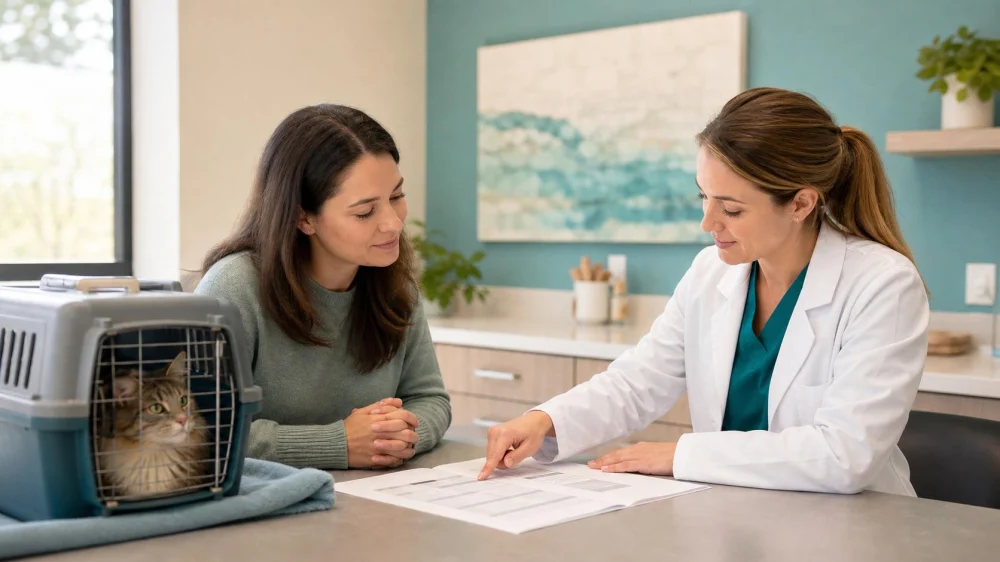
Veterinary Treatment Estimate: Compare Scope and Cost
A veterinary treatment estimate is a planning document, not a guaranteed final bill or a diagnosis. Ask the veterinarian to explain the clinical goal, recommended tests and treatments, likely sequence, cost range, alternatives, monitoring, and what could change. Confirm which items you authorize and how the team will contact you if the plan expands. In an emergency, necessary stabilization may come before a complete estimate; do not delay urgent care solely to compare prices.
In this guide
Start With the Clinical Plan
Ask what problem the team is evaluating or treating and what information is still unknown. The same symptom can have many causes, so an estimate may begin with examination and diagnostic steps before a final treatment plan is possible. Have the veterinarian distinguish urgent stabilization, recommended evaluation, optional services, and later follow-up.
Share accurate history, current medicines and supplements, allergies, prior reactions, recent records, and financial constraints. Do not omit a known exposure or give a home remedy to keep the estimate lower. Early, factual communication helps the team discuss safe priorities.
Lovet Pet Health Care - Arrowhead Ranch
GlendaleMaricopa CountyArizona
6750 W Deer Valley Rd c101, Glendale, AZ 85310, USA
Read Every Line Item
Look for the examination or consultation, laboratory tests, imaging, sample collection, sedation or anesthesia, procedure, medicines, supplies, hospitalization, monitoring, professional interpretation, and recheck. Ask whether quantities and duration are estimates and whether outside laboratory or specialist fees are included.
Clarify unfamiliar abbreviations. A bundled line may include several services, while apparently similar lines may cover different stages. Ask what is included in anesthesia monitoring and recovery, who performs and supervises the work, and whether take-home medication or protective equipment is part of the total.
Taxes, disposal, after-hours charges, boarding, emergency fees, and payment-plan costs may be separate. An itemized explanation is useful, but price alone does not show quality, medical necessity, risk, or expected outcome.

Animal Hospital of Nicholasville
NicholasvilleJessamine CountyKentucky
10 Wichita Dr, Nicholasville, KY 40356, USA
Understand Ranges and Changes
Many estimates show a low and high total because medicine involves uncertainty. The range may reflect weight-based doses, time under anesthesia, number of images, hospitalization length, test results, or complications. Ask which assumptions produce each end of the range.
Confirm how long the estimate remains valid and whether medicine or supply prices can change. Ask what happens if the team discovers a new problem, the pet responds differently than expected, or additional time is required. A revised estimate should explain new information, not simply present a higher number.
Discuss Alternatives Without Guessing
Ask the veterinarian what each recommended step is intended to accomplish, what risks it addresses, and how it may change the next decision. Request medically reasonable alternatives, their tradeoffs, and the expected consequences of delay or no treatment. “Cheaper” options are not equivalent if they answer a different question or carry different risk.
A second opinion may be appropriate for a stable pet and a major planned procedure, but transferring records, repeating tests, travel, and delay can add cost or risk. Ask whether the condition is stable enough to wait. For time-sensitive illness, follow urgent clinical guidance.
Never reduce a dose, split an unsuitable tablet, substitute a human product, or stop prescribed medicine solely to match a budget. Ask the prescribing veterinarian about safe changes.
Set Consent and Contact Limits
The consent form should identify the authorized decision-maker and how the clinic may reach that person. Provide a reliable primary and backup number. Ask whether you can set a dollar threshold requiring another call and what the team does if you cannot be reached during a critical change.
Consent should be informed and specific enough to understand, while allowing the team to respond to agreed emergencies. Read clauses concerning resuscitation, anesthesia, tissue samples, photographs, teaching, transfer, and disposal or return of removed items. Ask questions before signing blank or incomplete sections.
Confirm Payment and Insurance
Verify the deposit, payment schedule, accepted methods, refund handling, financing terms, and who owes the balance. Third-party financing is separate credit; read interest, deferred-interest, fee, and missed-payment provisions before applying.
If you have pet insurance, contact the insurer about deductibles, reimbursement percentage, exclusions, waiting periods, preauthorization, claim forms, and direct-payment availability. Approval of an estimate by a clinic does not guarantee insurance coverage. Keep the medical record and itemized invoice the insurer requests.
Collect Records and Follow-Up
At discharge, request the final itemized invoice and medical instructions. Compare completed services with the estimate and ask about meaningful differences. The final record should identify medicines, dosing directions, restrictions, warning signs, follow-up timing, and the contact for questions.
Keep the estimate, consent, revisions, diagnostic results, invoice, payment receipts, insurance correspondence, and discharge plan together. Send relevant records to the regular veterinarian. If a billing error is suspected, ask the clinic for a factual review before disputing the entire medical plan.
Estimate Review Checklist
- Clinical goal and current uncertainty explained
- Urgent, recommended, optional, and later steps distinguished
- Tests, procedures, medicines, monitoring, and hospitalization itemized
- Low and high totals tied to clear assumptions
- Alternatives and consequences of delay discussed with the veterinarian
- Authorized decision-maker and backup contact recorded
- Approval threshold and unreachable-owner plan understood
- Deposit, payment, financing, and insurance terms verified
- Revisions, final invoice, records, and follow-up instructions retained
Frequently Asked Questions
Is an estimate a price guarantee?
Usually not. It reflects the known plan and assumptions at that time. Ask what can change, how approval works, and whether local law or clinic policy gives the document a specific status.
Can I decline one line item?
You can ask questions and discuss consent, but only the veterinarian can explain how removing a step affects safety, diagnosis, or treatment. Do not edit the plan as if each line were independent.
Why might tests be repeated?
Results may be outdated, incomplete, performed by a different method, or needed to track a change. Ask why repetition is clinically useful and whether prior records can be reviewed.
What if I cannot afford the plan?
Tell the team early. Ask about safe priorities, alternatives, payment resources, and referral options. Availability varies, and no financing choice is right for everyone.
Should I sign during an emergency?
Ask for the clearest explanation circumstances allow. Immediate stabilization may be necessary before every uncertainty is resolved. Provide a reachable decision-maker and revisit the estimate as information develops.
A good veterinary estimate connects money to a clinical plan and a consent process. It helps owners ask useful questions without pretending that cost predicts outcome. Every pet and jurisdiction differs; rely on a licensed veterinarian for diagnosis and treatment, and seek urgent care when the pet may be in danger.
 Val Vista Animal Hospital4.0 (549 reviews)
 pets0.0 (0 reviews)
 VCA Lakota Hills Animal Hospital4.0 (158 reviews)
 Lovet Pet Health Care - White Tanks4.0 (861 reviews)
 PetVet Vaccination Clinic5.0 (1 reviews)
 FACE Low-Cost Animal Clinic4.0 (2536 reviews)
 How to Create a Pet Health Journal: Metrics to Track for Better Pet Care
 How 3D Printing Is Being Used in Pet Prosthetics & Surgery
 How to Vet a New Pet Food Brand: 10 Warning Flags
 Why Is My Dog Panting After Light Activity? Causes & What to Do
 Best Dog Food for Sensitive Skin and Coat Health
 How to Introduce a New Kitten or Puppy to Kids