
Dog Collar and Harness Fit Check: An Everyday Safety Guide
On this page
- Quick answer
- Match equipment to its purpose
- Measure the dog correctly
- Check collar fit
- Check harness fit
- Watch the dog move
- Inspect skin and coat
- Inspect buckles, rings, and straps
- Manage identification tags
- Adjust for growth and body changes
- Check fit for special situations
- Avoid unsafe shortcuts
- Weekly fit checklist
- Frequently asked questions
- Next steps
Quick answer
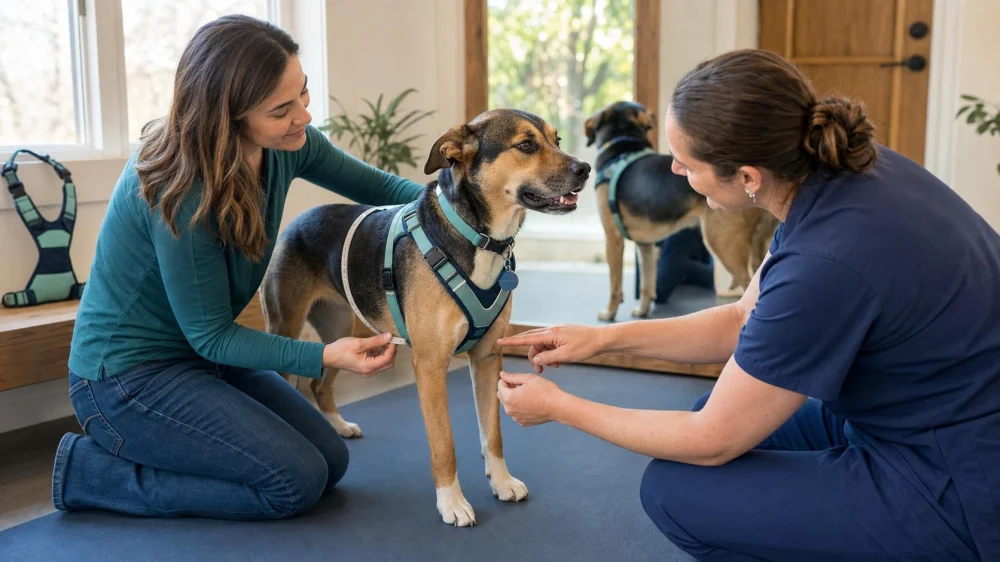
A dog’s collar or harness should stay secure without pressing, rubbing, restricting breathing, or interfering with natural shoulder and leg movement. Measure with a soft tape, follow the manufacturer’s size chart, adjust every strap, and check fit while the dog stands, sits, walks, turns, and gently backs up.
You should be able to slide fingers under the equipment with comfortable contact, but a generic “two-finger rule” is only a starting point because finger size, coat, dog shape, and product design vary. Confirm that the dog cannot slip a head, elbow, or shoulder through an opening. Remove equipment that causes coughing, gagging, hair loss, redness, sores, changed gait, panic, or escape attempts, and ask a veterinarian or qualified force-free trainer for help.

Arizona Humane Society Veterinary Clinic at Sunnyslope Campus
9226 N 13th Ave, Phoenix, AZ 85021, USA
Match equipment to its purpose
A flat collar can carry identification and provide routine leash attachment for some dogs. A harness spreads contact across the torso and may offer more control or comfort, depending on design and fit.
Car restraints, sport harnesses, mobility equipment, head collars, limited-slip collars, and working-dog gear have specialized purposes. One item should not automatically be used for walking, car travel, tie-out, lifting, and unsupervised wear.
Consider the dog’s size, head-to-neck ratio, chest depth, coat, strength, behavior, age, health, and activity. A narrow-headed dog may back out of a standard collar more easily, while a deep-chested dog may need additional harness adjustment.
Ask a veterinarian about equipment for a dog with coughing, neck or spine disease, skin problems, surgery, breathing difficulty, or mobility limitations. Equipment does not treat the underlying condition.

Durango Small Animal Veterinary Clinic
10300 S Miller Rd front, Buckeye, AZ 85326, USA
Measure the dog correctly
Use a flexible cloth measuring tape with the dog standing naturally on a nonslip surface. If the dog is uncomfortable, pause rather than holding or chasing.
For a collar, measure around the neck where the product will sit. For a harness, the manufacturer may request lower-neck, chest-girth, body-length, or other measurements. Follow that exact diagram.
Keep the tape flat and snug without compressing coat or skin. Thick fur can make a measurement appear larger while still allowing a loose strap to slide once the coat compresses.
Record the date and measurements. Compare them with the current manufacturer’s chart because size names such as small or medium are not standardized.
Check collar fit
Position a flat collar according to its design, normally around the neck without sitting on the windpipe under constant tension. Check the buckle and adjustment slider.
Slide fingers beneath the collar at several points. It should make comfortable contact but not leave a deep groove. Check again after the dog shakes, lies down, or the coat changes position.
Gently test whether the collar can pass over the ears or widest part of the head without unbuckling. Do not pull hard. A loose collar can slip off when a dog backs away.
Watch for the collar catching the lower jaw, leg, crate wire, fence, furniture, or another dog during play. Unsupervised wear and multi-dog play require a household-specific risk plan.
Check harness fit
Identify which strap goes around the neck, chest, and belly. A twisted or reversed harness can look plausible while placing pressure in the wrong area.
Place the front section so it does not cross the throat. Chest straps should not cut into the armpits. Allow enough distance behind the front legs to prevent rubbing while keeping the harness from shifting.
Adjust both sides symmetrically when the design allows. Check that connection points remain centered and that straps lie flat without folded edges.
Try a gentle backward-motion check in a secure indoor area. If the shoulders or elbows can move through the openings, the dog may escape outdoors. Some body shapes require an additional safety strap or different design.
Watch the dog move
Observe from the front, side, and rear while the dog walks at a normal pace. The dog should take an even stride without shortening a front step, swinging elbows, hopping, freezing, or resisting movement.
Have the dog sit, stand, turn, lower the head, and climb one safe step if those actions are normal for the dog. Look for straps that shift into the throat or armpits.
Attach the leash and apply only normal light handling. A harness that rotates dramatically or a collar that rides over the jaw needs adjustment or replacement.
Behavior is information. Scratching, biting the gear, rolling, hiding, or refusing to move can indicate unfamiliarity, poor fit, pain, or fear. Use gradual positive introduction and investigate the cause.
Inspect skin and coat
Remove the collar or harness daily as appropriate and part the coat beneath every contact area. Check the neck, chest, shoulders, sternum, back, armpits, and buckle locations.
Look for redness, warmth, swelling, dampness, odor, hair breakage, matting, dandruff, scabs, pressure marks, or open sores. Compare both sides.
Wet equipment and trapped moisture can irritate skin. Dry the dog and gear according to product instructions before reuse.
Contact a veterinarian for persistent redness, pain, swelling, discharge, sores, or sudden sensitivity. Do not cover a lesion with tighter gear or apply a human skin product without veterinary advice.
Inspect buckles, rings, and straps
Before each walk, press buckles closed and listen or feel for full engagement. Tug each connection while the equipment is off the dog.
Check D-rings, clips, rivets, stitching, webbing, elastic, hook-and-loop panels, and adjustment sliders for rust, cracks, bending, fraying, chewing, stretching, or loose threads.
Sand, salt, mud, hair, and grit can prevent closure. Clean according to manufacturer instructions and let hardware dry completely.
Retire damaged equipment instead of knotting, taping, gluing, or sewing load-bearing parts without an approved repair. A small defect can fail under sudden force.
Manage identification tags
Use current identification that helps a finder contact you without revealing unnecessary private information. Keep microchip registration current as a separate backup.
Tags should not be so heavy or numerous that they strike the dog, create noise distress, or pull the collar. Check split rings and attachment points for opening or wear.
Make sure hanging tags cannot catch in crate wire, floor vents, decking, or equipment. A slide-on tag or protected attachment may reduce snagging where compatible.
A tag is not a substitute for supervision, secure fencing, leash handling, and recall training.
Adjust for growth and body changes
Puppies can outgrow gear quickly. Check fit at least weekly and after growth spurts. Do not buy an oversized item expecting the dog to grow into it while wearing it unsecured.
Adult dogs change with weight gain or loss, coat growth, grooming, muscle development, pregnancy, illness, and aging. Recheck after any visible change.
Seasonal coats can compress beneath straps. A winter jacket under a harness changes fit; equipment over clothing must still follow manufacturer guidance.
After a medical procedure, ask the veterinarian before putting straps near an incision, shaved area, bandage, catheter site, or painful joint.
Check fit for special situations
For car travel, use a crash-tested restraint system appropriate to the dog and vehicle rather than relying on a walking harness or collar. Follow both vehicle and restraint instructions.
For hiking, water, snow, or low light, consider visibility, drying, debris, temperature, and terrain. A handle is not automatically rated to lift the dog.
For escape-prone dogs, use layered safety selected with a qualified professional, such as a properly fitted backup connection. Never rely on clipping multiple weak components together.
For daycare, boarding, grooming, or veterinary care, ask which equipment the facility accepts and whether items must be removed during group play or kenneling.
Avoid unsafe shortcuts
Do not tighten equipment until the dog cannot move normally. Tighter is not always safer; it can cause pain, breathing problems, rubbing, and panic.
Do not attach a leash to an identification-only collar that is not designed for load. Do not attach incompatible clips to small decorative rings.
Do not leave a dog tied out or tethered by the collar without a safe, lawful, supervised system. Entanglement and neck injury can occur.
Do not use aversive or tightening equipment without professional guidance. Fit, timing, welfare, and risk require individualized assessment.
Weekly fit checklist
- Measure neck and chest during growth or body change.
- Confirm every strap lies flat and in the correct position.
- Check comfortable contact without compression.
- Test for backward escape in a secure area.
- Watch walking, sitting, turning, and head movement.
- Inspect skin and coat under all contact points.
- Check buckles, rings, stitching, and webbing.
- Verify identification and attachment hardware.
- Clean and dry gear according to instructions.
- Stop using equipment that causes symptoms or damage.
Frequently asked questions
Is the two-finger rule always accurate?
No. It is a rough starting point. Finger size, coat, dog shape, and equipment design vary. Check security, movement, skin, and manufacturer guidance.
Should a dog wear a collar all day?
That depends on identification needs, supervision, home hazards, play, crates, and medical considerations. Ask your veterinarian or trainer about the household’s risks.
Why does a harness rub behind the front legs?
It may be positioned too close, too loose, too tight, the wrong size, or the wrong shape for the dog. Stop use until fit is corrected.
Can I use a walking harness in the car?
Not unless it is designed and independently evaluated for that use. Use a vehicle-restraint system according to its instructions.
How do I know whether my dog can back out?
Perform only a gentle controlled check indoors. If shoulders, elbows, or head can pass through an opening, choose a more secure fit or design with professional help.
Next steps
Measure your dog, identify the equipment’s purpose, and compare the current fit with the manufacturer’s instructions. Watch movement and inspect skin. Replace worn gear and seek veterinary or qualified training advice for pain, breathing, escape, or behavior concerns.
This guide provides general safety information. Fit and equipment choice depend on the individual dog, product, activity, health, and environment.

 Eastside Animal Hospital4.0 (480 reviews)
 Julie Bartz, DVM5.0 (3 reviews)
 Chateau Dog & Cat Hospital4.0 (314 reviews)
 Michael D. Wall DVM4.0 (54 reviews)
 Vetco Vaccination Clinic4.0 (12 reviews)
 Wilderness Trace Veterinary Clinic4.0 (81 reviews)
 Recognizing Pet Anxiety: Behavioral & Physiological Cues to Look For
 How to Plan a Pet-Friendly Party at Home – Fun Ideas for Your Pets
 How to Bathe a Dog That Hates Water: Tips, Tricks, and Step-by-Step Guide
 The Best Online Communities for Pet Health Advice (and Their Risks)
 How to Trim Your Dog’s Nails Without Stress: Safe, Calm Grooming Guide
 How IoT Devices Are Helping Pet Owners Stay Informed