
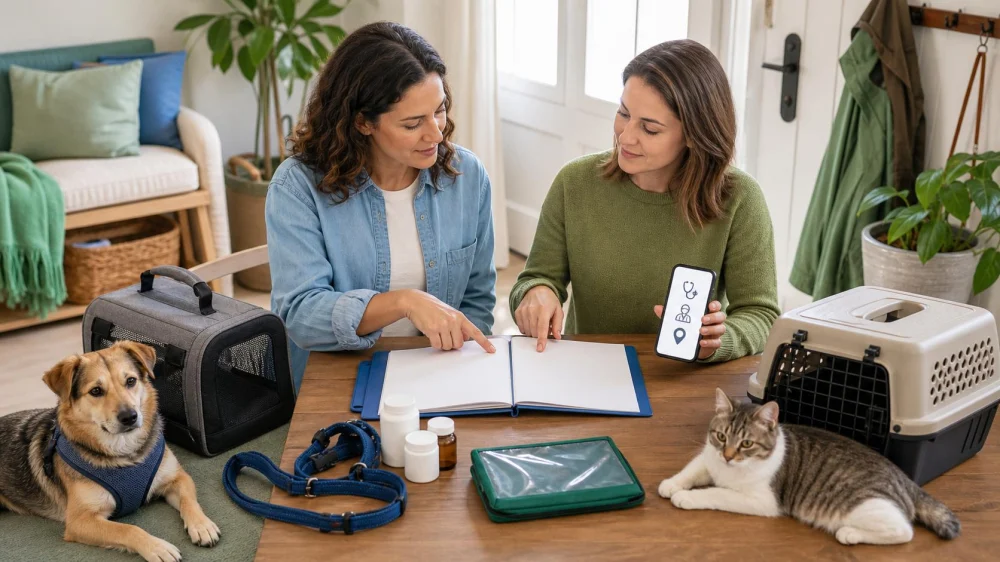
Pet Care Authorization: Vet Contacts, Decisions, and Transport
On this page
Quick answer
A pet care authorization plan tells a temporary caregiver who the pet is, which veterinarian to call, when to seek urgent care, who can approve decisions, how payment is handled, and how the pet will be transported. Review it with the caregiver and veterinary practice before travel. Keep medication labels, records, carrier or leash, and two owner contacts ready; do not rely on a vague note or verbal promise.
This guide is for US pet owners preparing for a sitter, family member, boarding arrangement, or other temporary caregiver. It is not a legal form and does not create authority by itself. Veterinary consent, payment, privacy, agency, and ownership rules vary by state and practice.

Identify the pet and normal care
Create one sheet per animal. Avoid a single household list that makes it easy to give the wrong food or medication.
- Pet’s name, species, breed or description, age, sex, color, markings, current photo, and microchip number if available.
- Owner names, home address, travel dates, reachable phone numbers, and a second trusted contact.
- Regular veterinarian, preferred emergency clinic, pharmacy, insurer, and current policy or membership details when relevant.
- Medical conditions, allergies, mobility needs, behavior triggers, bite or scratch risk, and handling limits.
- Exact food, portion, schedule, water routine, bathroom routine, and foods or products to avoid.
- Every medication in its original labeled container, with the current veterinary instructions and refill contact.
- Normal baseline: appetite, drinking, stool, urination, activity, breathing at rest, mobility, and sleep pattern.
Update the sheet after a new diagnosis, medication change, procedure, move, microchip update, or change in emergency clinic. Date every version and remove old copies from the care bag.

Set veterinary contacts and escalation
Ask the regular veterinary practice how it handles care when the owner is away. Some practices keep an authorization or payment arrangement on file; others require direct owner contact or use their own form.
Write a simple escalation order:
- Immediate danger: The caregiver calls the nearest appropriate emergency veterinary clinic and begins safe transport, then contacts the owner.
- Concerning change: The caregiver calls the regular veterinarian or its after-hours service with observations and follows professional instructions.
- Routine question: The caregiver records the issue and contacts the owner without changing food, medication, or care independently.
List clear professional-care triggers discussed with your veterinarian. Examples may include trouble breathing, collapse, repeated seizures, uncontrolled bleeding, major trauma, inability to urinate, possible poisoning, severe pain, rapidly worsening swelling, or repeated vomiting. A general list cannot cover every pet; ask the treating veterinarian what matters for this animal.
Define decision and payment boundaries
Separate medical communication, consent, and payment. A caregiver may be able to transport and relay information without having authority to approve every procedure.
- Name the primary owner decision-maker and a backup if the owner cannot be reached.
- State whether the caregiver may approve examination, diagnostics, stabilization, hospitalization, or other categories—and require veterinary explanation.
- Set a financial limit only after asking how the clinic uses estimates, deposits, and changing clinical needs.
- Provide a secure payment method agreed with the practice; do not place card numbers in an exposed binder.
- Clarify whether the caregiver can receive medical information and sign practice documents.
- State which decisions always require direct owner or legally authorized consent when reachable.
- Discuss end-of-life decisions explicitly with the veterinarian and appropriate legal adviser rather than leaving an ambiguous sentence.
A spending limit should not be the only instruction. It must be paired with who to call, what emergency stabilization is authorized, and how the clinic should proceed if the owner is unreachable.
Plan safe transport and handoff
- Stage equipment. Keep a fitted carrier, leash, harness, towel, and any veterinarian-recommended handling equipment in a known place.
- Practice calmly. Show the caregiver how doors, gates, carrier latches, and restraint equipment work before the trip.
- Map two clinics. Save the regular and emergency clinic routes, phone numbers, parking or arrival instructions, and likely travel time.
- Call ahead. The caregiver should describe the problem and follow the clinic’s arrival directions when time allows.
- Bring records. Take the current care sheet, medication containers, insurance details, authorization, and relevant packaging or samples only when the clinic requests them.
- Prevent escape. Secure cats inside closed carriers and dogs with suitable restraint before opening exterior doors or vehicle doors.
- Document handoff. Record symptoms, time, actions, food or medication given, and owner contact attempts.
A painful or frightened pet may bite or scratch. Caregivers should not risk injury by forcing an animal into a carrier or using unfamiliar restraint. Call the veterinary team for guidance.
Limits and emergency triggers
Do not diagnose: The caregiver records observable signs and contacts a veterinary professional. They should not change doses, give human medication, induce vomiting, or use leftover prescriptions unless the veterinarian directs it for that pet and event.
Poisoning: Keep the product, label, plant photo, or package available and call a veterinarian or animal poison-control service promptly. Do not wait for symptoms or try a home remedy.
Legal fit: Ask the veterinary practice whether it accepts your authorization and whether notarization, witness, date range, owner signature, or practice-specific language is required. A downloadable template may not satisfy local rules.
Privacy and security: Give the caregiver only the information needed for care. Protect home access codes, payment details, microchip accounts, and medical records from unnecessary sharing.
Sources and evidence notes
The American Veterinary Medical Foundation’s disaster-preparation materials recommend keeping veterinary records, proof of ownership, emergency contacts, individual diet instructions, medication dose and frequency, veterinary and pharmacy contacts, carriers, and transport supplies available. See the AVMF animal emergency planning brochure.
AVMA pet first-aid materials also emphasize calling the veterinarian or emergency clinic and carrying important phone numbers and medical records. These sources support preparation, but the veterinarian and local law determine actual consent and treatment.
Frequently asked questions
Can I write one authorization for all my pets?
You can use a shared owner section, but create a separate care and medication sheet for each animal. Species, condition, clinic, handling, diet, and emergency triggers may differ.
Should I leave my credit card with the sitter?
Avoid exposing card details. Ask the clinic, insurer, and owner’s financial institution about secure advance arrangements, deposits, or phone authorization. Document the payment plan without putting sensitive numbers in the care binder.
What if the regular veterinarian is closed?
List the clinic’s after-hours instructions and a preferred emergency hospital, then verify them before travel. The caregiver should call ahead when possible and use the nearest appropriate emergency option if the pet is in immediate danger.
Can the sitter change a medication time?
Not independently. The sitter should follow the current label and veterinary instructions and call the veterinary team about a late, missed, vomited, or uncertain dose.
How often should the plan be updated?
Review before every trip and after any health, medication, clinic, contact, address, insurance, microchip, diet, or behavior change. Put a revision date on each page.
Conclusion and next steps
Build one current sheet per pet, confirm the veterinary practice’s authorization process, name primary and backup decision-makers, arrange secure payment, and rehearse carrier and route logistics with the caregiver. The best plan makes the next call obvious while keeping diagnosis and treatment decisions with veterinary professionals and authorized owners.





 Gailor Animal Hospital: Herre Adam DVM4.0 (14 reviews)
 Premier Farm & Pet4.0 (115 reviews)
 EVE Pet Hospital4.0 (281 reviews)
 Pet Vaccination Clinic4.0 (831 reviews)
 VIP Petcare Vaccination Clinic0.0 (0 reviews)
 Woodstock Spay & Neuter Clinic4.0 (598 reviews)
 The Best Doggy Life Jackets for Water Safety
 When Is It Time for Pet Physical Therapy or Rehab?
 How Heatstroke Affects Pets: Symptoms, Prevention, and Emergency Action
 How Pet Startups Are Disrupting Traditional Vet Care
 How to Train a Service Dog: Basics & Considerations
 How to Help Dogs With Mobility Issues: Tips and Solutions