
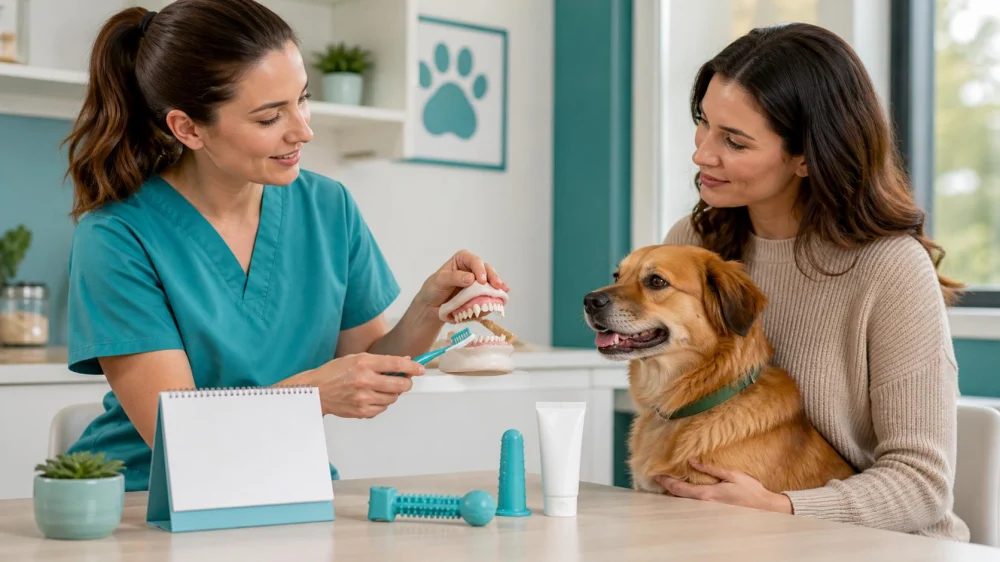
Pet Dental Home Care: Use Pet-Specific Products and a Veterinary Plan
On this page
Quick answer
Ask your veterinarian to examine your pet’s mouth and recommend a home-care plan based on species, age, temperament, disease, and current dental findings. When brushing is appropriate, introduce handling slowly, use a pet-specific toothbrush or approved tool, and use only toothpaste intended for that species. Never use human toothpaste.
Home care helps remove plaque but does not replace veterinary examination, dental X-rays when indicated, or professional treatment. Do not scrape tartar with tools, force open a painful mouth, or rely on breath improvement as proof that disease is gone.

Start with a veterinary oral exam
Before beginning, tell the veterinarian about bad breath, drooling, pawing at the mouth, chewing changes, dropped food, bleeding, swelling, broken teeth, appetite or weight change, and previous dental procedures. Some pets need painful disease treated before brushing can be introduced.
The American Veterinary Medical Association says regular brushing is the most effective action owners can take between dental cleanings and notes that products vary in effectiveness. Review its pet dental care brochure and obtain pet-specific recommendations.

Build brushing gradually
- Choose a quiet time and a stable, comfortable position.
- Let the pet investigate the approved brush and paste without restraint.
- Reward calm contact near the cheek and lips.
- Progress to briefly lifting the lip when the pet remains comfortable.
- Touch only the teeth and areas the veterinarian recommends.
- Increase duration over multiple sessions rather than completing the whole mouth at once.
- Stop for fear, struggling, pain, bleeding, or risk of a bite.
- Record what the pet tolerates and ask the veterinary team to demonstrate.
Never punish refusal or use a human restraint technique. Cats, small dogs, flat-faced breeds, and pets with medical or behavioral concerns may need different tools and pacing.
Choose products carefully
Use toothpaste labeled for pets and approved by the veterinarian. The FDA warns that xylitol, found in some human toothpastes and oral products, is toxic to dogs and says to use pet toothpaste rather than human toothpaste. See the FDA xylitol warning.
Discuss dental chews, treats, water additives, wipes, diets, and toys before use. Match every product to species, size, chewing behavior, calories, medical conditions, and choking or obstruction risk. A hard object that seems to clean teeth may fracture them. Store flavored toothpaste where pets cannot consume the tube.
Monitor and report changes
At least weekly, observe the outer surfaces of visible teeth and gums without forcing the mouth. Note redness, swelling, bleeding, tartar, recession, fractured or mobile teeth, masses, odor, and behavior. Photograph a concern only if it can be done without distress.
Call the veterinarian promptly for facial swelling, significant bleeding, severe pain, inability to eat or drink, trauma, a broken tooth, or sudden behavior change. If a dog consumes human toothpaste or another possible xylitol product, contact a veterinarian, emergency animal hospital, or animal poison control immediately; do not wait for symptoms.
Dental-care checklist
- Veterinary oral exam and plan current
- Pain and behavior concerns addressed first
- Pet-specific brush and toothpaste selected
- Human toothpaste stored away
- Handling introduced in short calm steps
- No scraping or forced mouth opening
- Chews and additives checked for suitability
- Weekly mouth observations recorded
- Professional recheck date scheduled
Limitations
This article cannot diagnose periodontal disease, tooth fracture, oral mass, or pain. Much dental disease is below the gumline and cannot be assessed at home. Product suitability and brushing technique depend on the individual pet and veterinary examination.
FAQ
How often should I brush?
AVMA says daily is best, but follow the veterinarian’s realistic plan and build tolerance gradually.
Can I use baking soda?
Do not improvise. Use only the pet-specific product your veterinary team approves.
Do dental chews replace brushing?
Not automatically. Effectiveness and safety differ; ask which products suit the pet.
Can I scrape tartar off?
No. Home scraping can injure gums, damage teeth, miss disease below the gumline, and expose both pet and person to harm.
What if the pet will not allow brushing?
Stop forcing it and ask for behavior-sensitive alternatives and a veterinary recheck.
Evidence notes
AVMA guidance supports frequent plaque removal through brushing and veterinarian review of dental products. FDA guidance identifies xylitol exposure as an urgent danger for dogs and advises pet-only toothpaste. Individual evidence includes the veterinary oral exam, product list, tolerance log, symptom photos, professional dental findings, and recheck plan.
Conclusion
Pet dental home care works best as a calm routine within veterinary care. Start with an exam, use only pet-specific products, build brushing in small steps, monitor visible changes, and seek professional assessment for pain or disease that home care cannot reach.






 Oaklandon Family Vet4.0 (348 reviews)
 Salt River Animal Hospital4.0 (291 reviews)
 Scottsville Animal Hospital4.0 (87 reviews)
 Low Cost Veterinary Surgery Clinic of Mesa4.0 (288 reviews)
 Johnson Veterinary Clinic4.0 (342 reviews)
 Arizona Humane Society Veterinary Clinic at South Mountain Campus4.0 (508 reviews)
 Leash Pulling in Dogs: Causes & Effective Correction Techniques
 What to Know About Canine Heart Disease: Signs, Care, and Prevention
 Why Is My Dog Sensitive to Loud Noises? Causes and Solutions
 How to Keep Senior Dogs Active and Healthy
 How to Tell if a Pet Insurance Policy Is a Scam - Tips to Protect Your Pet
 How to Introduce a New Kitten or Puppy to Kids