
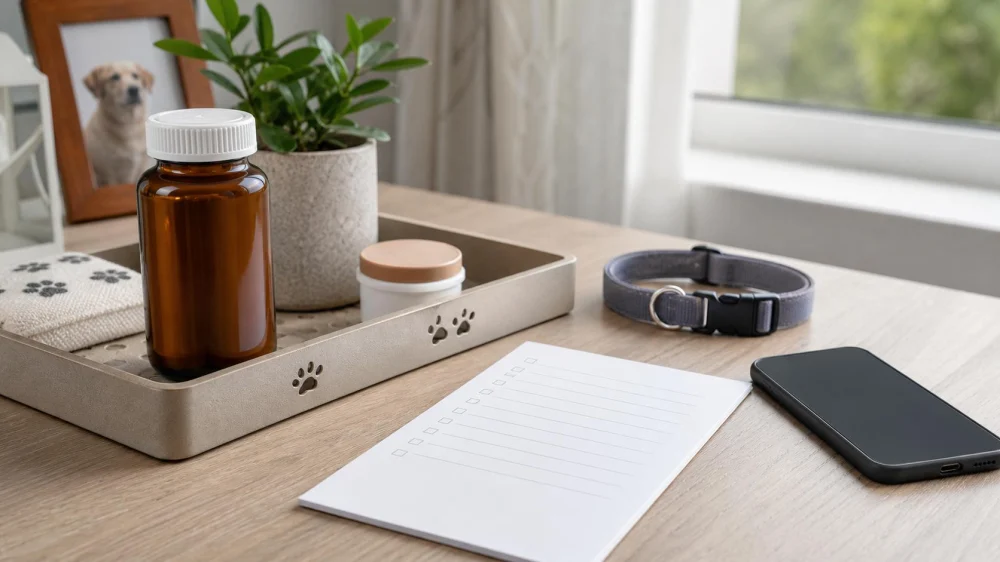
Pet Prescription Refill Plan: Verify the Label Before You Run Out
On this page
Quick answer
Start a pet prescription refill before the last doses are due. Read the original label, count the remaining medication without changing its container, and contact the prescribing veterinarian or authorized pharmacy with the pet's name, drug name and strength, directions, prescription number, remaining supply, and desired pickup or delivery method. Ask whether an examination, monitoring test, authorization, or pharmacy lead time is required.
Do not change the dose, stretch intervals, use expired medicine, substitute a human or animal product, or share another pet's prescription unless the veterinarian specifically directs it.
Scottsdale Ranch Animal Hospital
ScottsdaleMaricopa CountyArizona
9993 N 95th Way, Scottsdale, AZ 85258, USA
Build an accurate medication inventory
Keep every current prescription in its original labeled container and maintain one medication list. Include prescription drugs, over-the-counter products, preventives, supplements, special diets used therapeutically, and as-needed medicines. Mark stopped items as stopped rather than deleting the history immediately.
- Pet's full name and species
- Drug name, form, and strength
- Label directions and prescribing veterinarian
- Prescription number and pharmacy
- Date started and supply remaining
- Known reactions or administration problems
Calculate the refill lead time
Use the label directions and actual remaining quantity to estimate the last scheduled dose, but do not alter the schedule to make the supply last. Add time for weekends, holidays, shipping, compounding, stock availability, clinician review, and any required examination or laboratory monitoring.
For long-term medicines, choose a repeat reminder before the refill window. Ask the clinic how many business days it normally needs.

Send a complete refill request
Use the clinic or pharmacy's approved phone, portal, or app. State whether the pet has missed doses, vomited medication, developed new symptoms, started other products, changed weight, or had difficulty taking the formulation. Do not submit duplicate requests through several channels without noting them.
- Photograph the current label for your records.
- Confirm which veterinarian prescribed it.
- State the exact remaining quantity.
- Name the intended pharmacy and location.
- Ask when approval or pickup will be ready.
Verify the dispensed medication
Before leaving or opening a shipment, compare the pet name, drug name, strength, dosage form, directions, quantity, prescriber, and warnings with the expected refill. Note appearance changes but do not assume a different color or shape is an error; ask the pharmacist or veterinarian to verify.
Request any Client Information Sheet or administration instructions. Store the refill as directed and keep it separate from human medication.
Pause when something changed
Call before giving a product when the label is unclear, the seal is damaged, the medication looks or smells unusual, the strength or directions differ, the pet's condition changed, or another clinician changed the care plan. For suspected side effects, contact the veterinarian immediately or an emergency animal hospital when the veterinarian is unavailable.
Do not cut, crush, open, or mix a dosage form unless the veterinarian or dispensing instructions permit it.
Update every caregiver
After a refill, update the shared medication list and remove outdated copies from active use. Tell every caregiver which container is current, when it starts, where it is stored, how administration is recorded, and whom to call with questions.
Keep old medication separate until the veterinarian or pharmacist gives disposal instructions. Never combine old and new tablets in one bottle.
Important limitations
This is general U.S. medication-safety planning, not veterinary, pharmacy, dosing, or emergency advice. Prescription laws, refill rules, monitoring, compounding, shipping, and disposal vary. The prescribing veterinarian and authorized dispenser control the refill.
Evidence notes
FDA states that prescription animal drugs require a licensed veterinarian's lawful order and emphasizes reading labels, following directions, keeping medicine in original containers, maintaining a complete drug list, and not sharing one animal's drug with another. The refill workflow applies those safeguards before a supply gap.
FAQ
How early should I request a refill?
Ask the clinic's usual lead time and add time for weekends, tests, shipping, or compounding.
Can I give half doses to avoid running out?
No. Do not change dose or interval without veterinary direction.
Why does the clinic require an examination?
Prescription oversight and monitoring requirements depend on the drug, pet, veterinarian-client-patient relationship, and law.
What if the refill looks different?
Pause and ask the veterinarian or pharmacist to verify the product before use.
Can two pets share the same medicine?
Not unless the veterinarian specifically directs it for each animal.
Next steps
Gather every original container, update the medication list, calculate the last scheduled dose, and submit one complete refill request. Verify the label at pickup and update all caregivers before the new supply is used.

 Winchester Veterinary Clinic4.0 (250 reviews)
 Prices Creek Veterinary Service4.0 (190 reviews)
 Petland Austin Landing4.0 (119 reviews)
 Coffey's Vet Center4.0 (223 reviews)
 VCA Parkdale Animal Hospital4.0 (177 reviews)
 Feeders Pet Supply4.0 (209 reviews)
 How to Help Dogs With Anxiety at Night
 Why Do Dogs Shake Their Whole Body Suddenly? Causes Explained
 Best Flea and Tick Prevention for Puppies: Complete Guide
 Best Dog Harnesses for Outdoor Adventures: Comfort, Safety, and Durability
 Why Do Dogs Groom Themselves After Eating? Understanding the Behavior
 Dog Collar and Harness Fit Check: An Everyday Safety Guide