
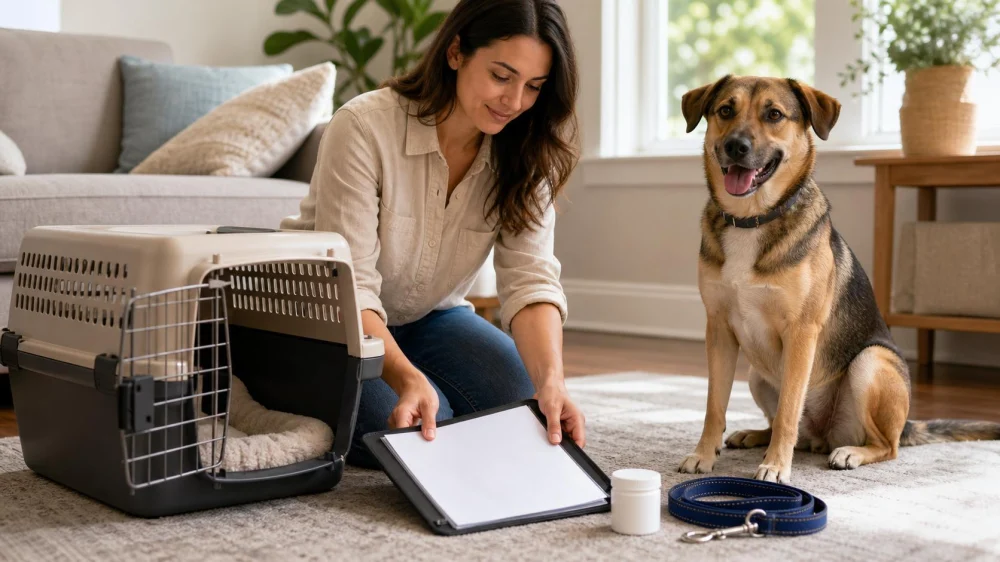
How to Prepare for a Productive Veterinary Visit
On this page
- Quick answer
- Start with the reason for the visit
- Build a concise health record
- Capture useful observations
- Plan safe, lower-stress transport
- Questions to ask the veterinarian
- Make the care plan usable at home
- When not to wait for a routine visit
- Important limitations
- Frequently asked questions
- Sources and evidence notes
- Conclusion and next steps
Quick answer
Before a veterinary visit, write down the main concern, when it began, what has changed, and every prescription, over-the-counter product, preventive, and supplement your pet receives. Bring relevant records and clear photos or videos, transport the animal securely, and list your top questions. Ask the clinic in advance about fasting, samples, timing, and urgent warning signs.
A veterinary visit brief is a short, factual summary that helps the care team understand the pet's history, current changes, treatments, and the owner's priorities.

Start with the reason for the visit
Preparation differs for preventive care, a new symptom, a recheck, and an emergency. When booking, give the clinic a plain description rather than guessing at a diagnosis: “vomited three times since last night” is more useful than “has a stomach disease.” Mention the species, age, known conditions, medications, recent procedures, and whether the problem is getting worse.
Ask whether the clinic wants the pet fasted, a stool or urine sample, prior imaging, vaccine records, or a medication dose given before arrival. Do not withhold food, water, insulin, seizure medicine, or any prescribed treatment unless the veterinary team gives instructions for this animal.

Build a concise health record
- Identity: name, species, breed or type if known, age or estimated age, sex, and reproductive status.
- History: chronic conditions, allergies or previous reactions, surgeries, hospitalizations, and relevant travel or exposure.
- Preventive care: vaccines, parasite prevention, and screening dates when documented.
- Diet: exact food and treat names, approximate daily amount, supplements, table foods, recent diet changes, and access to garbage or unusual items.
- Medication list: product name, strength from the label, amount given, route, schedule, reason, last dose, and prescribing clinic.
- Other clinicians: prior veterinary hospitals, specialists, pharmacies, and where relevant records can be requested.
Include nonprescription products, flea and tick products, vitamins, herbal preparations, and products containing cannabis or CBD. Bring original packaging or clear label photos when possible. Never give a human medicine because it seems similar to a pet prescription; contact a veterinarian first.
Capture useful observations
Create a timeline with dates and measurable details. Note appetite, water intake, urination, bowel movements, activity, sleep, breathing, mobility, itching, pain behaviors, and any change from the pet's normal pattern. Record frequency rather than using “often,” and describe color, consistency, size, or duration when relevant.
A short video can help document an intermittent cough, unusual gait, episode, or behavior that may not occur in the exam room. Photograph skin changes with consistent lighting and a size reference that does not cover the area. Do not provoke symptoms or delay urgent care to obtain media.
Plan safe, lower-stress transport
- Confirm the address, arrival time, parking or check-in process, and whether you should call from outside.
- Use a secure, species-appropriate carrier, leash, or restraint. Check closures before leaving home.
- Line carriers when accidents are possible and bring a spare towel or bedding.
- Keep pets separated from unfamiliar animals in waiting areas; ask the clinic about lower-traffic options if your pet is fearful or reactive.
- Bring a familiar reward only if food is permitted. Avoid forcing interaction when the animal shows escalating distress.
If previous visits were difficult, contact the clinic ahead of time. The veterinarian may recommend handling changes, a quieter appointment, or an individualized pre-visit plan. Use only medication prescribed or specifically approved for that pet.
Questions to ask the veterinarian
- What are the main possibilities, and what findings support or argue against them?
- Which tests are recommended now, what would each result change, and are there reasonable alternatives?
- What is the purpose of each medication, how and when is it given, and should it be given with food?
- What should I do after a missed dose, vomiting after a dose, or an administration error?
- Which side effects or changes require a call, and which require emergency care?
- How should the medicine be measured, stored, handled, and disposed of?
- What activity, diet, monitoring, or separation instructions apply at home?
- When is follow-up due, and what outcome would trigger an earlier recheck?
Ask the team to demonstrate unfamiliar techniques, such as measuring a liquid or applying an ear medication. Repeat the instructions back in your own words. This “teach-back” check can uncover misunderstandings before you leave.
Make the care plan usable at home
- Read every label and match it to the written discharge instructions.
- Create a dose and observation schedule that all caregivers can see without exposing medicines to children or animals.
- Use an appropriate measuring device; kitchen spoons are not reliable medication measures.
- Store each product exactly as directed and keep human and animal medicines separated.
- Record doses, appetite, symptoms, side effects, and questions for follow-up.
- Call the clinic when instructions conflict, a label is unclear, the pet cannot take the treatment, or the condition changes.
When not to wait for a routine visit
Seek immediate veterinary guidance for severe breathing difficulty, collapse or unresponsiveness, uncontrolled bleeding, repeated seizures or a seizure that does not stop, major trauma, suspected poisoning, inability to urinate, rapidly worsening abdominal swelling, or other sudden severe distress. This list is not exhaustive, and warning signs vary by species and individual.
Call your regular veterinarian, an emergency animal hospital, or an animal poison control service for triage instructions. Do not induce vomiting or give food, milk, salt, hydrogen peroxide, activated charcoal, or medicine unless a veterinary professional specifically directs it for the animal and exposure.
Important limitations
This article supports communication and organization; it cannot diagnose illness, determine whether a symptom is urgent, or replace an examination. Veterinary prescribing requirements and available services vary by state. Exotic pets and animals with diabetes, seizure disorders, pregnancy, very young or advanced age, or complex disease may need tailored instructions before travel or fasting.
Frequently asked questions
Should I bring my pet's medications to the appointment?
Bring the original containers when practical or clear photographs of every label. Also provide the actual schedule and last dose, including nonprescription products and supplements.
Can I feed my pet before a veterinary visit?
Ask the clinic. Some tests or procedures may require fasting, while withholding food can be inappropriate or dangerous for certain animals or conditions. Do not assume.
Is a video of a symptom useful?
Often, especially for intermittent behavior, breathing sounds, episodes, or gait changes. Record only when safe and never postpone care or trigger an episode to make a video.
What if I cannot afford every recommended test?
Say so early and ask which steps are most urgent, what each test could change, and whether staged diagnostics or other medically reasonable options exist. Do not alter treatment on your own.
May I use leftover medicine from another pet?
No medication should be reused without veterinary direction. The diagnosis, species, weight, dose, formulation, interactions, expiration, and storage history may differ.
Sources and evidence notes
The medication checklist and questions are consistent with the U.S. Food and Drug Administration's guidance on questions to ask about pet medications and its advice on preventing veterinary medication errors. FDA also advises contacting a veterinarian, emergency animal hospital, or animal poison control center for a pet emergency. Transport and observation suggestions are general care practices; the treating clinic's instructions take priority.
Conclusion and next steps
Make a one-page visit brief tonight: the main concern, timeline, medication list, diet, records, and three priority questions. Call the clinic before changing food or medicine or collecting a sample. Pet & Puppy can help you explore veterinary clinic options, but the clinic that examines your animal must make the diagnosis and treatment plan.




 Tisdale Animal Hospital Emergency & Wellness Center4.0 (346 reviews)
 Howell Jodi DVM4.0 (26 reviews)
 Curem Veterinary Care4.0 (123 reviews)
 My Fish Doctor4.0 (73 reviews)
 Alpine Pet Care Center4.0 (148 reviews)
 North Park Veterinary Care4.0 (160 reviews)
 Behavioral Cues That Suggest a Vet Visit Is Needed for Your Pet | Signs to Watch
 How to Re-Train a Rescue Dog with Unknown History: Tips and Techniques
 How to Care for a Dog With Allergic Dermatitis
 Choosing Wet vs Dry Food: When Each Is Best
 How to Train Dogs to Be Calm With Loud Music: Practical Tips and Techniques
 How AI & Machine Learning Are Shaping Veterinary Diagnostics